About All Tours From Split ToursPrivate ToursBoat ToursTours from ZadarWaterfalls Tours Directions Hours & Fees Guides
Find Tours 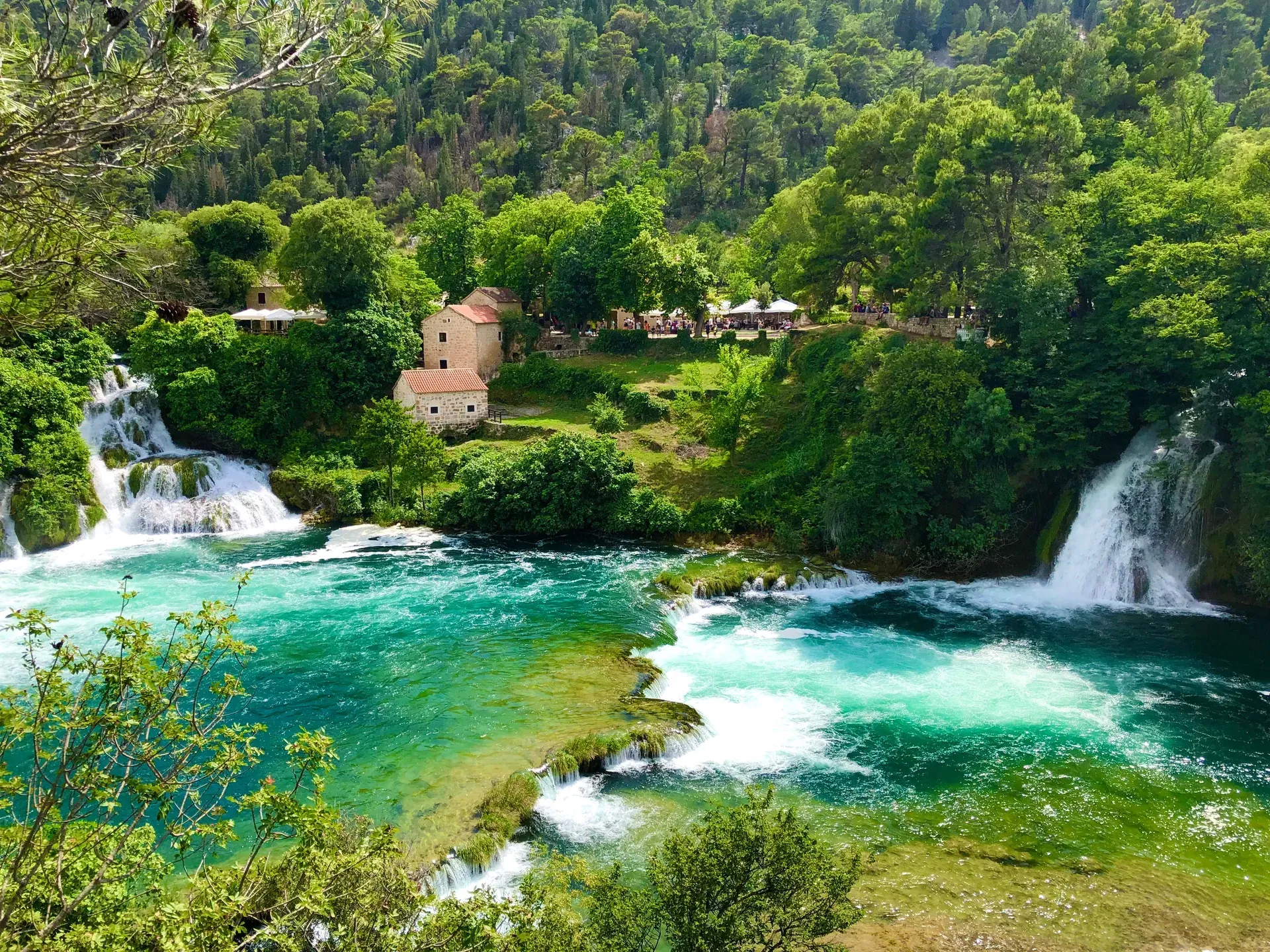
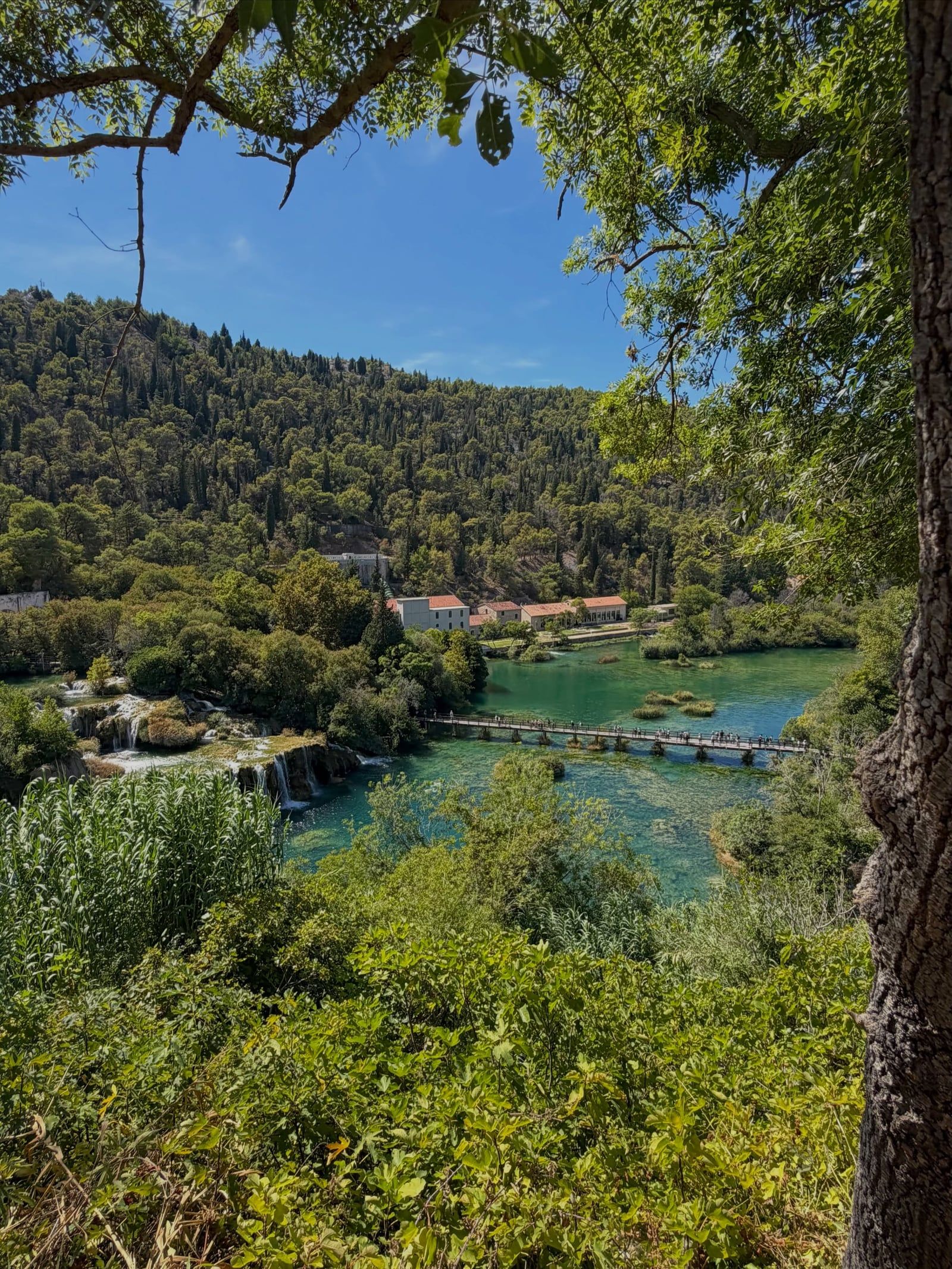
A 20-minute boat ride from Skradin drops you at Skradinski buk, where the Krka River splits into 17 travertine cascades dropping 45.7 metres across 800 metres of limestone. Wander the boardwalks past a 1445 Franciscan island monastery and the 1895 Jaruga plant that made nearby Šibenik the first city on earth lit by hydroelectric power.
Find Guided ToursKrka National Park protects 109 km² of the middle and lower Krka River, plus the lower stretch of its tributary the Čikola, in central Dalmatia just a few kilometres northeast of Šibenik. Proclaimed in 1985, it was Croatia's seventh national park, and it now draws over a million visitors a year. They come for the waterfalls: seven travertine cascades with a combined drop of 242 m, carved into a limestone canyon up to 200 m deep.
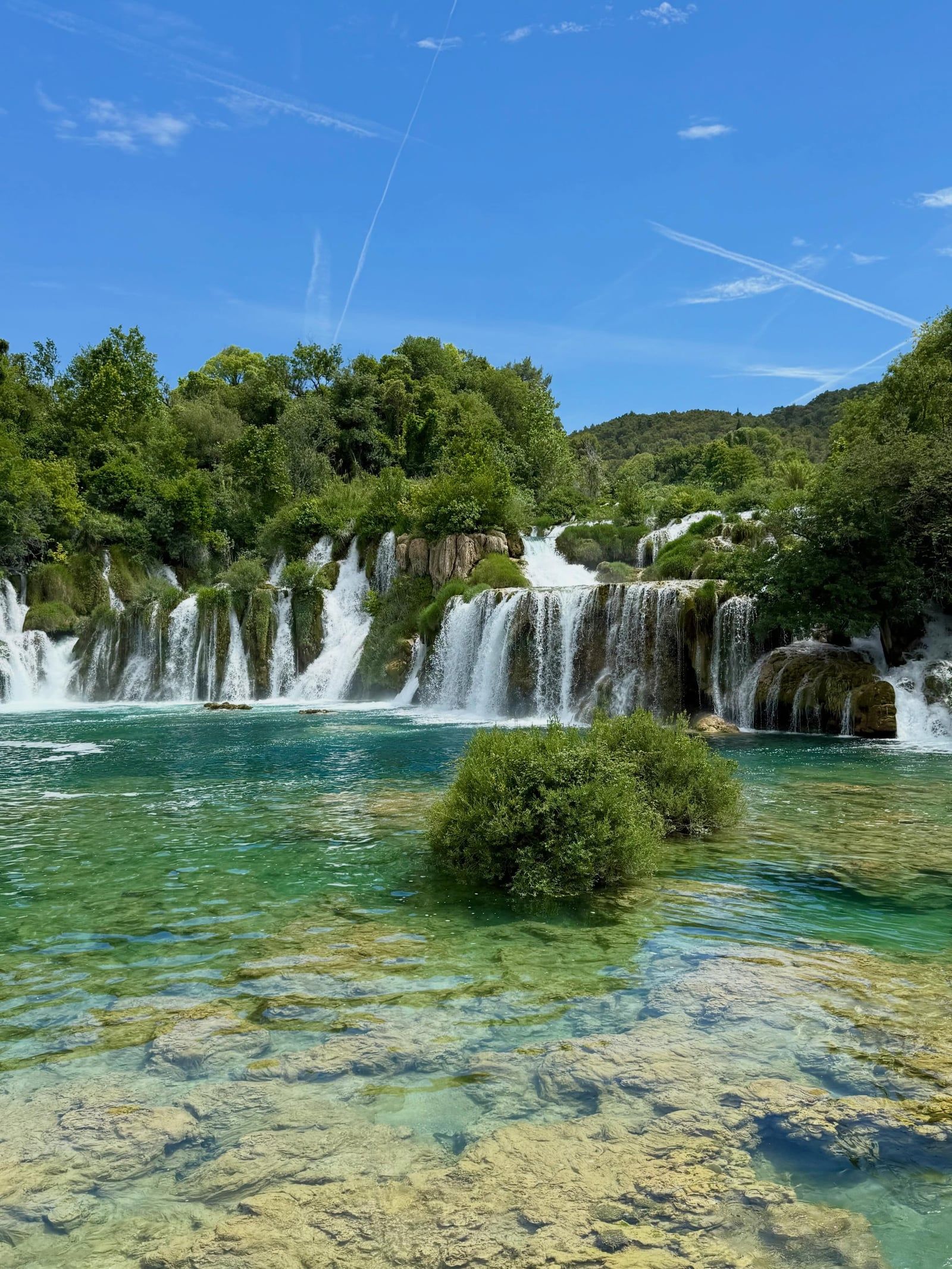
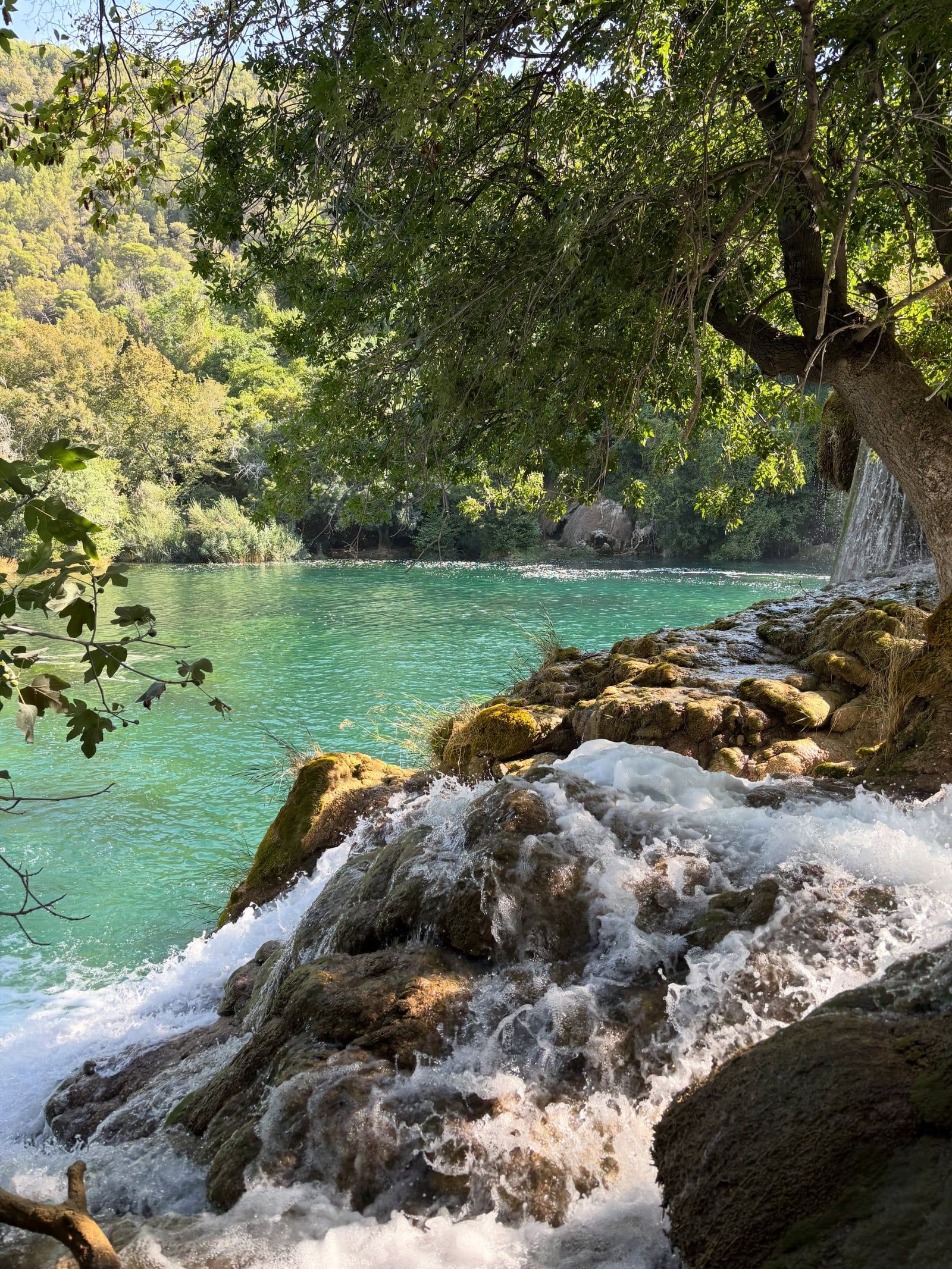
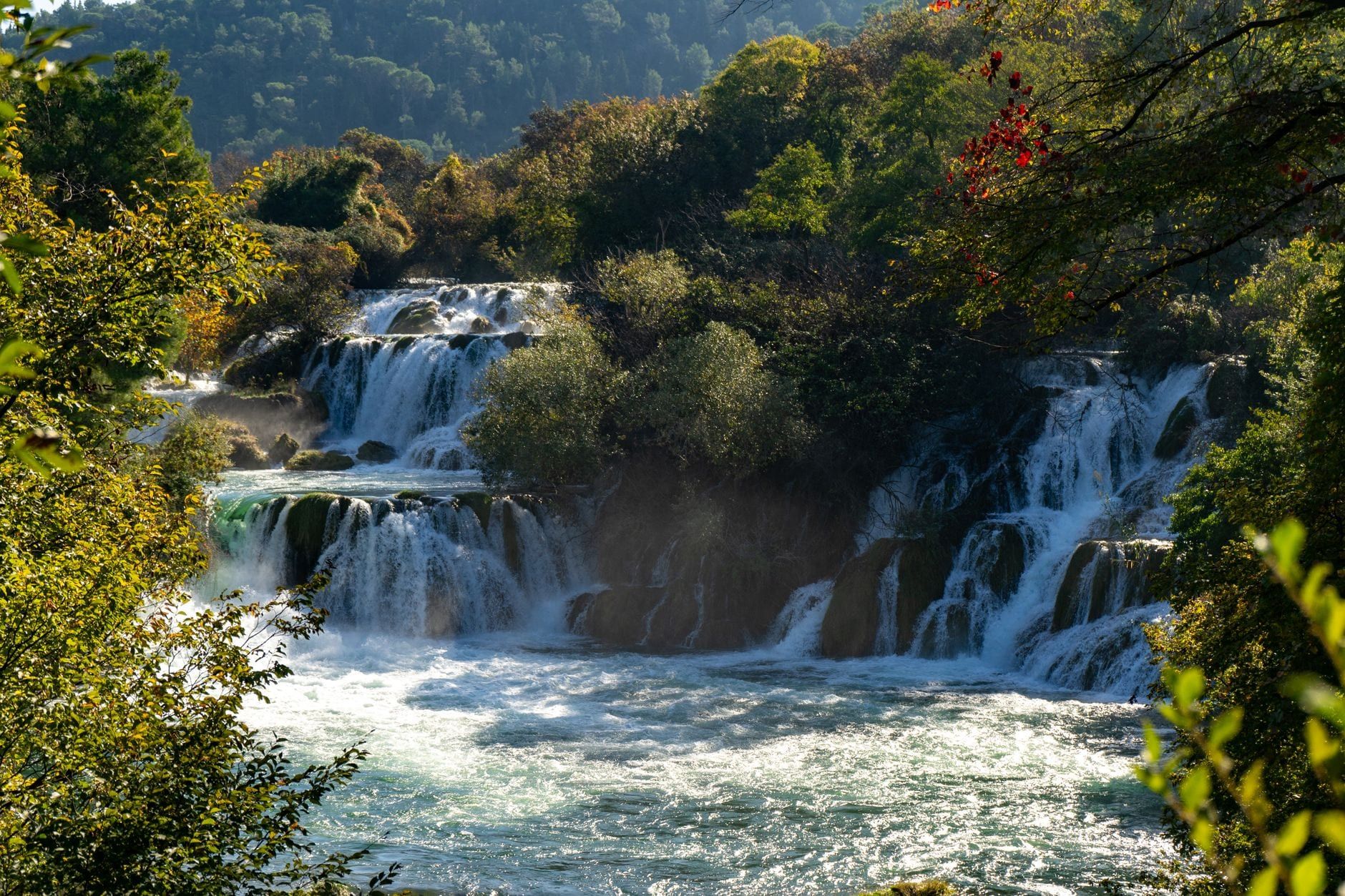
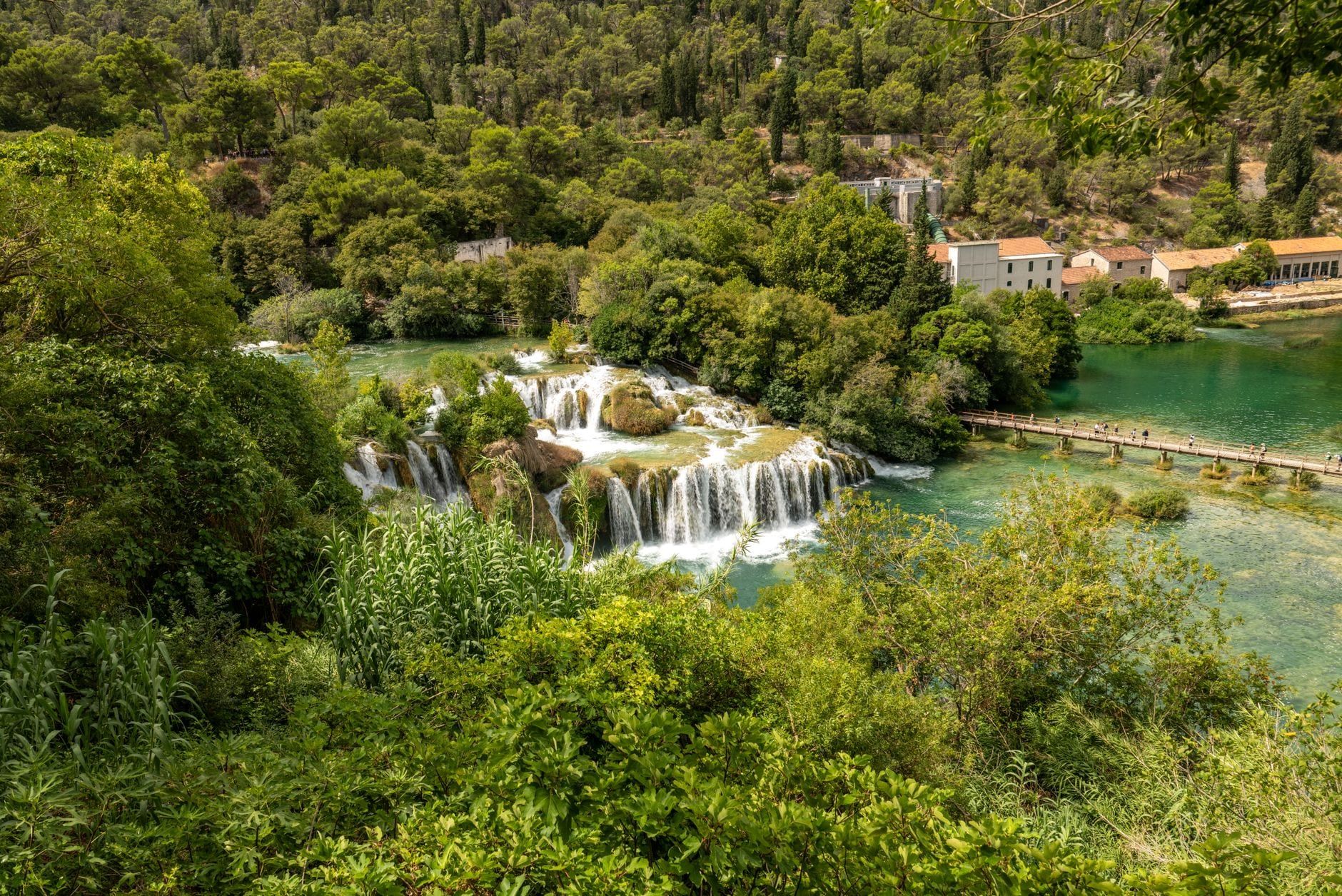
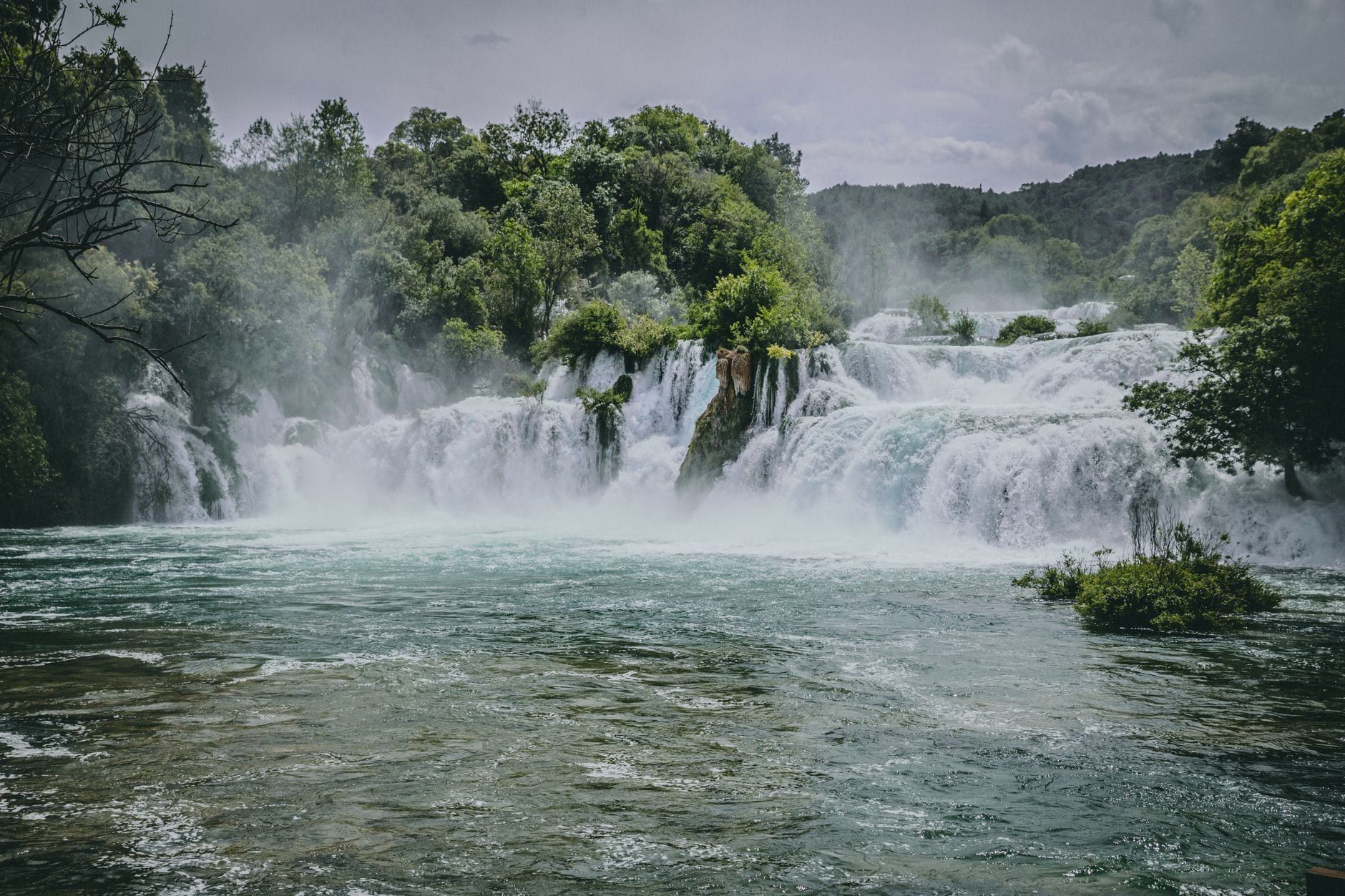
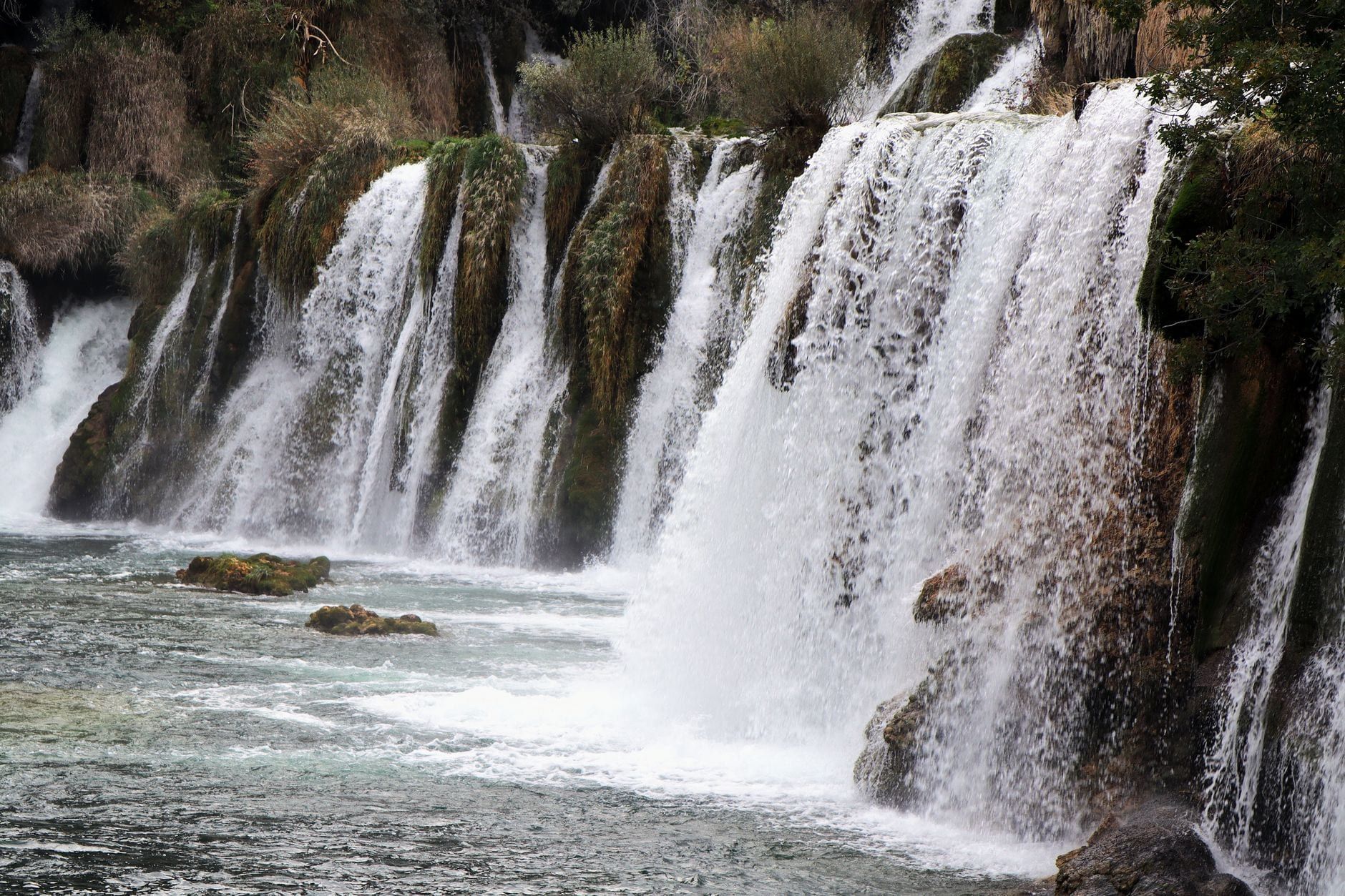
The star is Skradinski buk, one of Europe's largest travertine barriers. The river fans across it in 17 steps over 800 m, falling 45.7 m through cascades 200–400 m wide, with wooden boardwalks threading between them. The rock itself is the reason the park exists. Mineral-rich water constantly deposits new limestone, so the barriers are still growing — a living process the park was created to protect.
The Romans knew the river as the Titius and built the legionary camp of Burnum on its banks, garrisoned first by Legio XI Claudia Pia Fidelis from 42 AD, then Legio IV Flavia Felix from 69 AD. In 1445 Franciscans settled the tiny island of Visovac, where their monastery still stands in the middle of a broad river lake.
The strangest chapter is electrical. On 28 August 1895, the Jaruga hydroelectric plant opened two days after Niagara's, sending power 11 km to Šibenik — the first city in the world lit by a complete alternating-current hydroelectric system. More plants followed at Miljacka (1907) and Roški slap (1911). Beyond the machinery, the park holds 860 recorded plant species, 222 bird species and 18 fish species, ten of them found nowhere else.
Discover the full history and cultural significance on our About page.
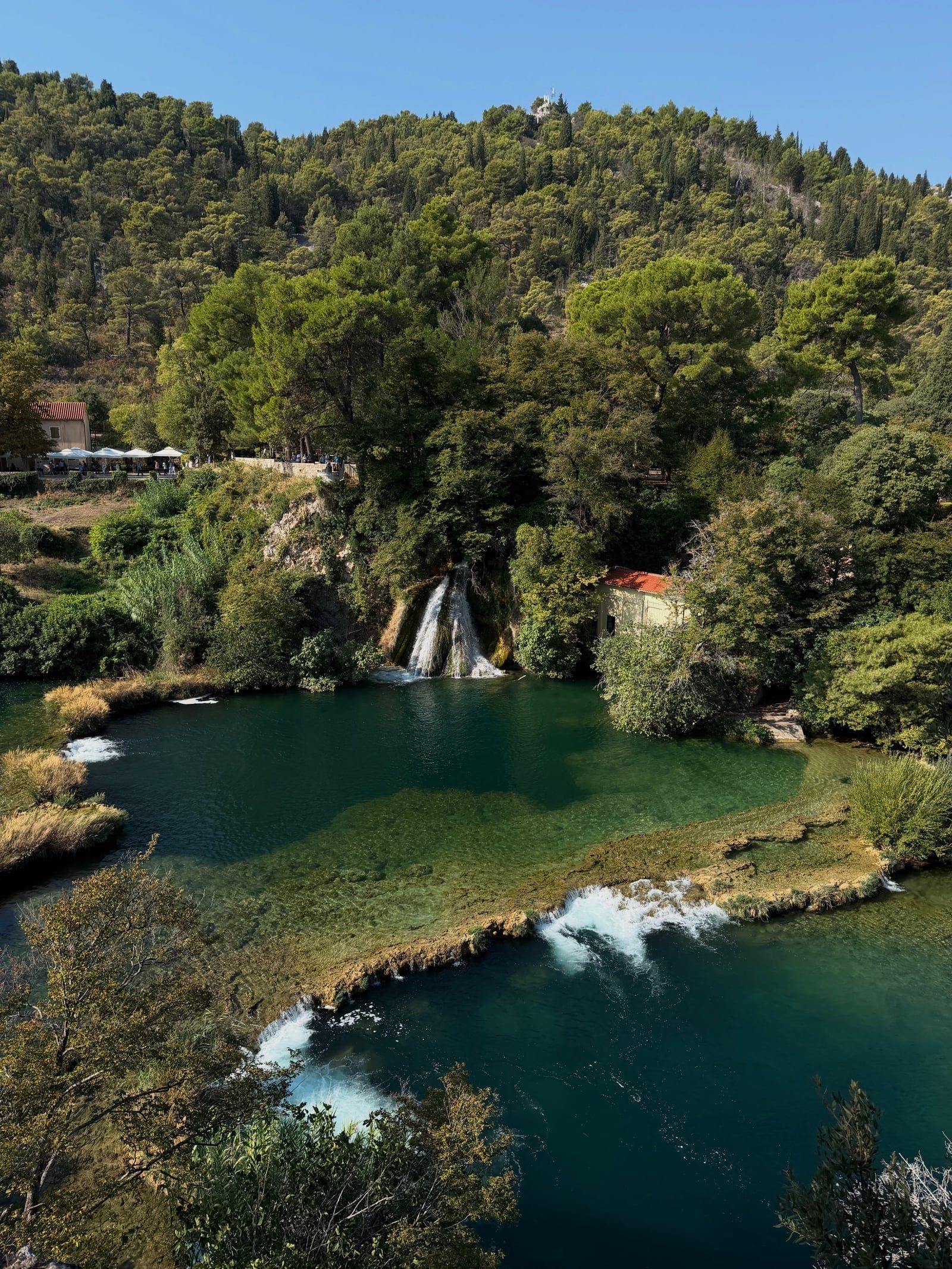
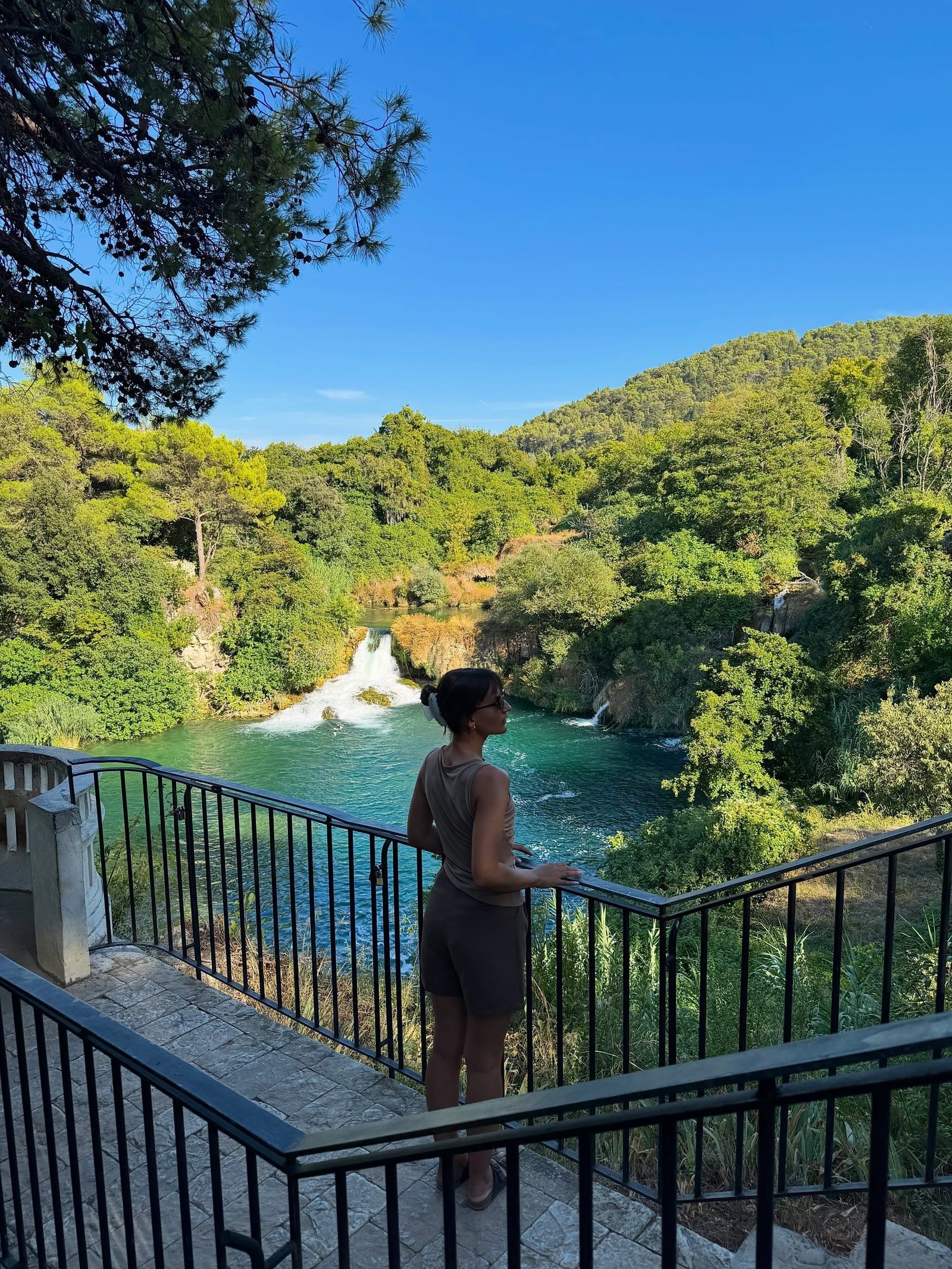
Wooden walkways cross islands and tufa thresholds as the Krka splits into 17 cascades dropping 45.7 m over 800 m. The circuit takes 60–90 minutes, passing restored watermills and the 1895 Jaruga hydro plant that lit Šibenik with AC power before most of the world.
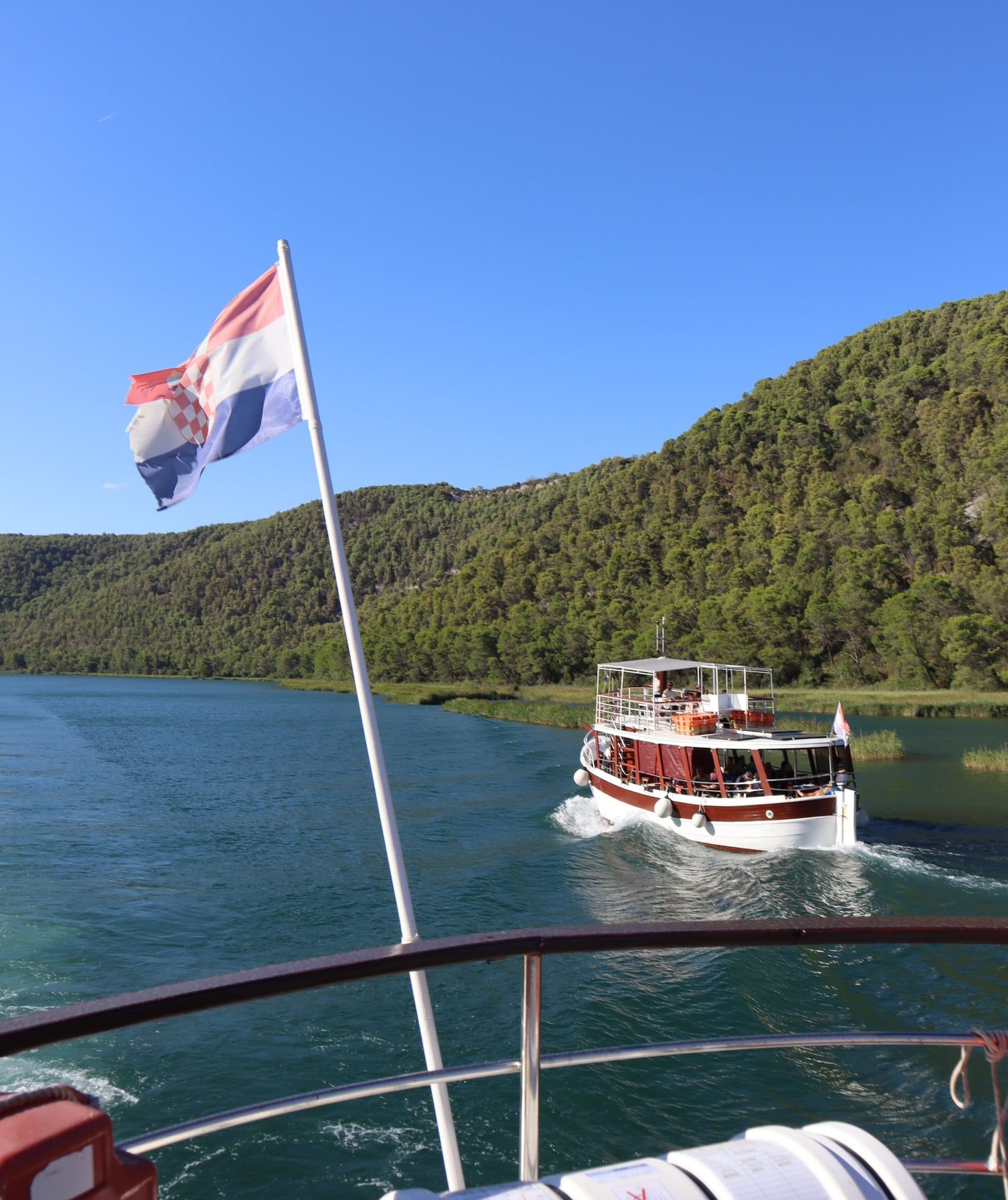
Your entrance ticket includes the 20-minute boat from Skradin to the falls, gliding up a limestone canyon that reaches 200 m deep. Board the first departure at opening — by mid-morning the jetty queues stretch and boats fill up fast.
A Franciscan monastery founded in 1445 sits on a tiny island in a broad river lake. The 2-hour boat excursion (€15, sold on site only) gives you a 30-minute stop. On 2 and 15 August, the island opens solely to pilgrims.
At Burnum, above the canyon near Puljane, excavated remains mark a camp garrisoned by Legio XI Claudia Pia Fidelis from 42 AD and Legio IV Flavia Felix from 69 AD. Open 10:00–18:00 April–June and September, 8:00–20:00 in July and August; closed November–March.
Compare Krka tours from $29.24 — most include a Krka River boat cruise and swimming in Skradin, all with free cancellation up to 24 hours.
Swipe to see more
 Free Cancellation 10h
 Free Cancellation 10h
 Free Cancellation 7h 30min
 Free Cancellation 8h 30min Free Cancellation 10h Free Cancellation 10h Free Cancellation 7h 30min Free Cancellation 8h 30min Free Cancellation 10h Free Cancellation 10h Free Cancellation 7h 30min Free Cancellation 8h 30min Free Cancellation 10h Free Cancellation 10h Free Cancellation 7h 30min Free Cancellation 8h 30min
 Free Cancellation 9h
 Free Cancellation 9h
 Free Cancellation 9h
 Free Cancellation 7h
Aim for May, June, September or early October, when temperatures sit around 18–25 °C, all boat services run and crowds thin out. July and August bring 30 °C-plus heat and capacity limits; November to March means short hours and no boats.
May is a top pick: roughly 18–25 °C, strong waterfall flow, active wildlife and full 8:00–19:00 hours. Boats resume 1 April; entry drops to €20, and it's free on 1 May (expect crowds that day).
June stays pleasant with the long 8:00–20:00 schedule, but July and August push past 30 °C with packed boardwalks and capacity limits. Adult tickets cost €40, dropping to €30 after 15:00; swimming areas open 1 June.
September and early October deliver the best balance: mild temperatures, every boat running and far fewer people, at €20 entry. Manojlovac and Burnum close from November, boats stop 31 October, and hours shrink to 9:00–16:00.
Cold and quiet, but the falls carry their maximum water — the clearest views of the tufa barriers all year. Entry is just €7, though Skradinski buk runs only 9:00–16:00 and the park closes 25–26 December.
Krka National Park is open year-round, with hours set by season and locality. Skradinski buk and Roški slap run 9:00–16:00 in January, February, November and December; 9:00–17:00 in March; 8:00–18:00 in April; 8:00–19:00 in May; 8:00–20:00 from June through August; 8:00–19:00 in September; 8:00–18:00 from 1–15 October; and 9:00–17:00 from 16–31 October. Manojlovac waterfall and Burnum keep different hours: 10:00–18:00 in April–June and September, 8:00–20:00 in July and August, and closed entirely from November through March. Three special dates change the schedule: on 1 January only the Lozovac entrance is open, on 24 and 31 December the park runs 9:00–12:00, and it closes completely on 25–26 December. Boat transfers between Skradin and Skradinski buk, plus the Lozovac shuttle bus, only operate from 1 April to 31 October — so a winter visit means arriving by land at Lozovac.
| Category | Price |
|---|---|
| Adult (high season, June–September) | €40 |
| Adult (shoulder season, April, May, October) | €20 |
| Adult (low season, November–March) | €7 |
| Adult after 15:00, June–September | €30 |
| Children 7–18, students, Croatian Hiking Society members (high / shoulder / low season) | €15 / €12 / €4 |
| Children 7–18 and students after 15:00, June–September | €11.25 |
| Adult groups (high / shoulder / low season) | €30 / €16 / €5 |
| Children under 7 | Free |
| Homeland War disabled veterans, European Disability Card holders plus one companion, people with special needs, and people with over 50% disability plus one companion (with ID) | Free |
| 'Friends of the Krka' annual pass (foreign adults) | €60 |
The single-day ticket includes the Skradin–Skradinski buk boat and the Lozovac shuttle bus (1 April–31 October) and covers one visit to each open land locality that day — you can't enter at Lozovac and exit by boat from Skradin on the same ticket. Entry is free for everyone on International Labour's Day (1 May), and pilgrims enter free on Easter Monday before mass; expect the year's biggest crowds on those days. Buy tickets online at shop.np-krka.hr to skip entrance queues — the park applies capacity limits in July and August, and once capacity is reached you wait. Groups of 20 or more must give written notice at least 24 hours ahead for group rates. Boat excursions cost extra and are sold only on site: Visovac €15 (2 hours), Visovac plus Roški slap €20 (4 hours), and the Čikola cruise €10 (45 minutes).
For complete schedules and ticket prices, visit our Hours & Fees page.
Krka National Park sits 76 km south of Zadar and 93 km north of Split on the A1 motorway, with most visitors exiting at Skradin (exit 21) and continuing to the Skradin or Lozovac entrances. It's roughly an hour to 90 minutes by car from either city, and both also run direct buses and day tours to the 'Skradin (Krka NP)' stop.
📍 The park has no single street address — it spans 109 km² of Šibenik-Knin County, with its main entrances at Lozovac (the car entrance) and Skradin (the boat entrance), a few kilometres northeast of Šibenik, Croatia. Follow the brown tourist signs to Lozovac or Skradin rather than your GPS, which the park's own FAQ warns often leads to fields.
Drive the A1/E65–E71 motorway north from Split to exit 21-Skradin, then take the D56 to the Skradin entrance; exit 22-Šibenik also serves the Lozovac side. The 93 km run takes 1–1.5 hours, and parking at Lozovac is free. Coming from the airport? Split Airport is 65 km from the Skradin entrance, about 50 minutes to an hour. Budget for fuel plus A1 tolls.
Direct buses leave Split's bus terminal for the 'Skradin (Krka NP)' stop in about 1h 20m–1h 30m, run by operators including Prijevoz Knežević (PKN) and Flixbus, at €12–15 one-way. From the stop, walk to the park boat in Skradin or continue to Lozovac. This is the straightforward car-free choice from Split — no transfers needed.
The park lies 76 km (47 miles) south of Zadar, about an hour's drive on the A1; Zadar Airport is 75 km from the Lozovac entrance, 50 minutes to an hour away. Car-free? Up to 12 buses a day connect Zadar's main bus station with Skradin, with local fares cheaper than the tolls and fuel you'd pay driving. Either way, this is an easy day trip.
In summer, private operators run boat trips from Šibenik roughly 15 km up the Krka estuary to Skradin. The ride takes about 1.5 hours — far slower than the road — but the limestone-canyon approach is the scenic payoff, and fares are set by each operator and vary seasonally. Check current schedules and prices locally in Šibenik before committing.
For detailed transport options and routes, visit our Directions page.
From 15:00 in June–September, the adult ticket drops from €40 to €30 — a real saving on a family trip. Better still, buy online at shop.np-krka.hr beforehand, since the park hits capacity limits in peak season and latecomers wait at the gate. Come before 9:00 if you want morning calm instead; the after-15:00 deal is for heat-tolerant crowds.
Your one-day ticket admits you to each locality only once, so you can't shuttle in from Lozovac and return by boat from Skradin on the same ticket. Decide your entrances before buying. Lozovac gives free parking plus the free shuttle bus down to the falls; Skradin gives the 20-minute boat cruise up the canyon. Both are included April through October.
GPS navigation regularly routes visitors into fields instead of park entrances — the official FAQ warns about it. Follow the brown tourist signs to the reception desks at Lozovac, Skradin, Laškovica or Burnum/Puljane instead. This matters most if you're heading beyond Skradinski buk: Roški slap and Burnum sit at separate entrances up the canyon, and a wrong turn costs real time.
Boat excursions — Visovac (€15, 2 hours), Visovac plus Roški slap (€20, 4 hours), the Čikola cruise (€10) — can't be reserved or bought online. They're sold only at the park, so build in jetty time. On 2 and 15 August the island opens solely to pilgrims, so skip the excursion those days unless you're there to worship.
Drones and other unmanned aerial vehicles are banned outright throughout the park, and recreational permits are essentially never granted. Croatian aerial-photography violations draw fines of roughly €650–€3,300 per incident, with confiscation possible. Bring a wide-angle lens instead — the boardwalk at Skradinski buk runs so close to the cascades that you'll get plenty without flying.
Skradinski buk is among Croatia's most accessible natural sights: free shuttle from Lozovac parking, paved approach roads, a flat boat landing from Skradin. But the full circular boardwalk has narrow sections and steps, so ask staff at arrival which loop is step-free. European Disability Card holders plus one companion enter free — bring the card.
A characterful Dalmatian old town crowned by the UNESCO-listed Cathedral of St James and the 15th-century St Michael's fortress. It's the closest sizeable base for the park, with multiple daily buses to Skradin from its main bus station.
A tiny, postcard-pretty marina town at the park's southern gateway, where the park boats depart and the branch office opens half an hour before the falls. Stay here and you'll be first in the boat queue at opening time.
The main Dalmatian transport hub, with direct buses (Flixbus, PKN) to the Skradin park stop from €12 one-way. Most organised day tours depart here, and its airport sits just 65 km from the park.
Read what travelers share about their experience visiting Krka National Park — from practical tips to personal highlights.
Planning advice, comparisons, and practical tips.
Krka National Park sits less than 60 km from Trogir — an hour's drive takes you from a walled island town to the largest travertine waterfall system…
Krka National Park starts barely an hour from Zadar — 75 km to the Skradin entrance, 88 km to Lozovac — which makes it the easiest big-sight day trip…
Plitvice Lakes is the better park; Krka is the better day trip. Almost everything in this comparison follows from that split: Plitvice is bigger,…
Krka National Park squeezes seven travertine waterfalls, a chain of boardwalks and a 15th-century island monastery into 109 km² of central Dalmatia,…
Adults pay €40 from June to September, €20 in April, May and October, and €7 from November to March; after 15:00 in summer the price drops to €30. Children aged 7–18 and students pay €15/€12/€4 for the same seasons, and kids under 7 always get in free. Entry is also free on 1 May and for pilgrims before mass on Easter Monday — expect the year's biggest crowds on those days.
Only at three designated spots — Roški slap, Stinice and Pisak (Remetić) — and only between 1 June and 30 September. Swimming at Skradinski buk has been banned since 1 January 2021 to protect the fragile travertine, and jumping off the falls or bridges is prohibited everywhere.
From Split it's 93 km — about 1–1.5 hours by car via the A1 motorway to exit 21-Skradin, or a direct bus (Flixbus or Prijevoz Knežević) costing €12–15 one-way in 1h 20m–1h 30m. From Zadar it's 76 km, roughly an hour's drive, with up to 12 buses a day connecting Zadar's main station to Skradin, so a car-free day trip works from either city.
Tickets aren't sold in time slots, but the park hits capacity limits in July and August, so buying online at shop.np-krka.hr saves you from queuing — or being turned away to wait. Note that boat excursions to Visovac (€15) and Visovac + Roški slap (€20) can't be booked online at all; they're sold only on site.
The Skradinski buk boardwalk circuit takes 2–3 hours with photo stops — the walk itself runs 60–90 minutes past watermills, an ethno village and the 1895 Jaruga hydroelectric plant. Add half a day if you're taking the boat from Skradin, and plan a full day for the Visovac excursion (2 h) or the Visovac + Roški slap tour (4 h).
Lozovac is the main car entrance, with free parking and a free shuttle bus down to the falls. Skradin is the scenic option — your ticket includes a 20-minute boat cruise up the canyon, running 1 April to 31 October. One ticket covers all open land localities that day, but each one only once, so plan your route before you buy.
Largely, at Skradinski buk: there's a free shuttle from the Lozovac car park, a paved and mostly flat approach, and a flat boat landing from Skradin. Some boardwalk sections have steps and narrow stretches, so ask staff to point out the accessible loop. Holders of a European Disability Card enter free, plus one companion.
Sturdy, grippy shoes — the boardwalks and tufa-side paths are wet and slippery — plus water and sun protection, since July and August heat regularly tops 30 °C with little shade on open viewpoints. If you're allergic to stings, pack medication: the park has the second-highest lavender density in Europe, so bees and wasps are constant. On a leash, dogs are welcome too, though never on Visovac Island.
Browse verified tours with free cancellation and instant confirmation.
Find Tours