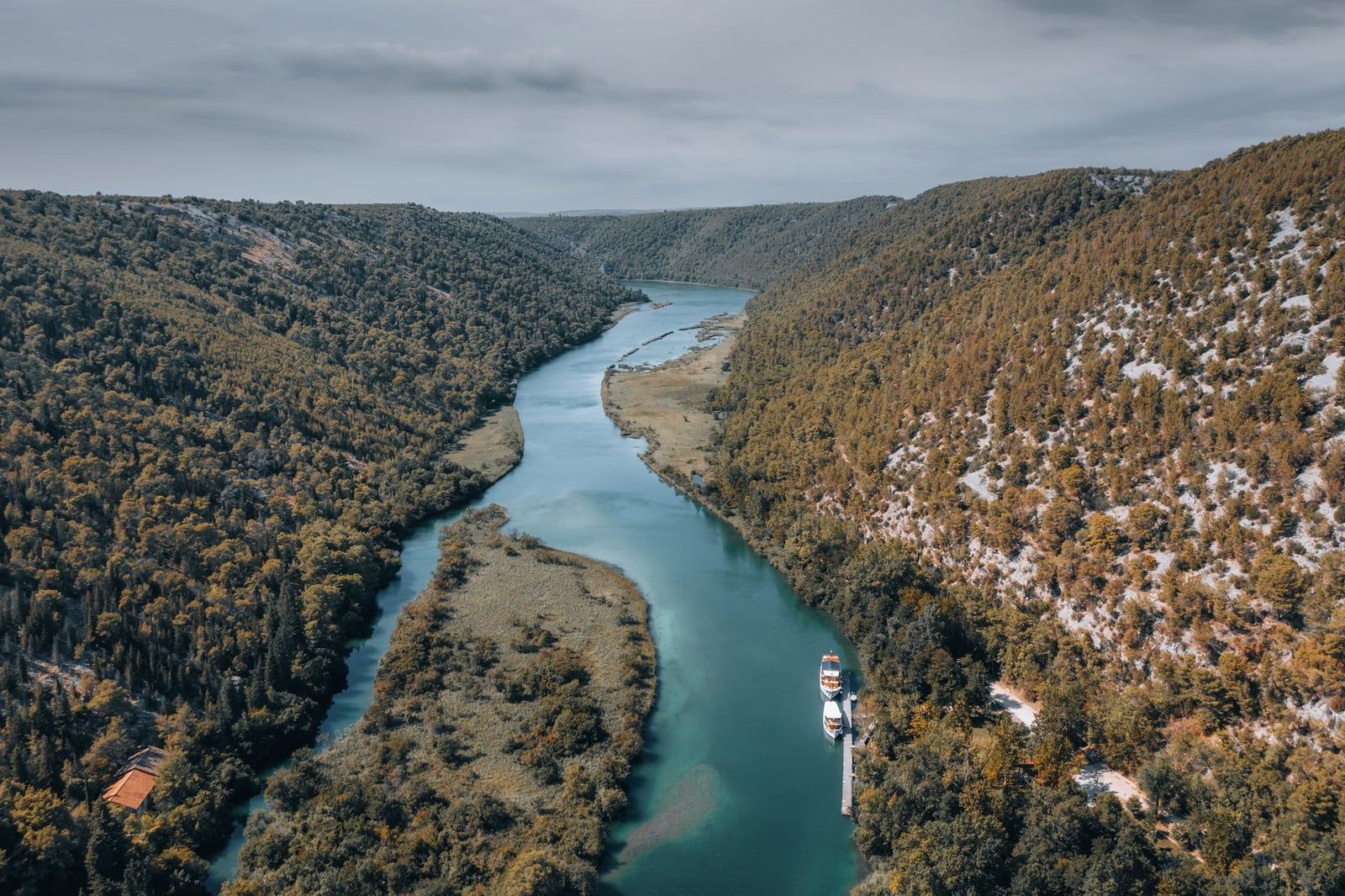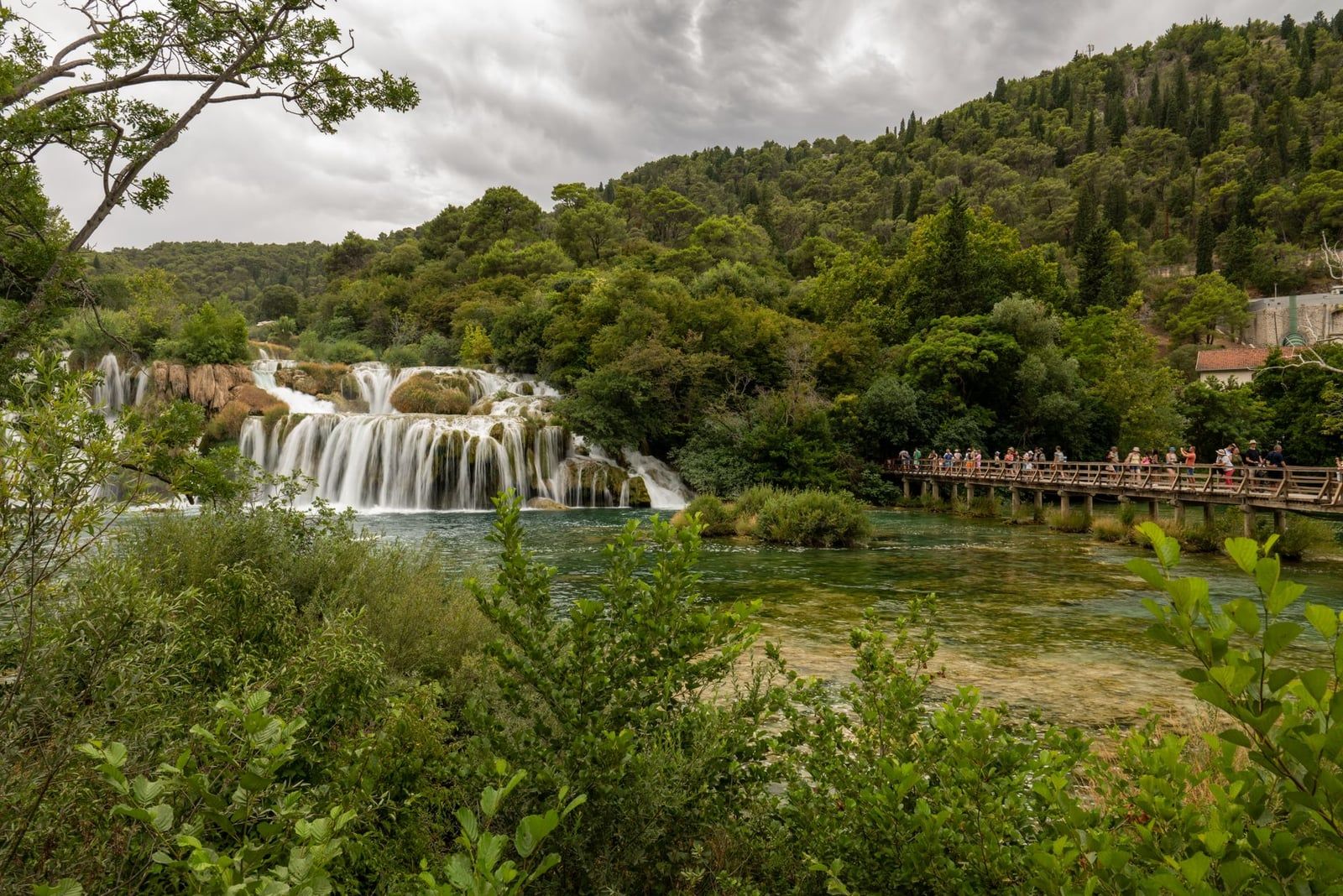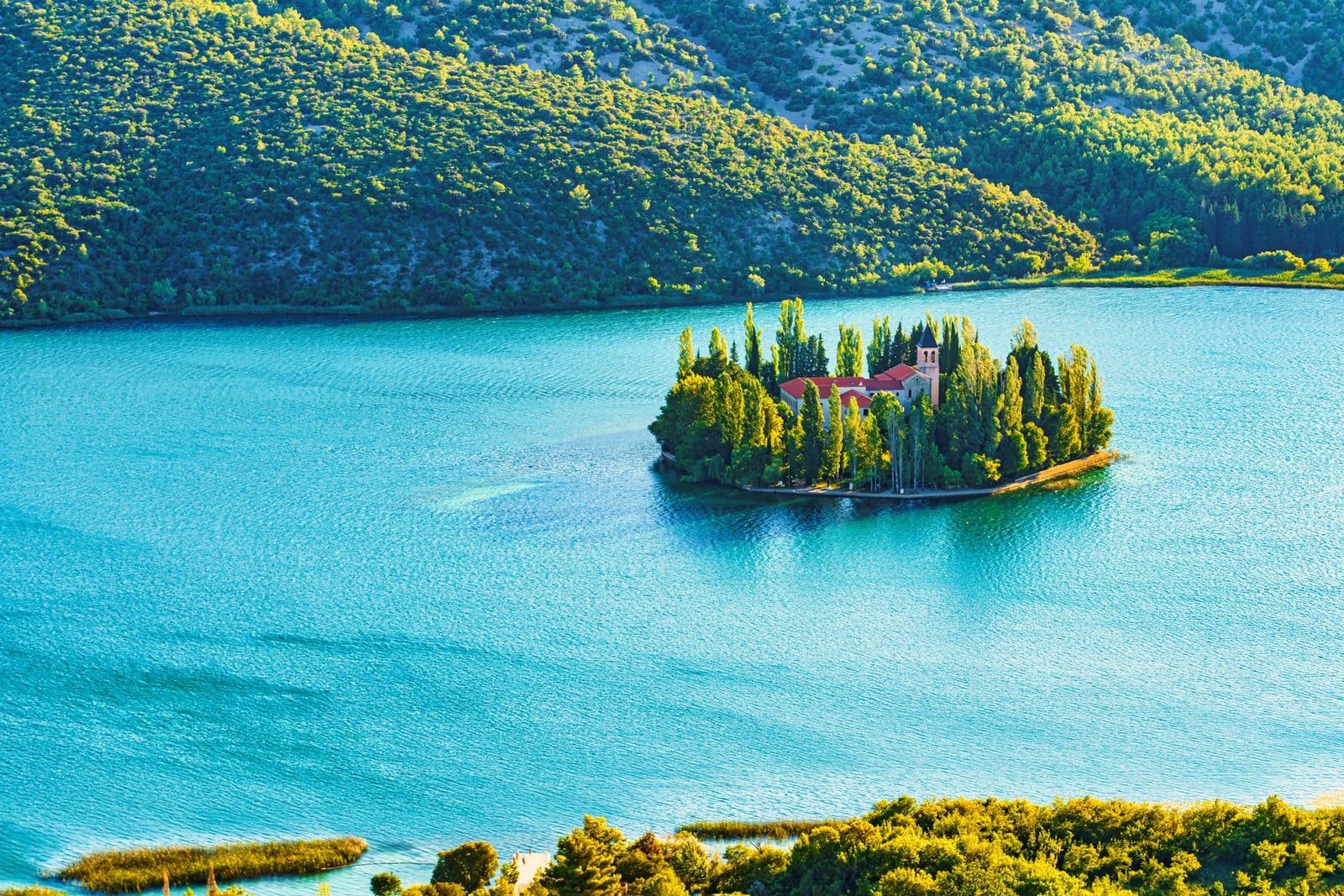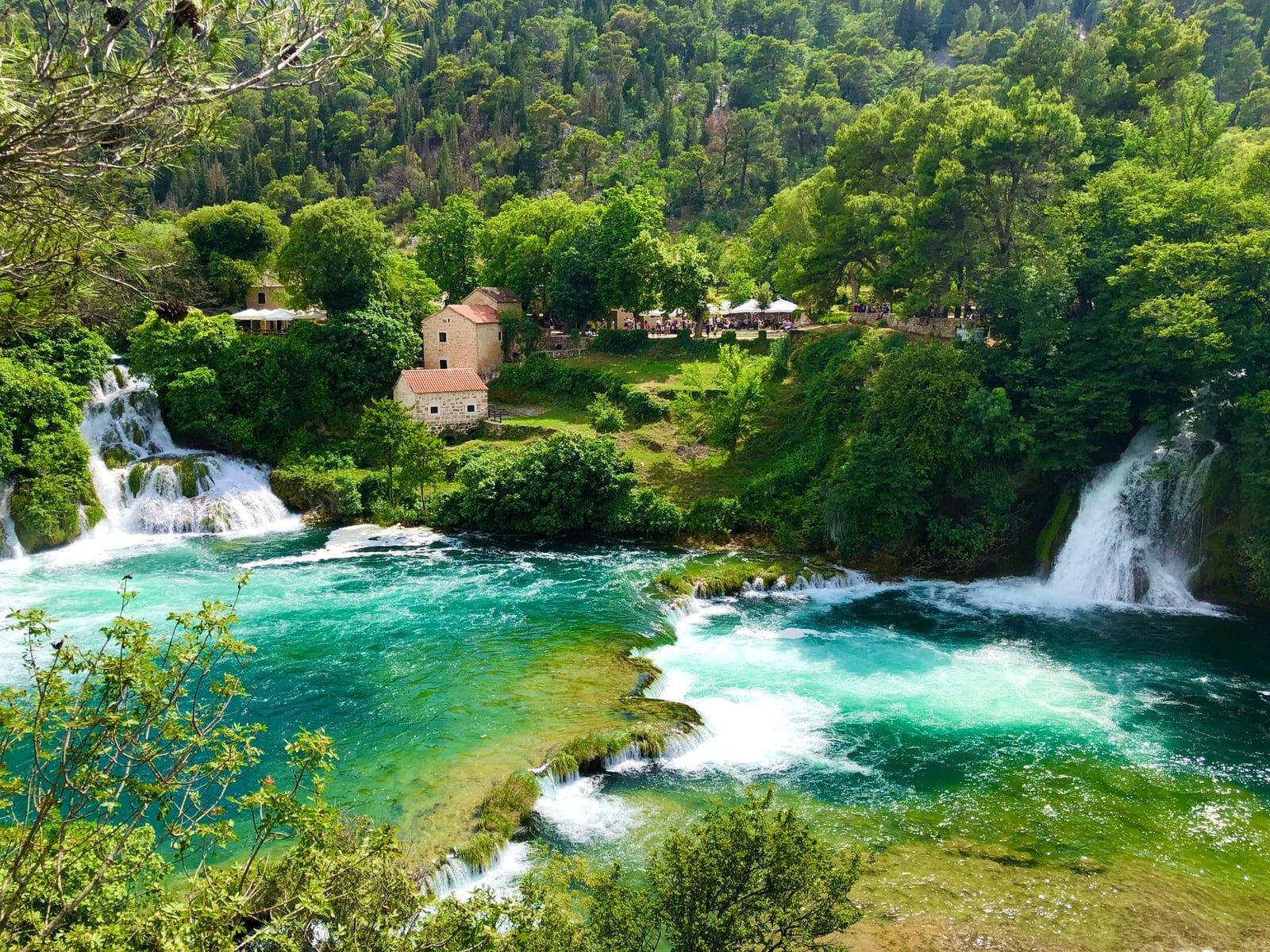
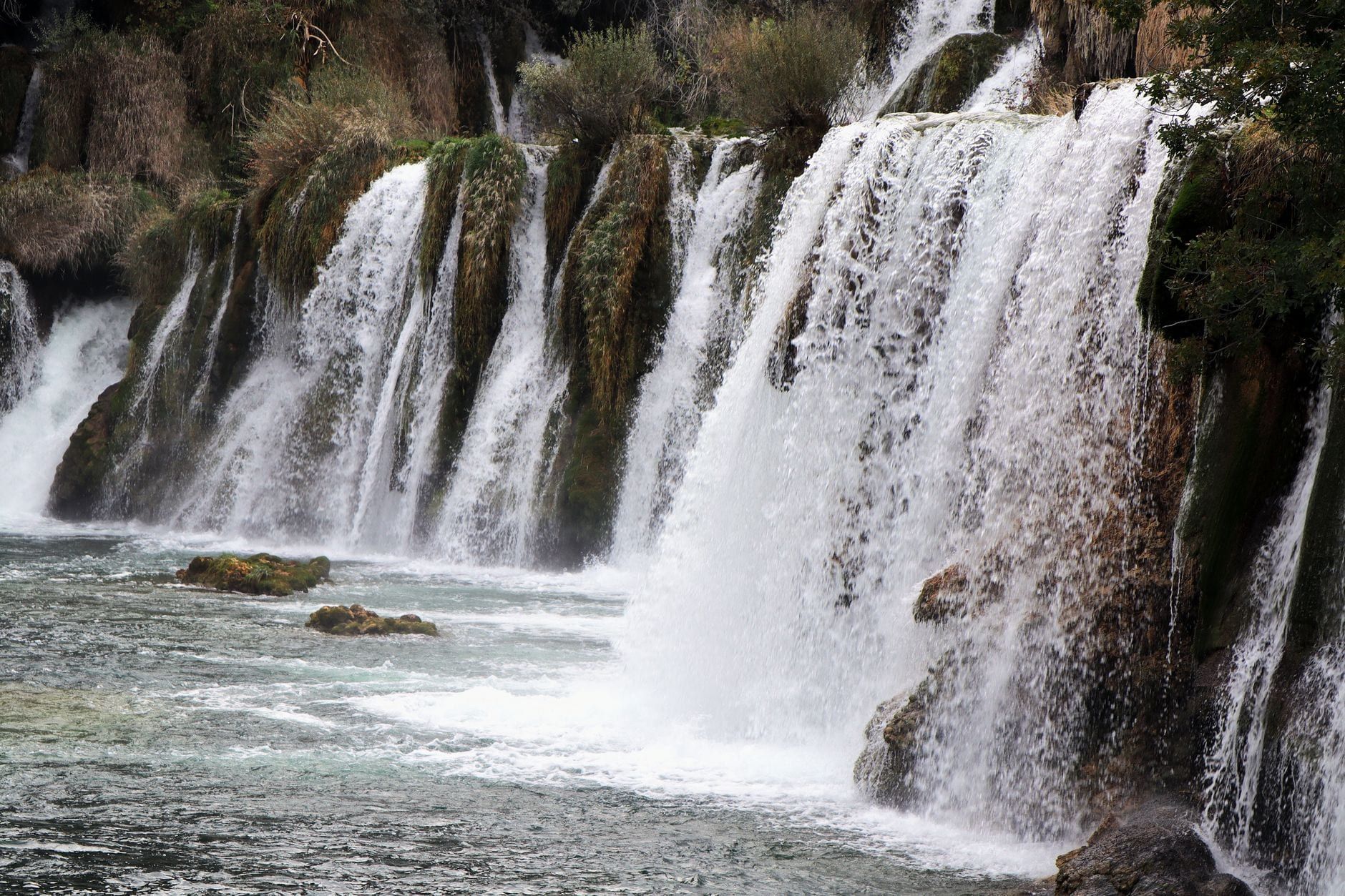
Krka National Park squeezes seven travertine waterfalls, a chain of boardwalks and a 15th-century island monastery into 109 km² of central Dalmatia, about 90 minutes from Split. The headliner is Skradinski buk: 17 cascades dropping 45.7 m across an 800-metre barrier that's 200–400 m wide, with wooden walkways threaded straight through the spray. You don't need a week here. You need one well-planned day, and this guide gives you the plan — transport, tickets, entrances, a timed itinerary and the rules that trip people up.
A word of warning before anything else: half the articles ranking for this trip still tell you to pack a swimsuit for the falls. Swimming at Skradinski buk has been banned since January 2021. Skip to the swimming section if that's what brought you here.
Krka National Park Day Trip at a Glance
| Question | Answer |
|---|---|
| Distance from Split | 93 km — 1–1.5 h by car, about 1 h 25 min by bus |
| Distance from Zadar | 76 km — about 1 h by car; up to 12 daily buses to Skradin |
| Adult ticket | €40 Jun–Sep, €20 Apr/May/Oct, €7 Nov–Mar; €30 after 15:00 in summer |
| Swimming | Banned at the falls since 2021; designated areas only, 1 Jun–30 Sep |
| Main entrances | Skradin (arrival by boat) or Lozovac (free parking plus free shuttle) |
| Time needed | Half a day for the falls; a full day with Visovac, Skradin or Šibenik |
Is it worth the day? Yes, with one caveat. The park caps visitors at 10,000 on site at any time and still draws over a million a year, so in July and August you'll share the boardwalk with coach-loads of people. Go in May, June, September or early October, arrive for the first boat, and Krka delivers one of the best days out on the Dalmatian coast for the money.
Is Krka Worth a Day Trip? (Krka vs Plitvice)
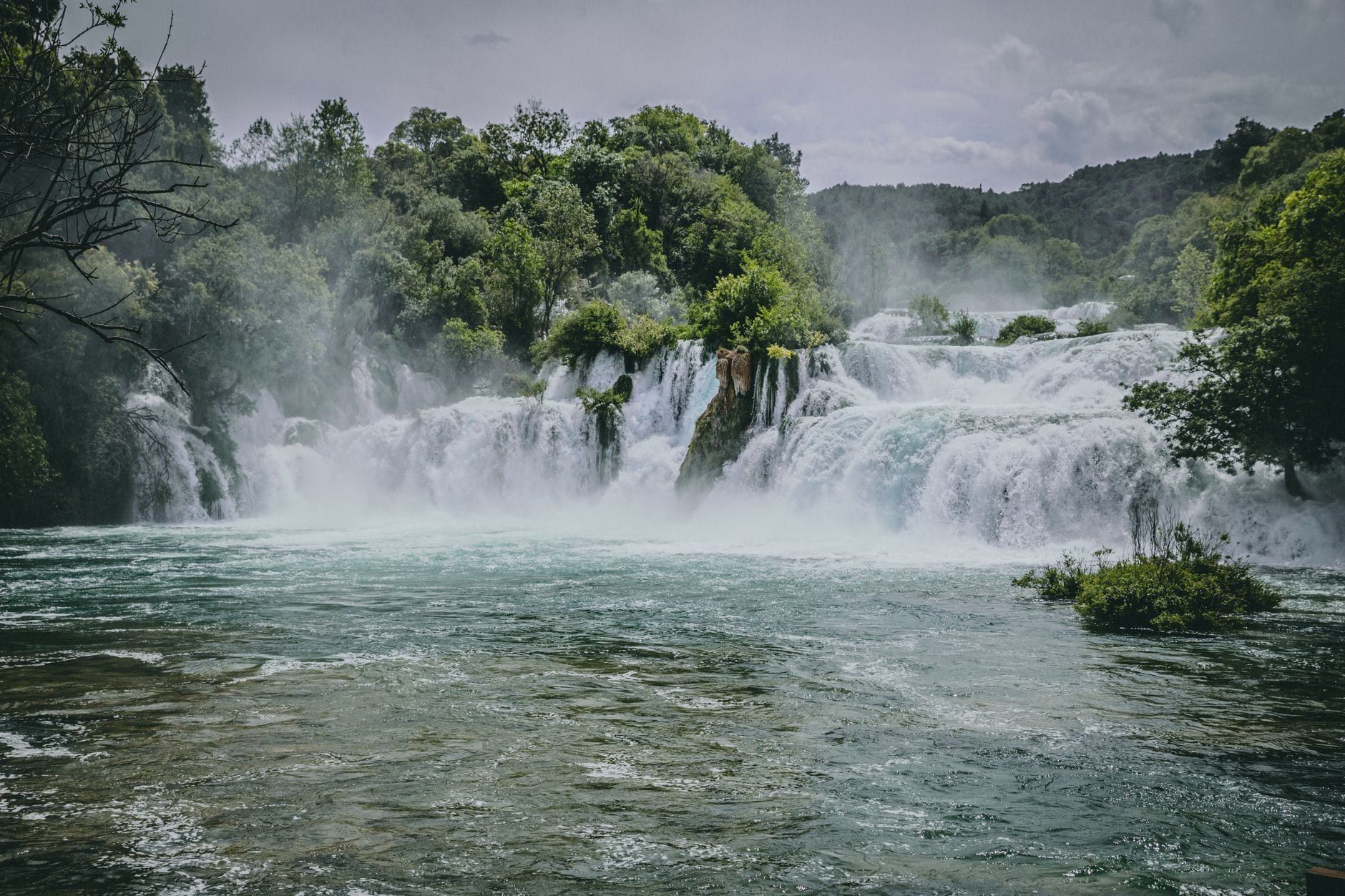
Krka is a river park built on living rock. Mineral-rich water has been depositing limestone barriers across the Krka for millennia, and the result is a staircase of waterfalls you walk through rather than look at — boardwalks cross the river's islands, and the water below the planks is clear enough to count the fish. Skradinski buk alone justifies the trip. Most day trippers never go beyond it, and most don't regret that.
Plitvice is the obvious rival, and the comparison is honest: Plitvice's lake terraces are bigger and more dramatic, but it's a punishing day from the coast — roughly twice the transit time each way. Krka wins for anyone based in Split, Trogir or Zadar who wants a real day trip rather than a 12-hour endurance test. It also pairs naturally with lunch in Skradin or a stop in Šibenik on the way back, which Plitvice can't. If you're torn, our Krka vs Plitvice comparison breaks down the trade-offs; for a single coast-based day, Krka is the sensible pick.
The crowd reality: Skradinski buk in July and August is a conveyor belt. Boats fill, viewpoints queue, and the 30 °C-plus heat has almost no shade over the open sections. Shoulder season flips the experience entirely — same waterfalls, a fraction of the people.
How to Get to Krka: Organized Tour, Rental Car or Bus
Three options, three price points. A tour from Split starts around $25 per person for transport and guide — but check the small print before comparing prices, because many operators sell the transfer only and you'll pay the €20–40 park ticket separately on the day. Tours suit travellers without a car who want zero logistics: hotel pickup, fixed timing, often an add-on such as Šibenik or wine tasting. Compare Krka day tours and confirm ticket inclusion first — it's the single most common booking mistake.
A rental car costs more than the bus but buys the most interesting day. The A1 motorway from Split takes exit 21-Skradin for the Skradin entrance, or exit 22-Šibenik for the Lozovac side, in about an hour to 90 minutes. With your own wheels you can add Roški slap, the Šibenik cathedral or a viewpoint or two that tours skip. Two warnings: the A1 tolls and fuel split across a car of four usually beat the bus fare per person, and GPS apps regularly route people to random fields when you search "Krka National Park" — the park itself warns about this. Navigate to Skradin or Lozovac specifically and follow the brown tourist signs.
The bus is the budget route. Direct coaches from Split's terminal to the "Skradin (Krka NP)" stop — Flixbus and local operator Prijevoz Knežević among them — take 1 h 20 min to 1 h 30 min and cost €12–15 one way, so a peak-season day totals roughly €65–70 per person with the €40 ticket. The catch is the timetable: departures run to seasonal schedules, so you must build the whole day around the return bus, and the bus-and-boat combination really only works for a Skradinski buk visit. For Krka tours from Split, the calculus changes — a tour with the ticket bundled can land close to the DIY cost with none of the timetable risk.
Based elsewhere? From Šibenik, local buses reach the park in 20–30 minutes, but departures are infrequent — miss one and you can wait two or three hours, so check times before committing. Zadar works well: 76 km, about an hour by car, and up to 12 daily buses to Skradin, plus a good spread of tours from Zadar if you'd rather not watch a clock. Trogir sits on the same Split corridor, roughly an hour to the park by road.
Krka Tickets: Prices, What's Included and When to Book
Prices below come from the park's official price list, and they're seasonal enough to plan around — the same waterfall costs nearly six times more in August than in February. After 15:00 in June–September the adult rate drops from €40 to €30, a real option once you know the boats run until evening.
| Season | Adult | Child 7–18 / student |
|---|---|---|
| June–September | €40 (€30 after 15:00) | €15 (€11.25 after 15:00) |
| April, May, October | €20 | €12 |
| November–March | €7 | €4 |
Children under 7 enter free, and entry is free for everyone on 1 May — though that's the single most crowded day of the year. Your one-day ticket admits you to every open land locality in the park, and from 1 April to 31 October it also includes the boat between Skradin and Skradinski buk and the shuttle bus between Lozovac and the falls. Note the catch: each locality can be visited once, so you can't ride the shuttle in from Lozovac and sail back out to Skradin on the same ticket. Plan your route before you buy.
Longer boat excursions cost extra and are sold only on site — you cannot book them online. The Visovac trip is €15 for two hours, the Visovac-plus-Roški-slap combination €20 for four hours, and the Čikola cruise €10 for 45 minutes. Buy online in advance at the park's official shop for the main ticket, especially in July and August when the 10,000-visitor cap can force latecomers to wait at the gate. Full opening hours and entry fees are published by season, so double-check them for your dates — winter visits run on a reduced 9:00–16:00 schedule.
Which Entrance to Use: Skradin or Lozovac
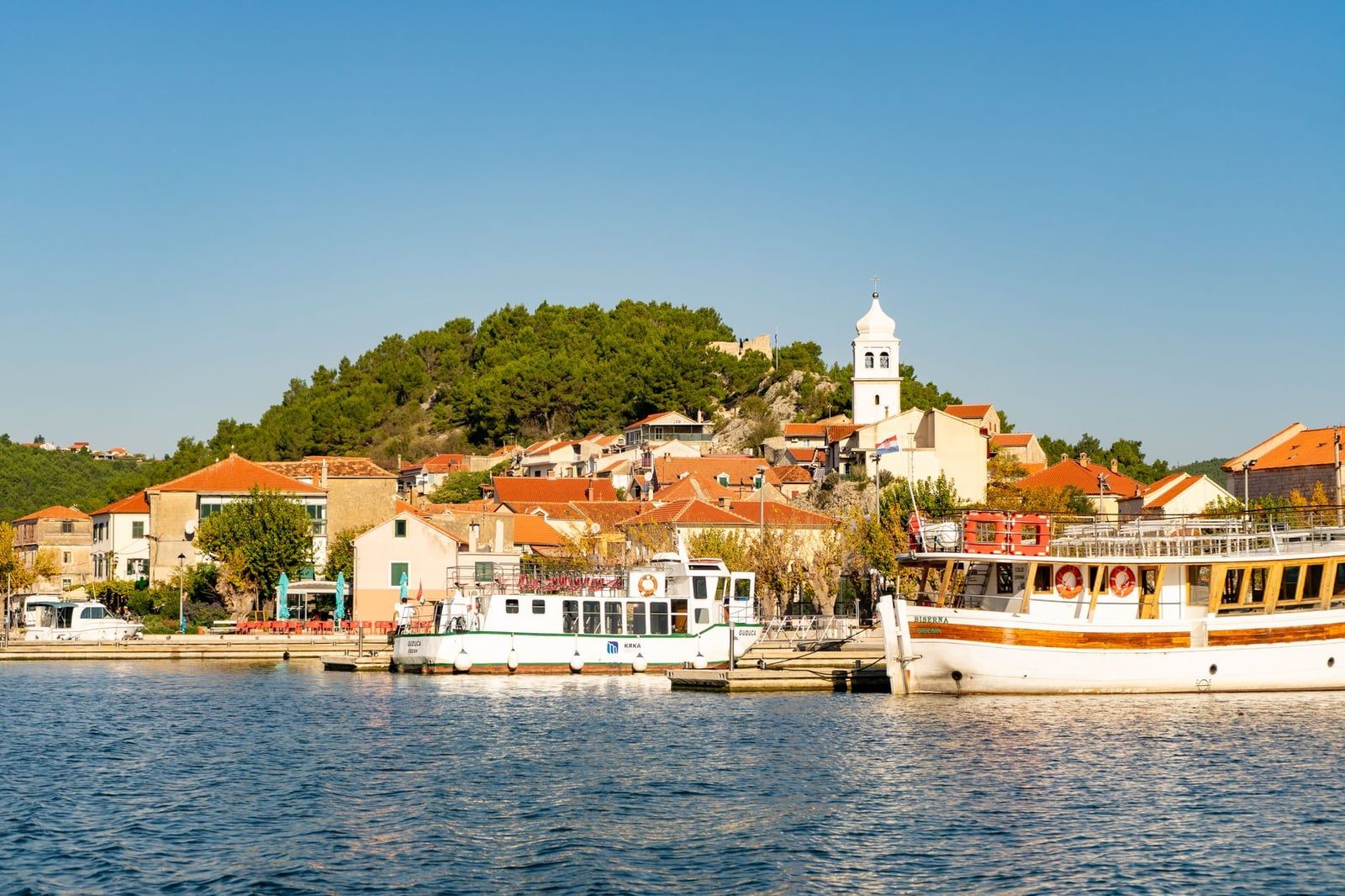
Skradin is the entrance people remember. Your included boat glides about 20 minutes up a widening limestone canyon to the falls landing — the journey itself is half the attraction. Boats sail roughly hourly, every half hour at peak; in July the first departure is 8:00 and the last boat back leaves Skradinski buk around 18:00. Parking in Skradin is paid and often cash-only, around €1 an hour at busy times, and the lots fill on peak days. The town itself is a small marina settlement famous for Skradin risotto and Skradin cake, which is reason enough to plan lunch around your boat times.
There's also a walk-in option almost nobody takes: a riverside forest path from the blue bridge in Skradin runs about 4 km one-way into the park, so you can walk in and ride the boat back. It's flat, shaded and quiet — the closest thing Krka has to a crowd-dodge.
Lozovac is the efficiency choice. It's the closest entrance to the falls, has a large free car park, and a free shuttle bus covers the steep gravel track down to Skradinski buk in about five minutes. You can walk down instead, but it's a punishing climb back up in summer heat. Drivers should default to Lozovac; the rule of thumb is Skradin for the classic boat arrival, Lozovac when you're self-driving or racing the crowds.
What to See on a Krka Day Trip
Everything below is ranked by priority for a single day. The waterfalls of Krka number seven in total, but a day tripper realistically sees two, maybe three of them — and that's plenty.
Skradinski Buk: the boardwalk loop
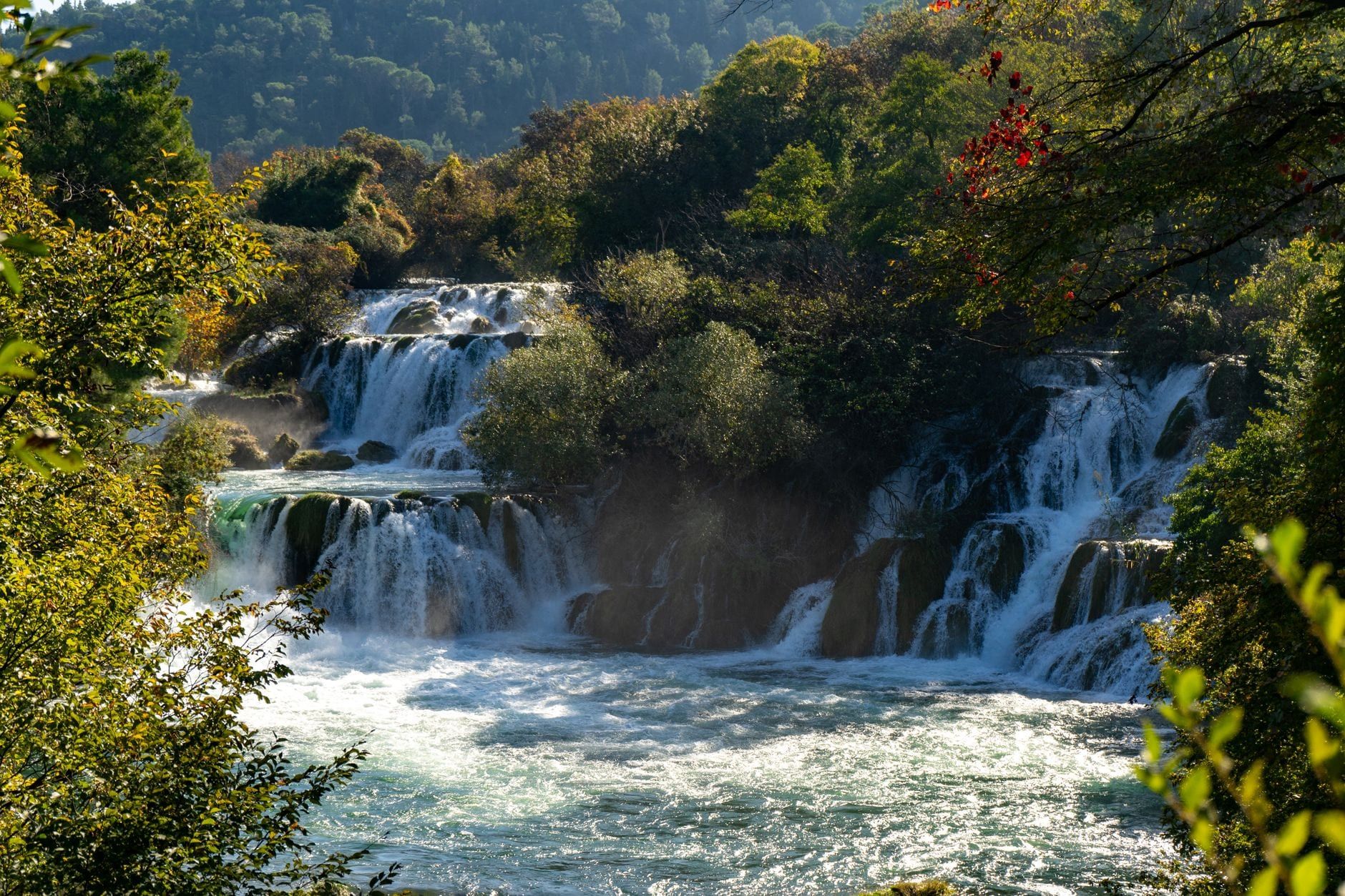
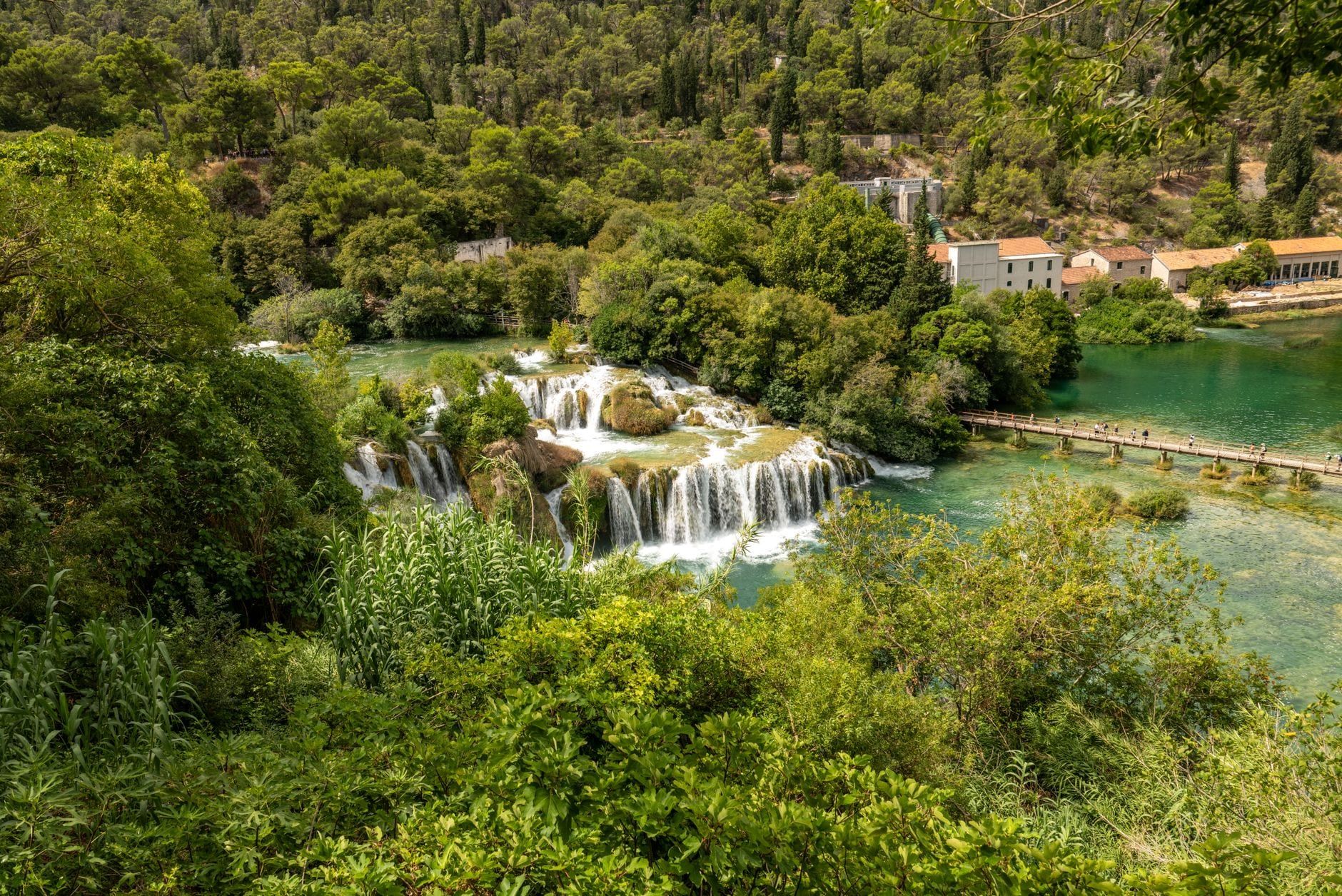
The loop itself is about 875 m of wooden walkway crossing the river's islands and thresholds, and the walking takes 60–90 minutes. With photo stops, the mills and the exhibits, plan two to three hours. The Krka fans out here into 17 cascades over 800 m — stand on the bridges mid-loop and you're surrounded by falling water on three sides. The pools between the barriers are glass-clear and thick with fish. Get the circuit done before 11:00 and you'll have viewpoints to yourself; by noon the boardwalk bottleneck sections are single-file.
The watermills and ethno village
Six restored watermills stand in an ethno-village by the falls, some still grinding flour the traditional way. At the end of the trail you'll reach something stranger: the Jaruga hydroelectric plant of 1895, which made nearby Šibenik the first city in the world lit by alternating-current hydroelectric power — two days after Niagara. It's a five-minute look, and worth it.
Food and drink inside the park
Snack stalls and restaurants sit by the mills, and they price for a captive audience. Bring your own water at minimum, and if you're carrying a picnic, the quiet spots along the walk-in path from Skradin beat the benches at the falls.
Visovac island monastery
A Franciscan monastery has stood on Visovac, a tiny island in a broad lake, since 1445. The €15 boat excursion from Skradinski buk takes two hours with a 30-minute stop on the island — buy it on site only, since these trips can't be reserved online. If your day is tight or the jetty queue is long, skip it without guilt; the island is a highlight, not the point.
Roški slap
Krka's second waterfall is a stair-step chain of low cascades and tufa islands — locals call them the "necklaces" — beneath steep canyon walls, with a 22.5 m main drop. It's about a 30-minute drive further in via the Laškovica side, or the €20 four-hour boat tour from Skradinski buk with a 90-minute stop. Either way, it's dramatically quieter than Skradinski buk. If you have a car and one extra hour, this is the best spend of it.
Manojlovac
Skip it in late summer. Manojlovac is among the park's more dramatic viewpoints when the river runs high in spring, but by August the flow is often a trickle and it closes entirely from November to March. Check conditions before you drive out for it.
Beyond the gate: Skradin and Šibenik
The two best add-ons sit outside the park. Skradin is the lunch stop: order the risotto, which simmers for hours and is the town's signature dish. Šibenik, about 20 minutes away, is a proper Dalmatian old town whose Cathedral of St James is UNESCO-listed — a natural final stop on the drive back toward Split, and closer to the park than Split itself.
A Realistic Krka Day Trip Itinerary
Here's the day, timed to the park's actual operations rather than to optimism. This version assumes Skradin entry in peak season; the Lozovac variant just replaces the boat with the shuttle.
- 07:15 — Leave Split by car, bus or tour; the A1 makes it 90 minutes.
- 08:30 — Arrive Skradin; tickets ready, walk straight to the boat jetty.
- 09:00 — First available boat up the canyon to Skradinski buk.
- 09:20–12:00 — Boardwalk loop, mills and viewpoints before the coaches land.
- 12:30 — Return boat to Skradin; risotto lunch in town.
- 14:00 — Add-on window: Šibenik cathedral, or Roški slap if driving.
- 16:00 — Back in Split, with the whole evening intact.
Flex it by transport. Tours run on fixed timings — usually 4–5 hours in the park, sometimes with a Šibenik stop built in — so your only job is knowing whether the ticket is included. With a car, add Roški slap and Šibenik and let the day run to 18:00. On the bus, anchor everything to the return departure; check the seasonal timetable that morning so you're not stranded in Skradin. The full Split to Krka transport guide has the current options.
How long do you really need? Four to five hours covers the boat, the loop and lunch — one family found 10:00–15:00 plenty. Add the Visovac excursion, Roški slap or a slow Skradin afternoon and it becomes a full day. If you're staying in Split, base yourself near the Old Town or the main bus station so an early departure is a ten-minute walk, not a negotiation.
Can You Swim at Krka Waterfalls
No — and this is where most older guides mislead you. Swimming at Skradinski buk and across most of the park has been banned since 1 January 2021, to protect the travertine barriers from damage by feet and sunscreen. The rock is alive, in a literal sense: it's still forming, and thousands of swimmers a week were killing it. Blog posts and even some tour ads still show people in the water at the falls because the photos predate the ban — don't book anything based on them.
Where you can get in the water: three designated areas — Roški slap, Stinice and Pisak (Remetić) — are open for swimming from 1 June to 30 September, weather and water levels permitting, at your own risk. Jumping or diving off the falls or bridges is prohibited everywhere. The practical alternative is Skradin's river beach right by the park entrance: shallow entry, shade, and no need to haul a wet swimsuit around the boardwalk loop. Swim there after the park, not during.
Best Time to Visit Krka (and How to Beat the Crowds)
May, June, September and early October are the sweet spot: temperatures around 18–25 °C, the full 8:00–19:00 or 8:00–20:00 schedule, every boat and shuttle running, and crowds noticeably thinner than midsummer. Spring brings the strongest waterfall flow and the lavender and scrub in flower. July and August are hot — regularly above 30 °C with little shade on the open viewpoints — and busy enough that capacity limits occasionally make latecomers wait at the gate.
Two crowd tactics that actually work. First, arrive for opening: be at the Lozovac car park by 8:00 in summer and take the first shuttle down, or catch the first boat from Skradin — early visitors get the boardwalk nearly to themselves. Second, go late: from 15:00 in June–September the adult ticket drops from €40 to €30, tour buses are leaving, and you still have until 20:00 in midsummer. It's a legitimate half-price strategy, not a hack.
Winter, from November to March, is a different product. Entry is €7, the crowds vanish, and the river runs at its fullest — the clearest views of the barriers and canyon rock all year. But the boats and shuttle don't run, so you walk in, hours shrink to 9:00–16:00, and Manojlovac, Burnum and the island visits are closed. The park shuts entirely on 25–26 December, and on 1 January only the Lozovac entrance opens.
What to Pack for a Krka Day Trip
Keep it light — you're carrying it across 875 m of boardwalk in the sun.
- Grippy walking shoes: the boardwalk and steps are wet and slippery.
- Refillable water and sun protection for the exposed sections.
- A light layer for the early start and the boat ride.
- Swimsuit and towel only for designated areas or Skradin's beach.
- Card plus some cash: Skradin parking is often cash-only.
- Downloaded e-tickets — phone signal at the entrances can be weak.
Two extras worth knowing: the park has the second-highest lavender density in Europe, so bees and wasps are a constant presence — carry medication if you're allergic. And leave the drone at the hotel; flying one in the park is prohibited outright, with Croatian fines running €650–€3,300 per incident.
FAQs About a Krka National Park Day Trip
Can you still swim at Krka waterfalls?
No. Swimming at Skradinski buk has been banned since 1 January 2021 to protect the travertine barriers. From 1 June to 30 September you can swim at three designated areas — Roški slap, Stinice and Pisak (Remetić) — and Skradin's river beach by the park entrance is an easy alternative.
How far is Krka National Park from Split and how long does it take?
About 93 km from Split depending on the entrance — roughly 1.5 hours by car via the A1, or 1 h 20 min to 1 h 30 min by bus to Skradin followed by the park boat. From Zadar it's 76 km, about an hour.
How much does a Krka National Park day trip cost?
Adults pay €40 in June–September, €20 in April, May and October, and €7 from November to March, dropping to €30 after 15:00 in peak months. Children 7–18 pay €15/€12/€4 by season, and under-7s enter free. The ticket includes the Skradin boat and the Lozovac shuttle in season.
Do you need to book Krka tickets in advance?
Recommended in July and August, when the 10,000-person on-site cap can force latecomers to wait at the gate — buy through the park's official online shop. In shoulder season, buying at the entrance is usually fine. Boat excursions to Visovac cannot be booked online at all; they're sold only on site.
How long do you need at Krka National Park?
Budget 4–5 hours minimum: about 2–3 hours for the Skradinski buk loop plus the boat or shuttle each way. Make it a full day if you add a Skradin lunch, Šibenik, or the two-hour Visovac excursion.
Krka or Plitvice — which is the better day trip?
For most coast-based visitors, Krka: it's about 1.5 hours from Split, an easier day, and pairs naturally with Skradin or Šibenik. Plitvice has bigger, more dramatic scenery but makes for a much longer, more tiring day from the coast.
What does the Krka entrance ticket include?
Entry to every open land locality that day (one visit each) plus, from 1 April to 31 October, the Skradin–Skradinski buk boat and the Lozovac shuttle. Longer excursions cost extra: €15 for Visovac, €20 for Visovac plus Roški slap, €10 for the Čikola cruise.
Is Krka National Park doable with kids or a stroller?
Yes. The boardwalk is mostly stroller-compatible with a few stepped, narrow sections — a child carrier is easier — and children under 7 enter free. Take the Lozovac shuttle down rather than the steep gravel walking path, and watch kids closely on the wet planks and open edges.