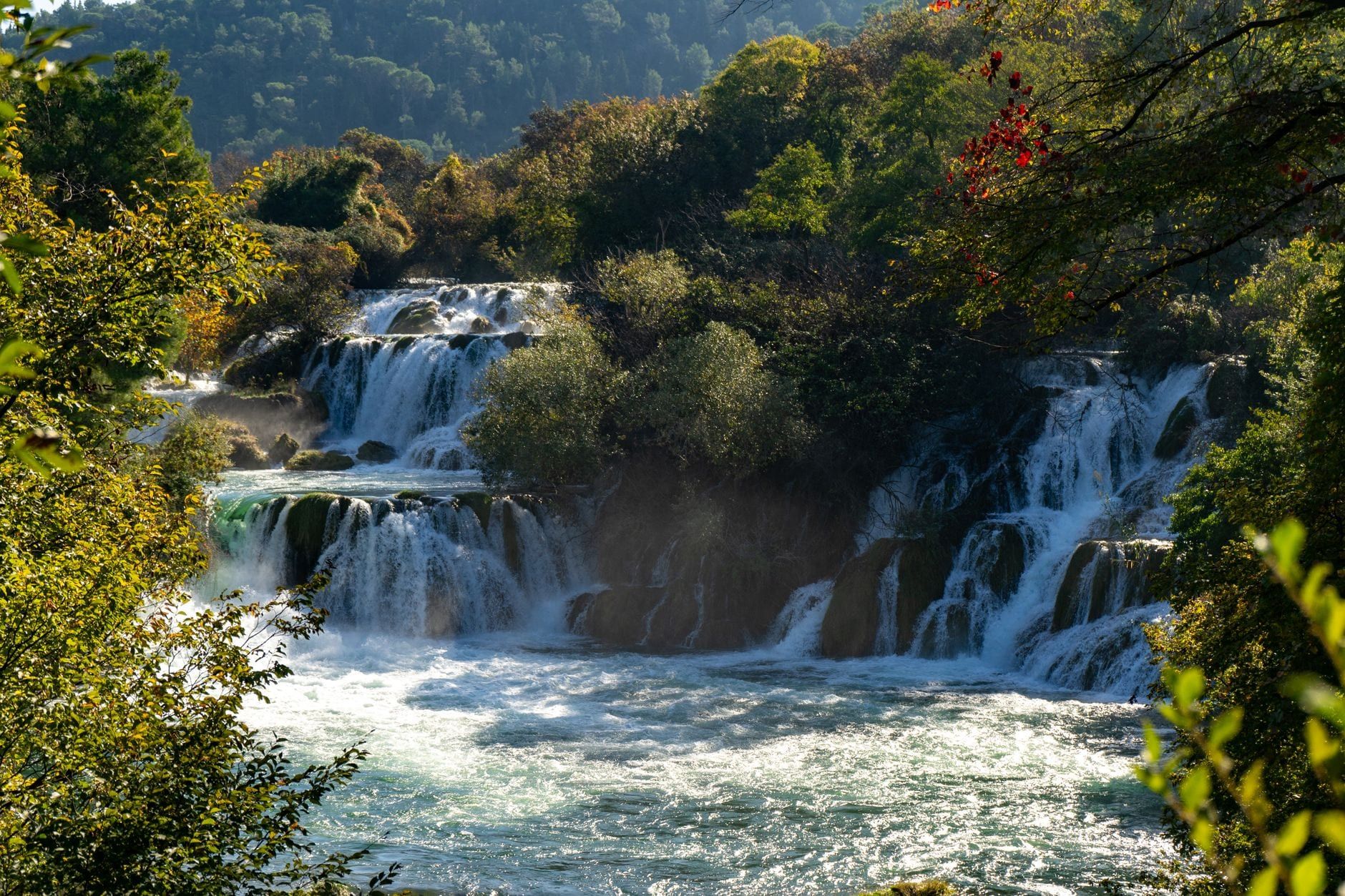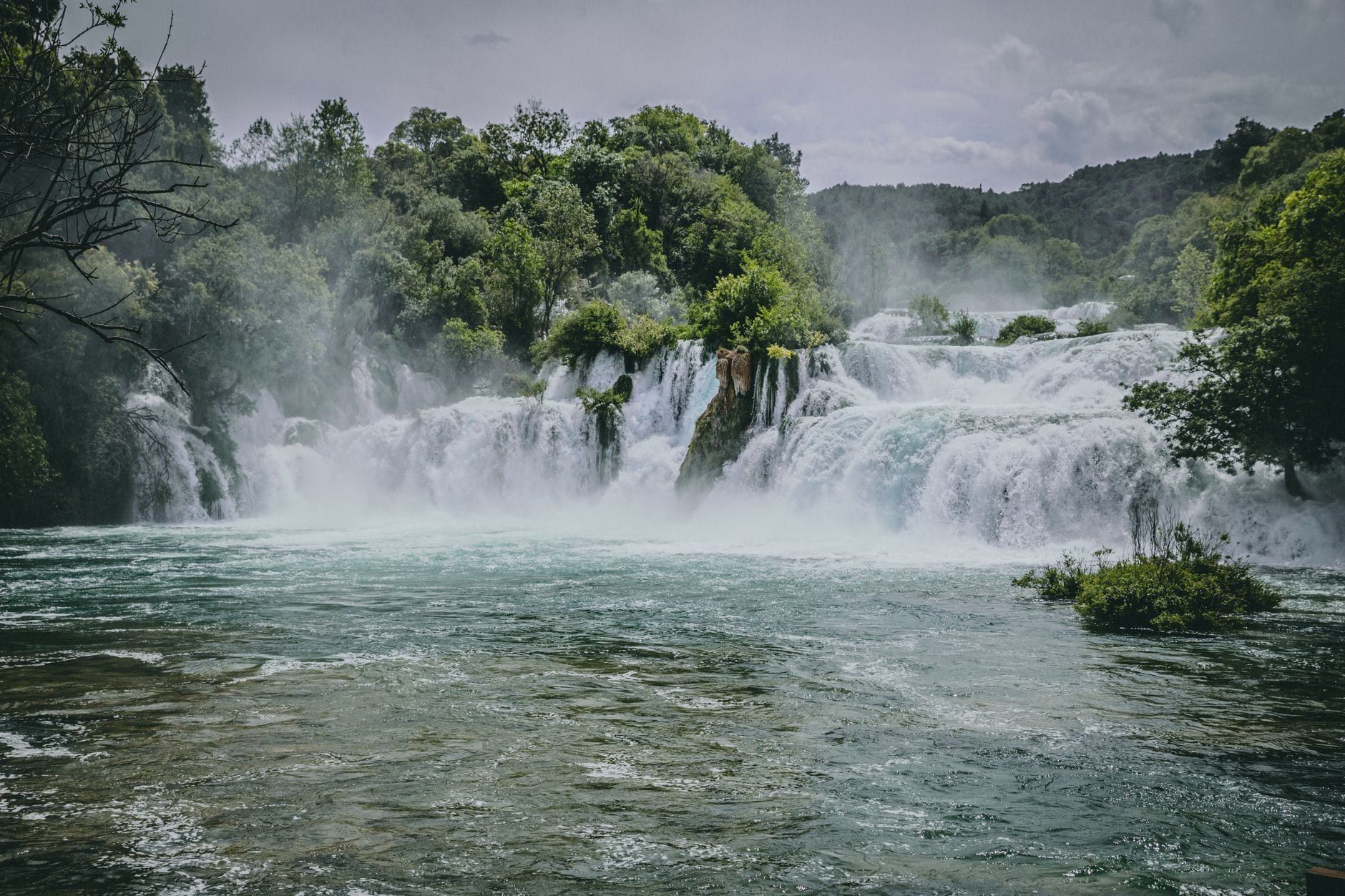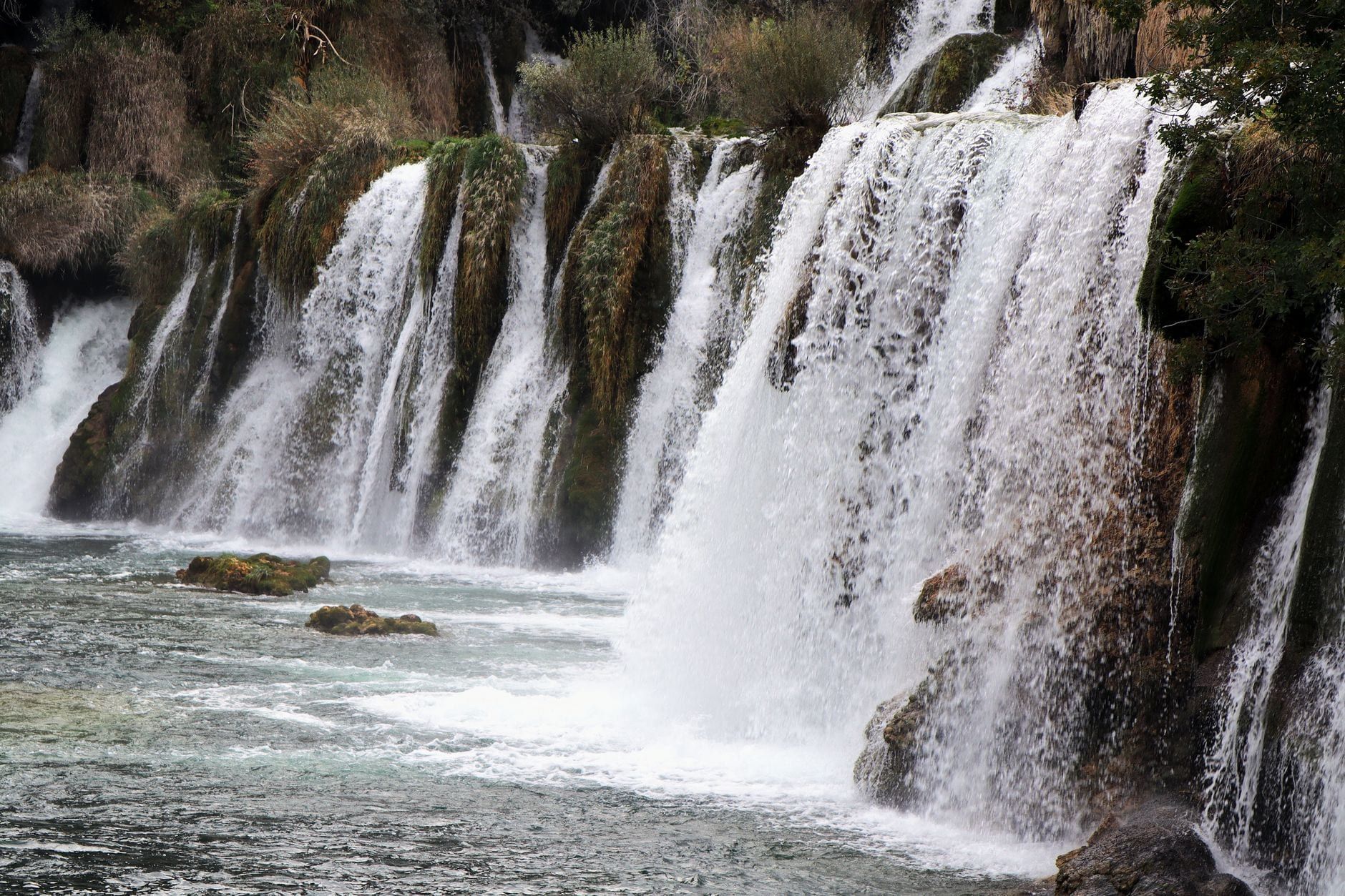
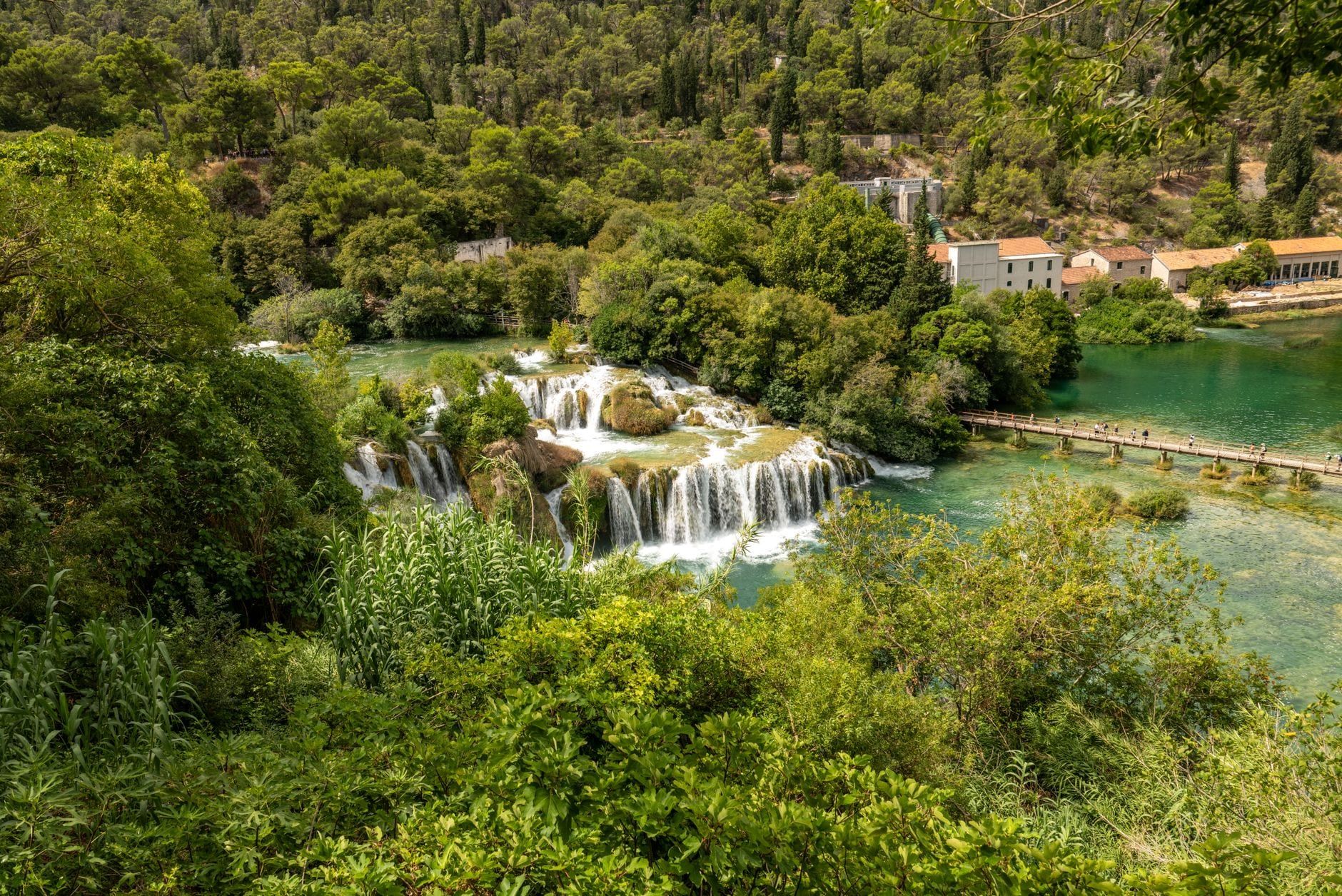
Krka National Park starts barely an hour from Zadar — 75 km to the Skradin entrance, 88 km to Lozovac — which makes it the easiest big-sight day trip on this stretch of the coast. The payoff is Skradinski buk: seventeen travertine cascades dropping 45.7 metres across an 800-metre barrier, threaded together by wooden boardwalks. You can get there by bus, rental car, organized tour or private transfer, and this guide prices out all four, plus the ticket costs and the hour-by-hour plan for the day.
Krka from Zadar at a Glance
Zadar's main bus station sends up to twelve buses a day to Skradin in high season, and the drive south on the A1 motorway takes about an hour. Either way you can leave after breakfast and be standing at the falls before noon, which is why Krka — not Plitvice — is the waterfall trip Zadar visitors actually take. If you're weighing the two parks, our Krka vs Plitvice comparison breaks down the trade-offs; the short version is that Krka is closer, cheaper to enter off-peak, and doable without a car.
| Option | Time each way | Typical cost | Best for |
|---|---|---|---|
| Bus to Skradin | ~50 min | €11–12 one-way, €19–20 return | Travelers without a car |
| Rental car | ~1 h via the A1 | Fuel and tolls; free parking at Lozovac | Families and upper-park sights |
| Organized tour | ~1 h each way, 8–10 h total | From ~€25 per person, entry usually extra | Anyone who wants zero logistics |
| Private transfer | ~1 h | ~€115 by car, ~€20–25 more for a minivan | Comfort and door-to-door timing |
Pick your row and jump to the section below. The only decision that genuinely binds you is the bus return schedule, so read that part before committing.
Taking the Bus from Zadar
Buses leave from Zadar's main bus station at the corner of Ul. Ante Starčevića and Ul. kralja Tvrtka, about 2 km from the Old Town. The ride to Skradin takes 50 minutes to an hour, and most departures are run by Prijevoz Knežević. A one-way adult ticket costs €11–12; book the return with the same operator and it's €19–20 total, with discounted fares for children under 12. Buy at the station or online.
Frequency swings hard with the season. Winter sees only a few departures a day; summer runs up to seven daily — some timetables list as many as twelve — with the earliest leaving Zadar around 9:30 am. There is no train option at all: no railway reaches Krka, so bus, car, tour or transfer are the whole menu. Our guide to getting to Krka covers the full route picture.
The bus stops in Skradin village, about a kilometre from the boat dock. From there a 20-minute park boat carries ticket-holders up the canyon to Skradinski buk — it's included in your entrance ticket and runs about hourly in summer.
Sample timetables show the last Skradin departures toward Zadar at roughly 17:15 and 18:30. Board the 9:30-ish bus out and that gives you around five hours at the park — plenty for the main falls and a boat excursion, tight if you planned a slow day. Check the current timetable the week you travel; it shifts between seasons, and in July the return buses fill up.
Driving from Zadar (and Which Entrance to Use)
Driving takes about an hour from Zadar via the A1 corridor. Leave the motorway at the Skradin exit for the Skradin entrance, or the Šibenik exit for the Lozovac side. One warning from the park itself: GPS navigation routinely steers drivers into fields here — follow the brown tourist signs to the entrance desks instead.
Skradin is the scenic entrance. Parking in town is paid, and from the dock the included 20–25 minute boat runs up a widening limestone canyon to the falls — the best arrival of the four options. The catch: boats operate April to October only, sometimes starting in March, so in winter this entrance effectively closes.
Lozovac is the driver's entrance, with a large free year-round parking lot. From April to October a free park shuttle covers the ten minutes down to the trailhead, and staff check tickets before you board; in the off-season you drive yourself down. Bring small children or stiff knees, and this is the side you want.
Families can halve the walking by hiking one way between Lozovac and Skradinski buk and catching the free park bus back to where they entered. One rule to know: your ticket admits you to each locality once, so you can't shuttle in from Lozovac and then sail back out to Skradin on the same ticket. A riverside walking path also leads from Skradin to the falls if you'd rather skip the boat entirely.
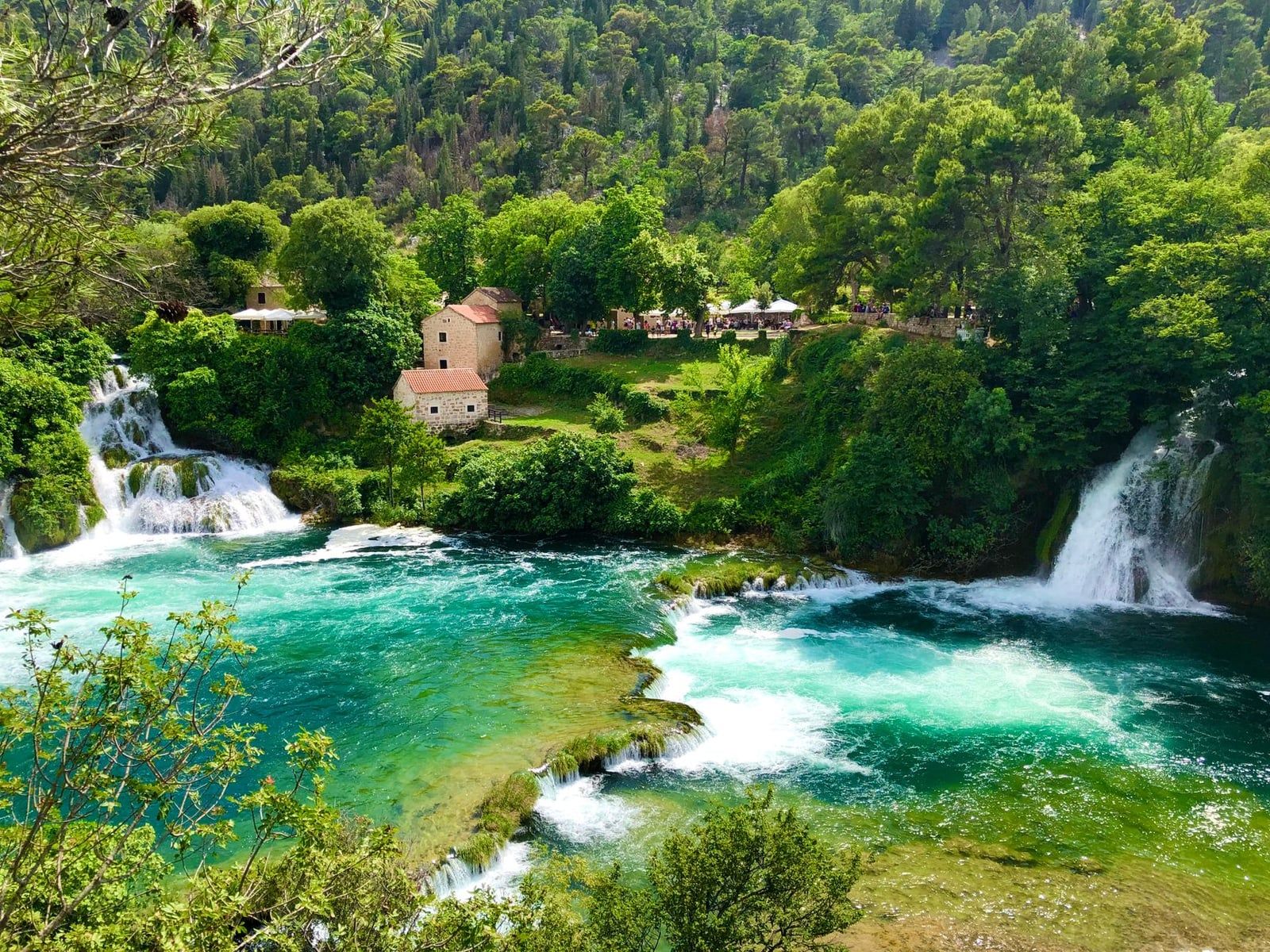
With a car you can also reach the upper park: Roški slap's stair-stepped cascades, the Krka Monastery, the Roman amphitheatre site at Burnum, and the jetty for Visovac island. No extra entrance fee applies at these land sites — the Visovac boat transfer costs €15 — and Burnum closes November to March.
Guided Tours and Private Transfers from Zadar
Zadar-based day trips typically run 8 to 10 hours door to door. Most include hotel pickup in Zadar, though the exact pickup point varies by agency, and some combine the park with Šibenik or a wine and olive-oil tasting. Compare tours from Zadar side by side before booking anything.
Three gotchas recur. Park entrance tickets are usually not in the tour price and cost up to €40 in summer — confirm before you pay. The 'included boat cruise' advertised by many operators is the national park's own Skradin ferry, which every ticket-holder gets anyway. And some operators buy tickets in bulk at a discount, so ask whether theirs is cheaper than buying at the gate. A wider look at all Krka tours shows which itineraries bundle what.
A private transfer Zadar–Skradin runs around €115 with a regular car, roughly €20–25 more for an eight-seat minivan — a reasonable split for a group of four. Taking a taxi instead? Agree the fare before leaving Zadar; meters on this route are not the norm. For full flexibility, private tour options add a guide and a set itinerary to the same door-to-door comfort.
Entrance Tickets and What the Day Costs
The official park price list sets adult entry at €40 in June–September, €20 in April, May and October, and €7 from November to March. Children aged 7–18 and students pay €15, €12 and €4 in those same seasons, and under-7s enter free all year. Groups of adults pay less, and entry is free for everyone on 1 May.
| Ticket | Jun–Sep | Apr, May, Oct | Nov–Mar |
|---|---|---|---|
| Adult | €40 (€30 after 15:00) | €20 | €7 |
| Child 7–18 / student | €15 / €15 | €12 / €12 | €4 / €4 |
| Under 7 | Free | Free | Free |
| Includes | Skradin boat + Lozovac shuttle | Skradin boat + Lozovac shuttle | Boats not running |
The ticket covers the return boat between Skradin and Skradinski buk and the Lozovac shuttle, both running 1 April to 31 October — in winter, with the boats laid up, you walk or drive in from Lozovac. Tickets aren't sold in time slots, but the park applies capacity limits in July and August, and once it's full you wait. Buying online through the official park shop (shop.np-krka.hr) skips both the queue and the risk; current opening hours and fees are worth a check before any off-season trip.
For budgeting, a summer day trip costs an adult around €80 in total: roughly €20 return bus, €40 entry and €20 for lunch. Drivers with fuel and tolls land near the same figure. Arrive after 15:00 in June–September and the ticket drops to €30 — pointless on a day trip from Zadar, but useful if you're staying closer.
A Day Trip Itinerary from Zadar
Take the 9:30 bus, or leave Zadar by car around 10:00, and you're at Skradin by late morning. Fifteen minutes of queueing and a 20-minute canyon cruise later, you're at the falls. Drivers entering at Lozovac follow the same clock, minus the boat. Our fuller Krka day trip itinerary covers slower variants of this plan.
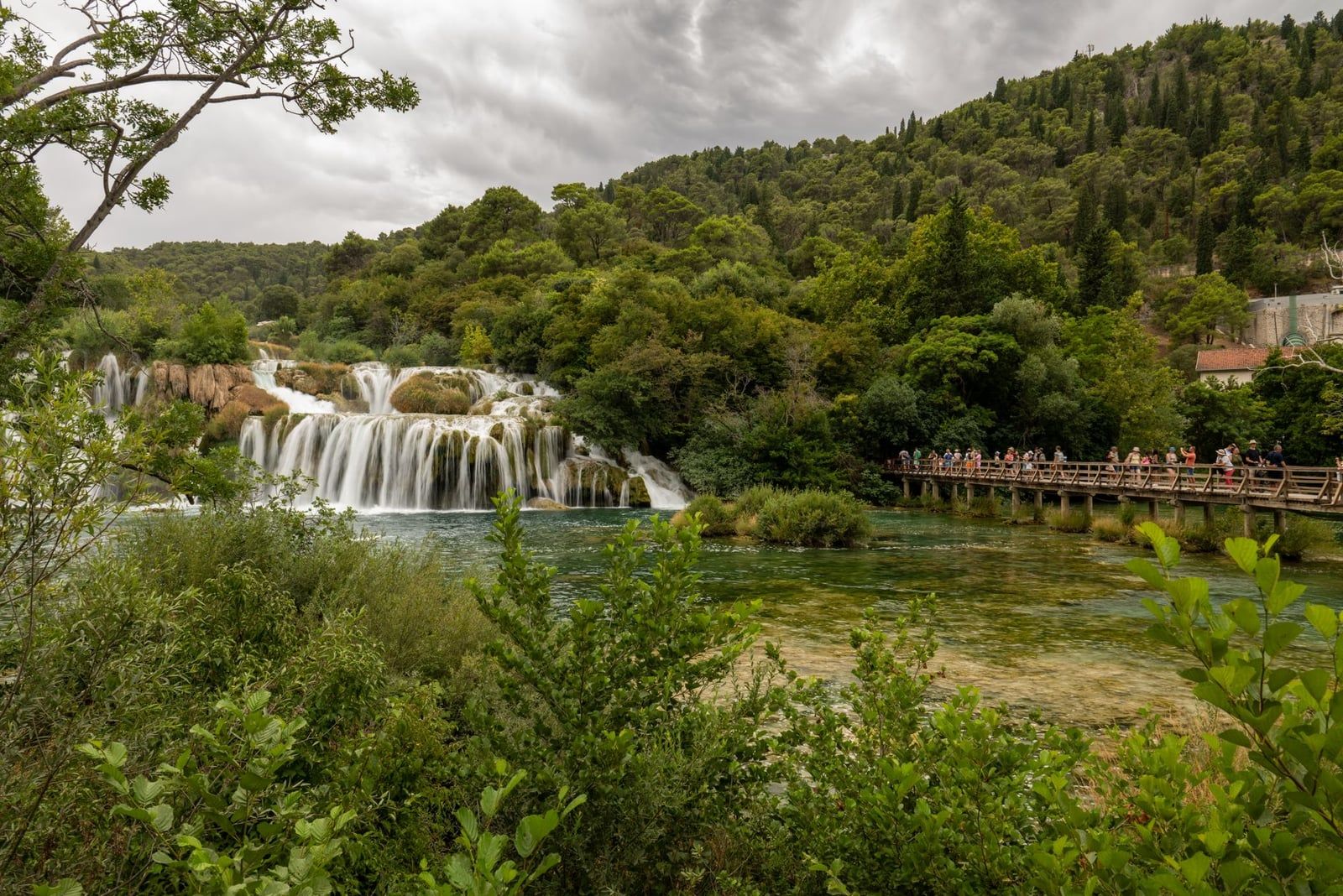
The Skradinski buk loop is a 1.9 km educational trail on boardwalks that cross islands and travertine thresholds as the river splits into its seventeen cascades. The walking itself takes 60–90 minutes; with photo stops, the watermills and the ethno-village exhibits, most people spend 2.5–3 hours. Walk the loop clockwise — you'll face fewer oncoming groups and hit the big viewpoints first. Near the end you pass the Jaruga hydroelectric plant of 1895, switched on two days after Niagara's, which made nearby Šibenik the first city in the world lit by alternating-current hydro power.
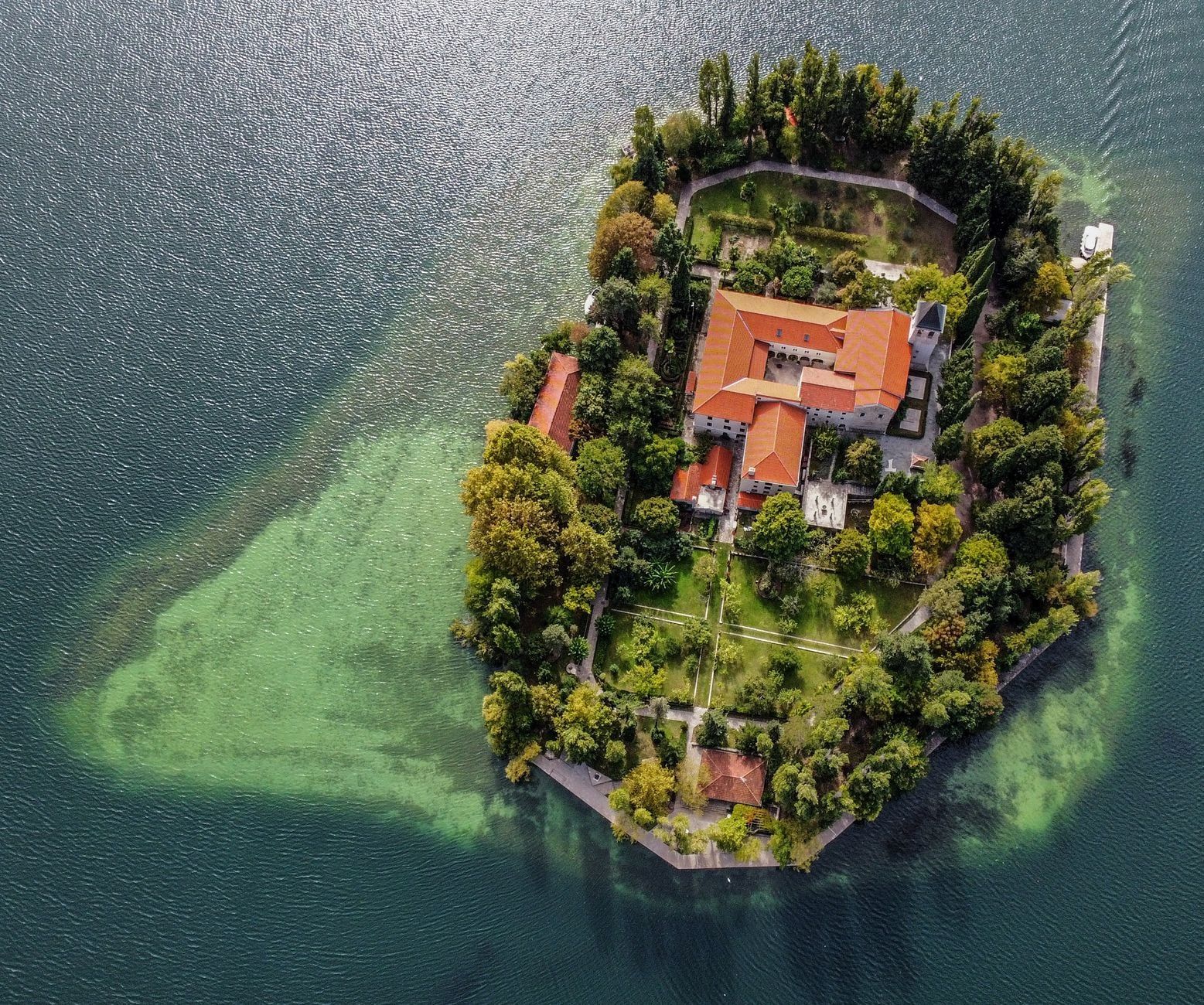
From the Skradinski buk jetty, park boats run excursions to Visovac island and its Franciscan monastery, founded in 1445 on a sliver of land in a broad river lake. The 2-hour Visovac trip costs €15 with a 30-minute stop on the island; the 4-hour Visovac plus Roški slap tour is €20. These are sold only on site, never online, so build in queue time if you want one. Details on all of them are in our guide to Krka's waterfalls.
Skradin itself earns your last hour: a marina town small enough to see over lunch, with swim spots in the river outside the falls area. Then the 17:15 or 18:30 bus, or your car, and you're back in Zadar in time for the Sea Organ — 70 metres of steps whose pipes sound when the waves push through them — beside the solar Greetings to the Sun installation. Count four hours minimum in the park; with a boat excursion, six.
Before You Go: Swimming, Seasons and Crowds
Ignore any article that tells you to pack a swimsuit for the falls. Swimming at Skradinski buk has been banned since 1 January 2021, to protect the travertine barriers that take centuries to form, and jumping from the falls or bridges is prohibited everywhere. The ban is enforced.
Swimming is still allowed in three designated areas — Stinice, Remetić–Pisak, and downstream of Roški slap — but only from 1 June to 30 September, at your own risk and depending on water levels. On a day trip from Zadar, treat swimming as a bonus rather than the plan.
For season, the sweet spots are May, June, September and early October: temperatures around 18–25 °C, all boats running, full opening hours, and a €20 ticket instead of €40. July and August bring heat above 30 °C, tour-bus crowds on the boardwalks, and capacity limits that can leave latecomers waiting at the gate. Winter is the cheapest and emptiest time — €7 in, the river at its fullest, no boats, and hours cut to 9:00–16:00.
Whenever you go, three tactics hold: arrive at opening time, go on a weekday, and walk the loop clockwise. In July and August, being at the entrance by 8:00 is the difference between a quiet boardwalk and a queue.
FAQ: Zadar to Krka
How far is Krka National Park from Zadar?
About 75 km to the Skradin entrance and 88 km to Lozovac — roughly an hour by car via the A1, or 50 minutes to an hour by bus to Skradin.
How much is the bus from Zadar to Krka?
Around €11–12 one-way and €19–20 for a same-operator return, with discounts for children under 12. Most departures are run by Prijevoz Knežević; buy at Zadar bus station or online.
Can you swim at Krka National Park?
Not at the falls — swimming at Skradinski buk has been banned since 1 January 2021. Only Stinice, Remetić–Pisak and the stretch below Roški slap are open, 1 June to 30 September, at your own risk.
How much is the entrance ticket to Krka?
Official adult prices are €40 June–September, €20 in April, May and October, and €7 November–March, dropping to €30 after 15:00 in summer. Children 7–18 pay €15/€12/€4 and under-7s enter free. The Skradin boat and Lozovac shuttle are included.
How much time do you need in Krka National Park?
About 2.5–3 hours for the Skradinski buk boardwalk loop, plus an hour for the round-trip boat from Skradin. Budget four hours minimum, or six with a boat excursion to Visovac or Roški slap.
Can you visit Krka from Zadar without a car?
Yes. The bus to Skradin runs up to twelve times daily in summer, and the park boat to the falls is included. But the last Skradin departures are around 17:15–18:30, so you get roughly five hours in the park.
Is there a train from Zadar to Krka National Park?
No. No railway serves the park — bus, rental car, organized tour or private transfer are the only options.
Which Krka entrance should I use — Skradin or Lozovac?
Skradin for the scenic 20–25 minute boat ride (April–October, paid town parking). Lozovac for free year-round parking and a free shuttle down to the trailhead in season. Both reach Skradinski buk on the same ticket.