Plitvice Lakes is the better park; Krka is the better day trip. Almost everything in this comparison follows from that split: Plitvice is bigger, more varied and UNESCO-listed, while Krka sits an hour from the Dalmatian coast and gives you a satisfying half-day without wrecking your itinerary.
This guide compares the two on the things that actually decide it — scenery, trails, tickets, crowds, the swimming rules that changed in 2021, and travel times from Split, Zadar, Zagreb and Dubrovnik. If you have a week, do both; there's a section on the right order at the end.
Krka vs Plitvice at a Glance
Plitvice is the park worth restructuring an itinerary around. Krka is the one you slot into a beach holiday. If scenery is the point of your trip, Plitvice wins on scale and variety; if your holiday is based in Split or Zadar and you want waterfalls without a 5-hour round trip, Krka wins on logistics.
| Krka | Plitvice Lakes | |
|---|---|---|
| Scale & waterfalls | 109 km² canyon; Skradinski buk's 17 cascades | Nearly 300 km²; 16 lakes, 90+ waterfalls |
| Trails | 47 km; one main 60–90 min loop | 36 km, 8 routes, boardwalks over water |
| Time on site | About 3 hours | 5–6 hours minimum |
| Peak ticket (Jun–Sep) | €40 adult | €40 adult |
| Swimming | Banned at the falls; 3 designated areas | Never allowed |
| UNESCO | No | Yes, since 1979 |
Each row above gets its own section below. Short on time? Jump straight to the base-city logistics, the ticket prices, or the five scenarios near the end.
What's Actually Different: Two Parks, Two Characters
The two parks aren't versions of the same thing. Plitvice is a vast mountain-forest system of terraced lakes; Krka is a compact river canyon with a cultural layer stacked on top. Once you grasp that, every comparison below — trails, crowds, cost — falls into place.
Plitvice: lakes stacked in terraces
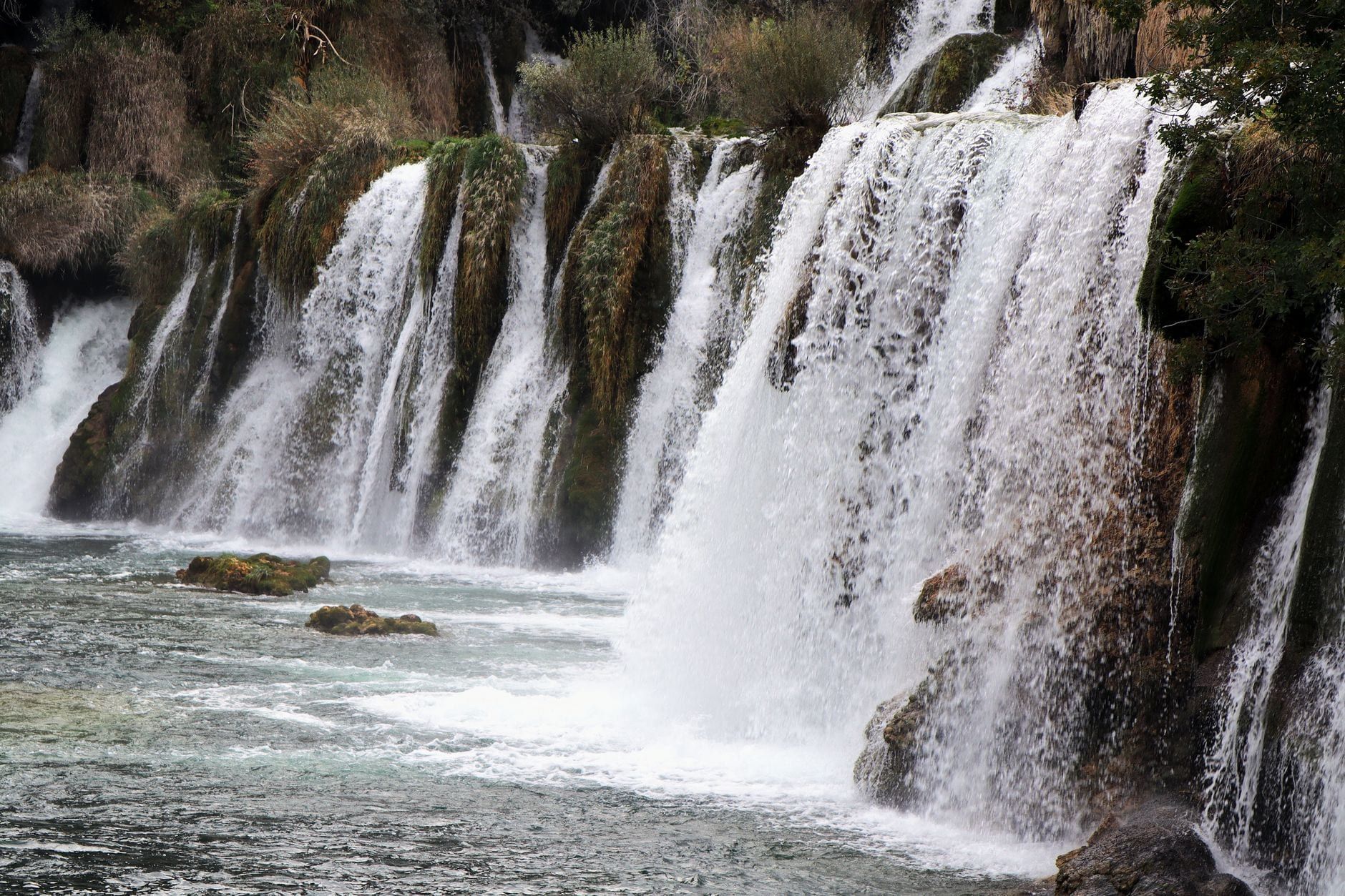
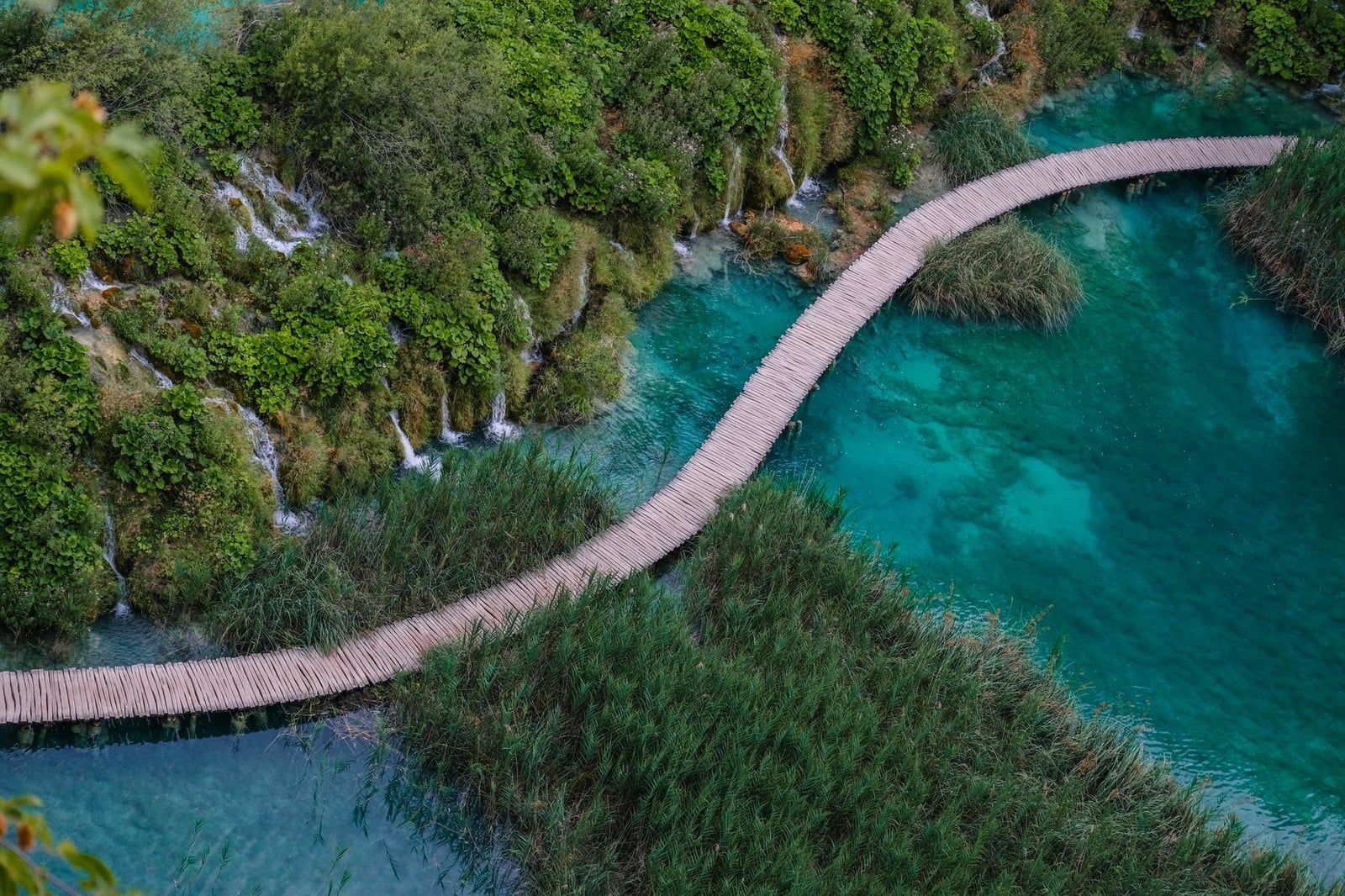
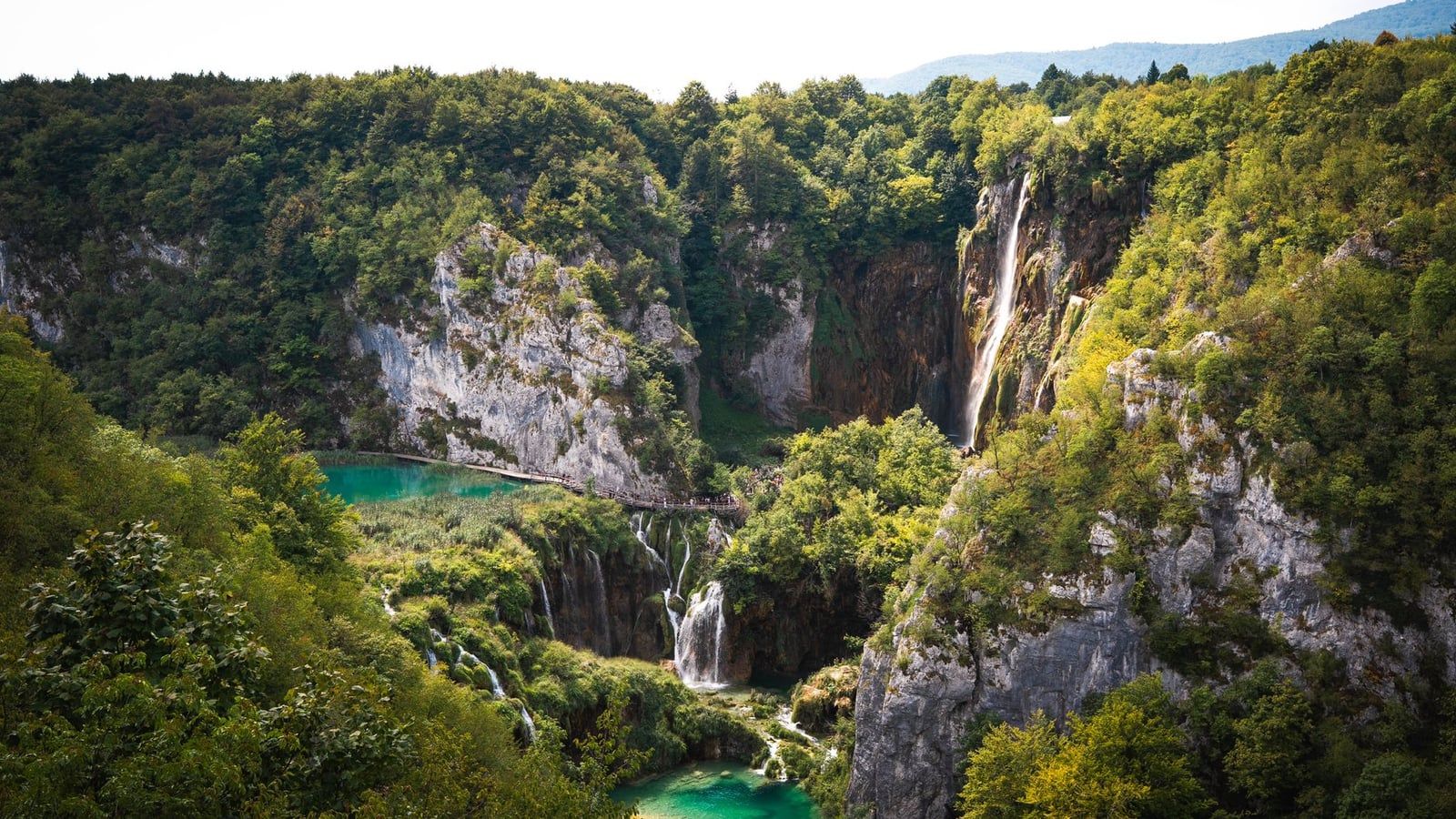
Plitvice is a system, not a single sight. Sixteen lakes step down a forested valley on the way to the Korana river, joined by more than 90 waterfalls, and you walk it on wooden boardwalks laid directly across the water. The headline drops are Veliki Slap and Veliki Prštavac. Nearly 300 km² of beech and fir forest wrap the lakes — that's what earned the park its UNESCO listing in 1979 and the strict protection that comes with it.
Krka: one great waterfall, plus a cultural layer
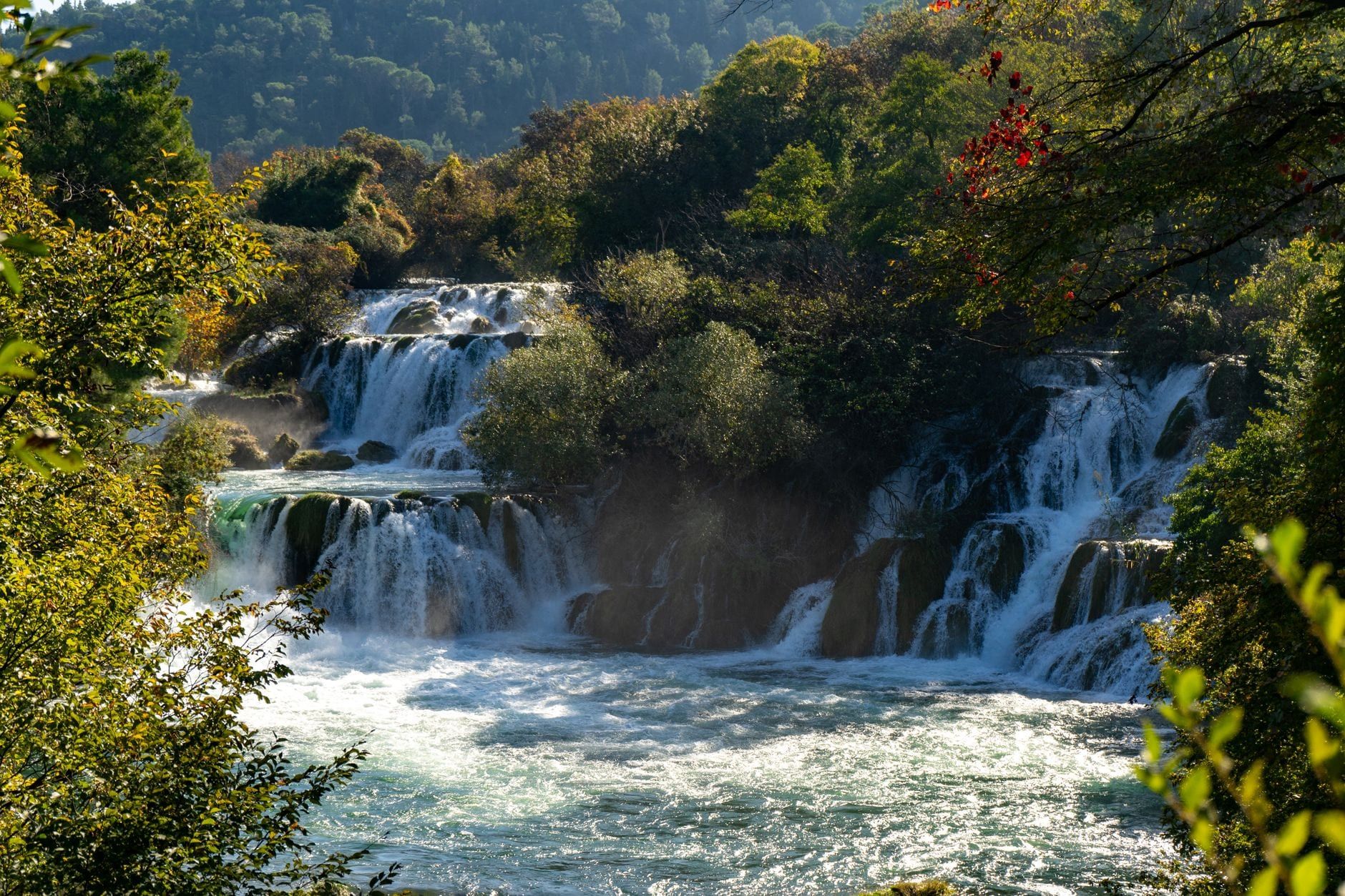
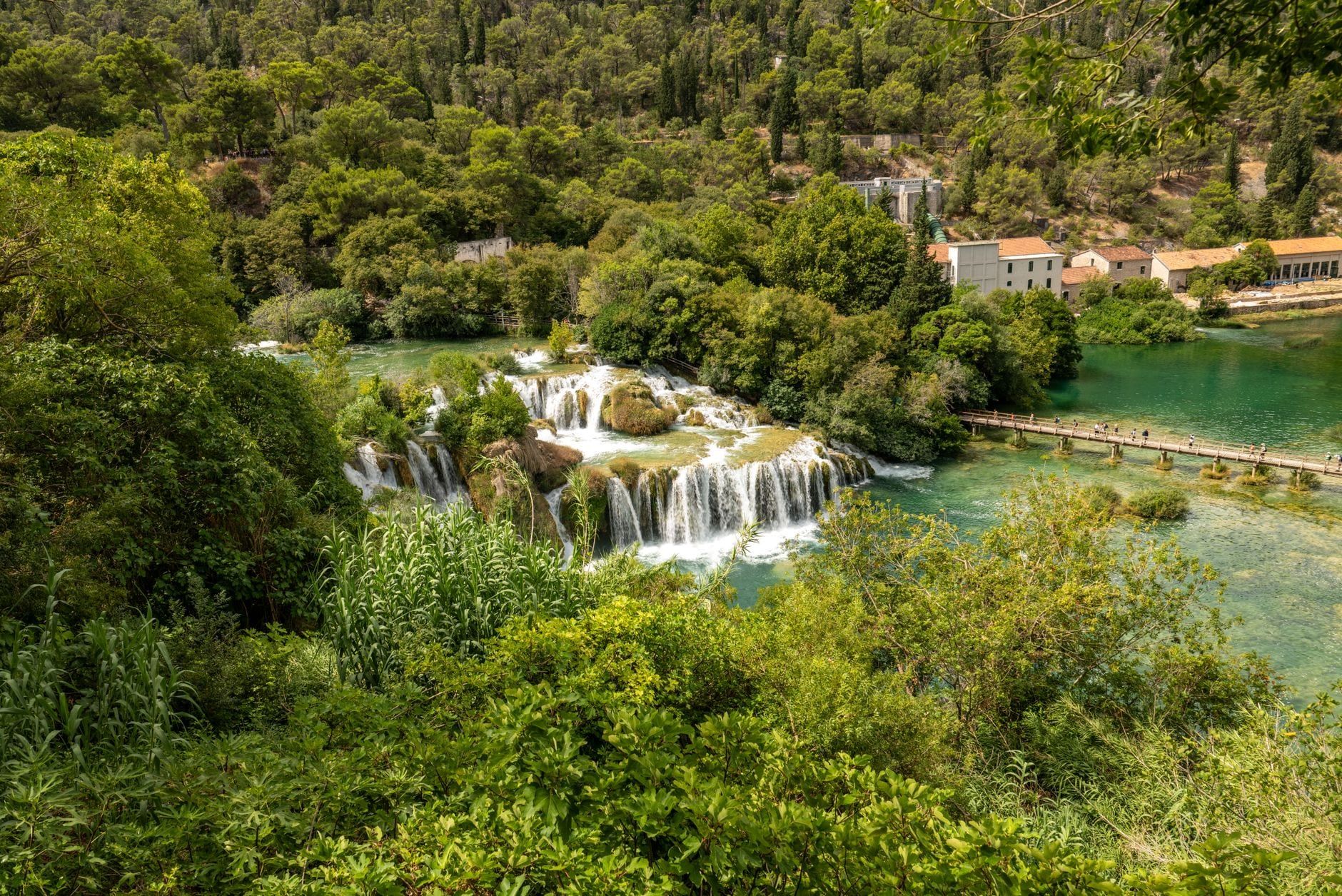
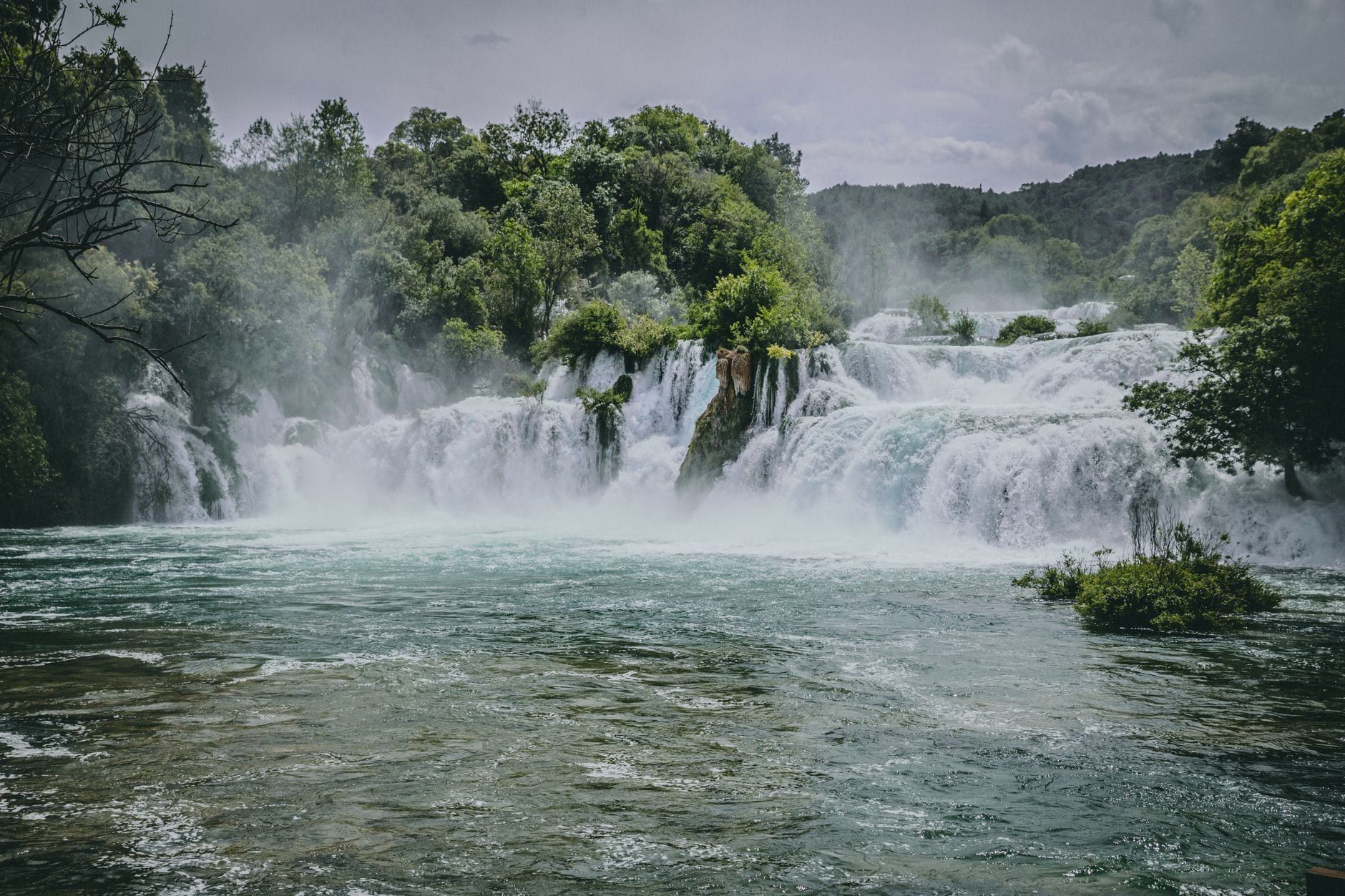
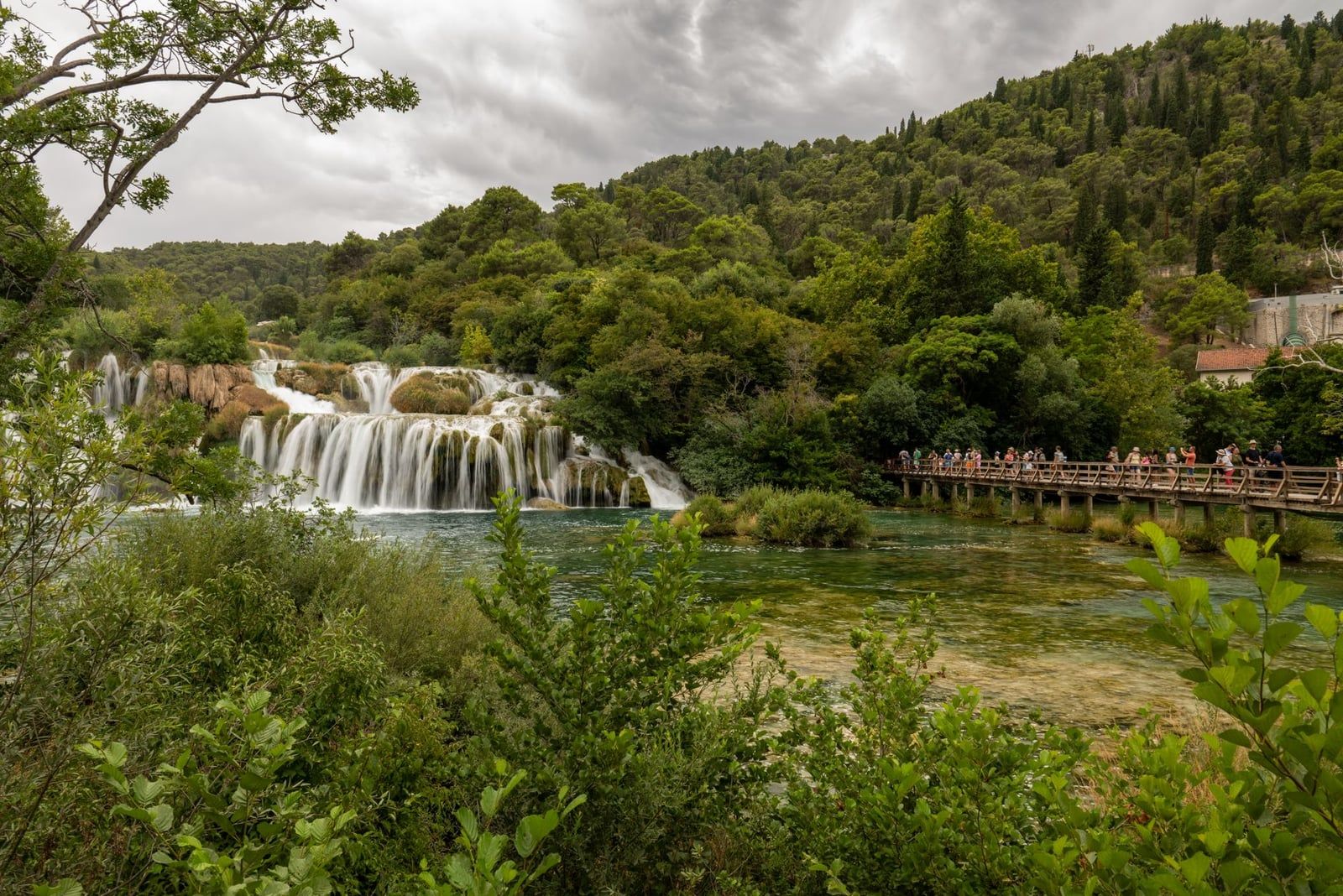
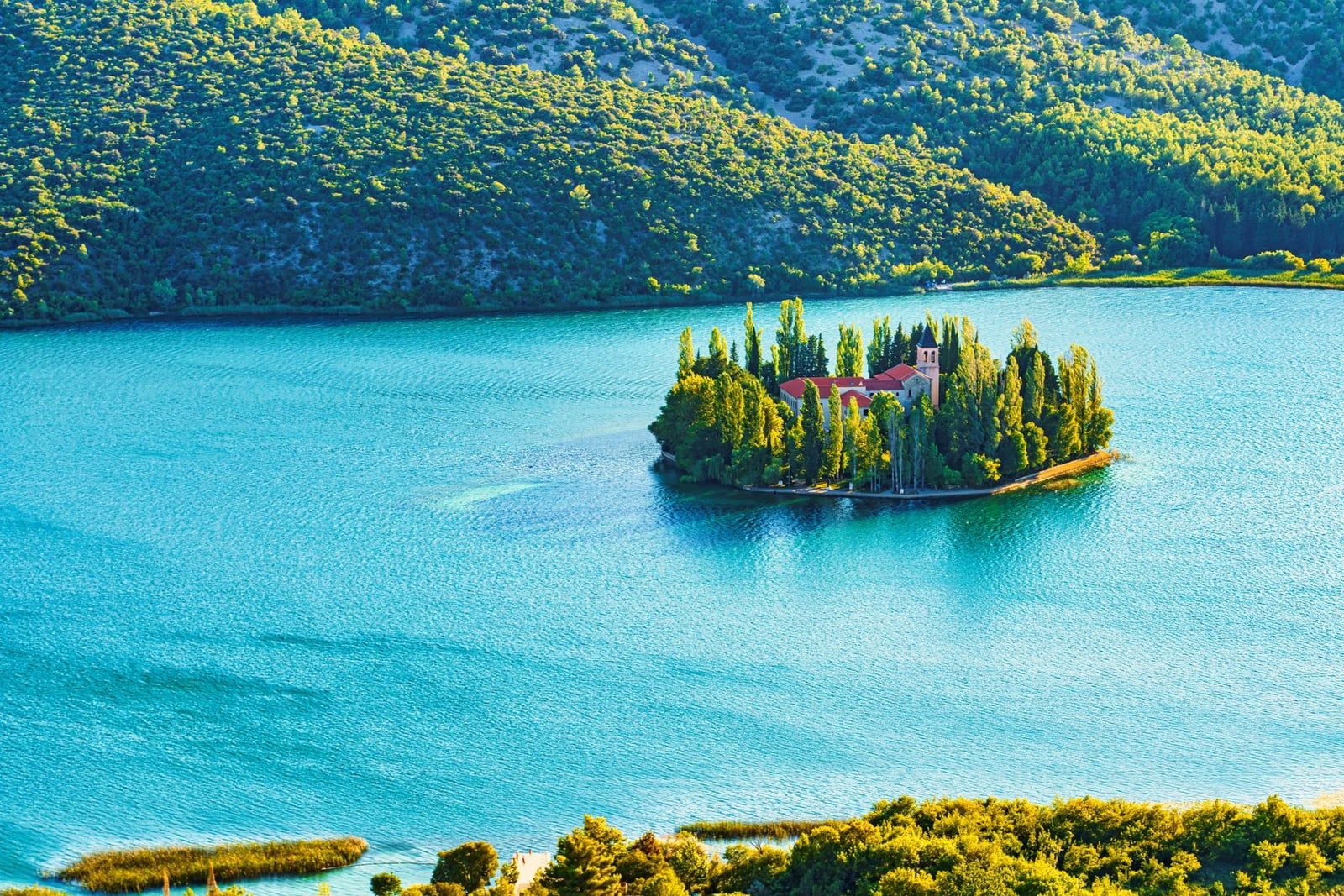
Krka is a river-canyon park of 109 km² built around a single landmark: Skradinski buk, where the Krka splits into 17 travertine cascades that drop 45.7 m across an 800-metre front up to 400 m wide. The park has seven waterfalls in total, including Roški slap's stair-step "necklaces" upstream. And it carries history Plitvice can't match: the Franciscan monastery on Visovac island (founded 1445), Roman ruins at Burnum, working watermills in a recreated ethno village, and the Jaruga hydro plant of 1895 — opened two days after Niagara's, it made Šibenik the first city lit by alternating-current hydroelectric power. Note the claim you'll read that Jaruga was the world's first hydro plant: it was the second.
Wildlife differs too. Plitvice's forests shelter more than 50 mammal species — brown bear, lynx, wolf, deer — though you'll rarely see them from the boardwalks. Krka is a river habitat: otters in the water, 222 recorded bird species overhead, and fish you can actually watch from the walkways, ten of them endemic to the river.
The UNESCO gap isn't trivia; it explains the rules. Plitvice's World Heritage status means strict limits on what visitors may do — no swimming, ever, and walking only on marked paths. Krka protects the same travertine-forming process with its own rules, which is exactly why its swimming rules changed in 2021 (more on that below).
Location & Logistics: Let Your Base City Decide
Where you're sleeping matters more than any scenery argument. Krka is about 93 km from Split (1–1.5 hours by car or bus) and 76 km from Zadar (roughly an hour, with up to 12 buses a day to Skradin). Plitvice sits roughly 130 km south of Zagreb — about 2 hours — but 2.5 hours from Split and just under 2 from Zadar. Those are day-trip numbers for Krka from the coast, and a long day for Plitvice from anywhere except Zagreb.
From Split or Trogir, Krka is the obvious call: an hour each way, direct buses from €12, and a trip that pairs with an afternoon in Šibenik or Skradin. Our Split to Krka transport guide covers the routes, and organized tours from Split handle everything for around $25 plus entry. From Zadar, both parks are realistic — Krka is the easier half-day, Plitvice the bigger outing; tours from Zadar run to both.
From Zagreb, Plitvice — no contest. Krka is too far south for a comfortable day trip. The one efficient way to fold Plitvice into a coastal itinerary: group transfer tours that run Zagreb–Split (or Split–Zagreb) with a Plitvice stop, turning a travel day into a park day. From Dubrovnik, neither park works as a casual day trip — the drives are too long. Visit Plitvice en route north, or add Krka as a day trip once you reach central Dalmatia.
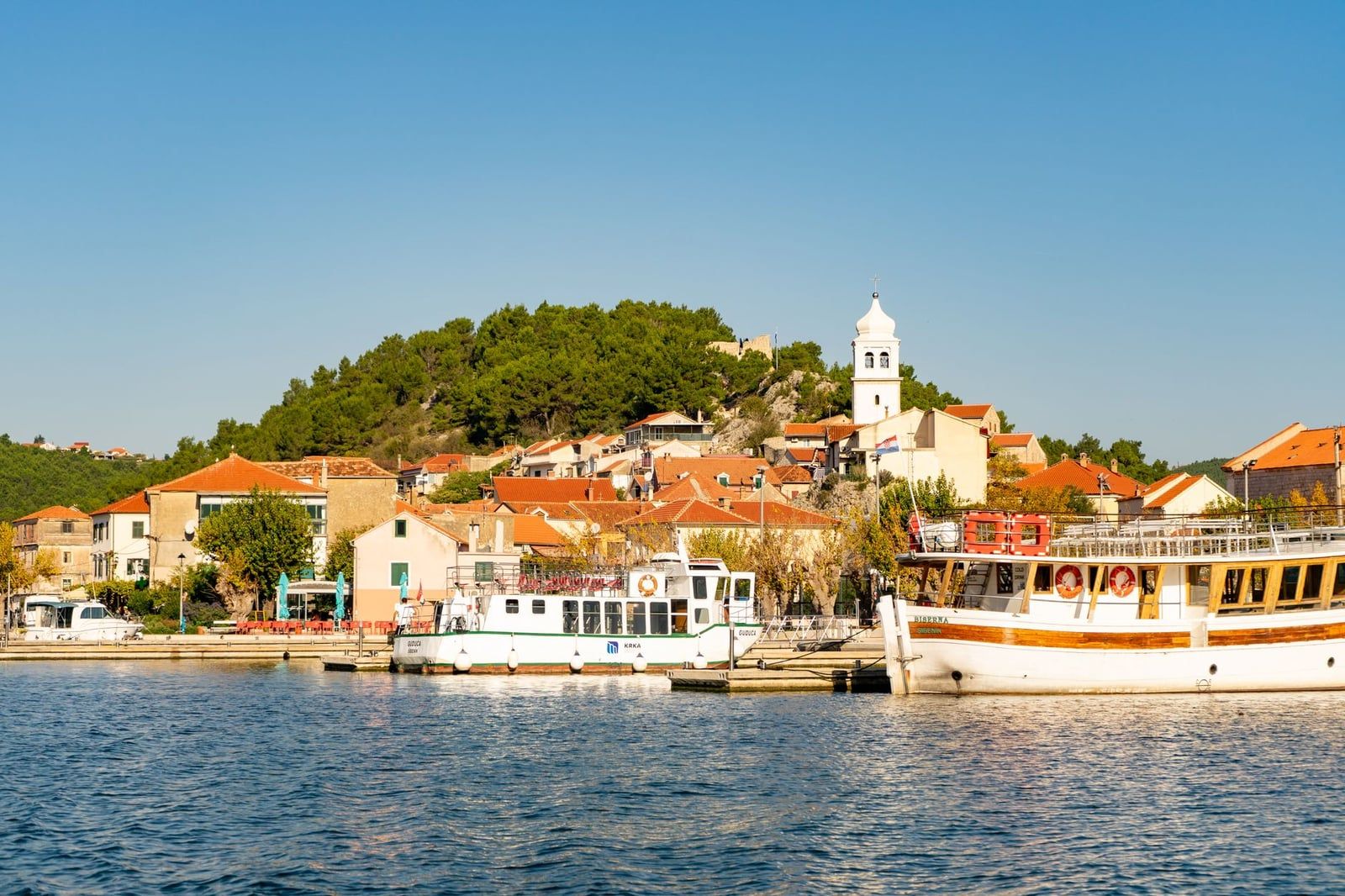
Entrances are straightforward. Krka's two main gates are Lozovac (free parking plus a free shuttle down to the falls) and Skradin, where your ticket includes the 20-minute boat cruise up the canyon — the better arrival. Plitvice has Entrance 1, closest to Veliki Slap, and Entrance 2 at the Upper Lakes. Without a car, both parks are reachable by public bus, though Krka's bus-to-Skradin-then-boat connection is the smoother of the two; full details are in our directions guide.
The mini-verdict: coast base, pick Krka. Zagreb, or an inland road trip between Zagreb and the coast, pick Plitvice — or one of those transfer tours.
Scenery, Trails & What There Is to Do
This is where the parks diverge most: Plitvice gives you a full day of walking across water; Krka gives you one superb hour and a menu of paid extras. Be realistic about how much day you want to spend inside a park, because the answer usually settles the whole decision.
Plitvice: a full day of walking on water
Plitvice's 36 km of trails, organised into eight signposted routes, are the reason to pick it. Boardwalks run a few centimetres above the lakes, so you spend the day walking across water between waterfalls — an angle you can't get at Krka. The electric-boat crossing of Kozjak lake and the panoramic train are included in the ticket, and most people roam 5–6 hours without repeating themselves. Photographers get endless variety: milky-blue lakes, falls you can stand beside, canyon viewpoints. Start from Entrance 2 for better morning light on the Upper Lakes.
Krka: one hour of waterfall, then choices
Krka's core is the Skradinski buk loop — a 60-to-90-minute walk across the travertine barriers, past the watermills, ethno village and the Jaruga plant. There's exactly one waterside trail. Everything beyond the loop costs more time and money: boat excursions to Visovac monastery (€15, 2 hours, a 30-minute stop on the island), Visovac plus Roški slap (€20, 4 hours), or the Čikola canyon cruise (€10, 45 minutes), sold only on site. Add the Roman camp at Burnum and 388 km of cycling routes if you want the full-park version — but that's a full day, and at that point you're doing Plitvice-scale logistics anyway.
Be honest about time. About 3 hours covers Krka properly; Plitvice needs 5–6 at minimum. Krka's single hero shot of the cascades is genuinely striking, and the boat ride up the canyon is half the pleasure — but if photography or hiking is the reason you're going, Plitvice is the park for you.
Tickets & True Cost Compared
Headline prices are identical — €40 for an adult in peak season — but the seasonal ladders and what's included differ. These are the official figures.
| Adult ticket | Krka | Plitvice Lakes |
|---|---|---|
| Peak (Jun–Sep) | €40 | €40 (€25 after 16:00) |
| Shoulder (Apr, May, Oct) | €20 | €23 |
| Off-season (Nov–Mar) | €7 | €10 |
| Late-day peak entry | €30 after 15:00 | €25 after 16:00 |
| Students | €15 peak | €25 peak (near half price) |
| Children 7–18 / under 7 | €15 peak / free | €15 peak / free |
Inclusions are where Plitvice pulls ahead. Its ticket covers the electric boat and the panoramic train across a 36-km trail network; Krka's covers the Skradin boat shuttle and Lozovac bus (both running 1 April to 31 October) and one entry to each open locality that day. Krka's excursions — Visovac, Roški slap, the Čikola — cost €10–20 extra and can't be booked online. Plitvice also sells 2-day tickets from roughly €15 to €60 depending on season, which is the sensible buy if you want the park without the crowds.
The value math: per euro, Plitvice delivers more park. The catch is that "doing Plitvice properly" usually means an overnight nearby, which Krka never demands from a coastal base. For the full hours-by-season breakdown, see our Krka hours and fees page; buy Krka tickets in advance at the official online shop to skip entrance queues when capacity limits bite in July and August.
Crowds & the Best Time to Visit
Both parks draw around a million visitors a year, and both peak June to September — but the crowding feels different. Plitvice bottlenecks on narrow boardwalks over water, where you physically cannot overtake the tour group stopped for photos in front of you; even in September there's a queue at Veliki Slap. Krka funnels everyone down the same single loop, so it's congested at the falls but thins fast on the boat and the upper trails.
The playbook is the same at both. Arrive at opening — one Plitvice visitor who showed up 20 minutes before the 7 am gates in August still found a dozen people queuing — or stay the night before within reach of the gates: Skradin or Šibenik for Krka, the villages around the Plitvice entrances for Plitvice. Both parks limit daily numbers in high season, and latecomers can be made to wait or turned away, so book online in peak months.
Shoulder season is the sweet spot: May, June and late September to early October bring full operating hours, all boat services and roughly 18–25 °C without the July–August crush (and the 30 °C-plus heat on Krka's exposed boardwalks). Late-afternoon entry is a double win at both parks — the ticket drops to €25–30 and the day-tripper crowds are already on their buses home.
Winter is the real fork. Plitvice under snow is quiet and photogenic, though lower-lakes paths can close in high water. Krka's Skradinski buk stays open 9:00–16:00, and the river runs at its fullest November to March — but the Skradin and Lozovac boats stop entirely, Manojlovac and Burnum close, and the park shuts on 25–26 December. You'd drive to Lozovac and walk down. Off-season Krka is calm and cheap at €7; it's also a stripped-down version of the park.
The Swimming Question: What Changed in 2021
You can no longer swim at Skradinski buk. Plenty of articles still say you can — it was the park's signature experience for decades — but the ban took effect on 1 January 2021. Decades of bathers and off-trail walking were eroding the travertine barriers, the limestone formations that build the waterfalls themselves, and the park's viability, in its own words, rests on their development. You can still see the worn, pale patches around the cascades that motivated the decision.
Three designated swimming areas remain — Stinice, Remetić–Pisak, and downstream of Roški slap — open 1 June to 30 September at your own risk. The park frames them chiefly for the local population, and they're minor, upstream localities, not the falls you came for. Swimmers should plan instead for river beaches outside the park boundary, the coast, or waterfall tours with swim stops on the Krka and Čikola.
At Plitvice, swimming has never been allowed anywhere — the UNESCO-protected lakes are off-limits to bathers, full stop. If a dip under a waterfall is the thing you're picturing, adjust the picture: in 2026 Croatia, neither park sells that experience.
Which Park Should You Choose? Five Real-World Scenarios
The analysis above turns into five situations. Find the one that matches your trip and you have your answer.
Choose Krka if you're coastal, short on time, or with young kids
Based in Split, Trogir, Šibenik or Zadar, or squeezing waterfalls between beach days: Krka. The shuttle or boat drops you close to the falls, the loop is under 90 minutes, and you're back for a late lunch. With small children it's the easier park by some distance — less walking, railed walkways, watermills and fish to look at, and under-7s enter free. Pair it with a wander through Skradin or Šibenik's UNESCO-listed cathedral and you've had a full day for modest effort.
Choose Plitvice if the park is the point of the trip
If this is a scenery-first trip — a photographer wanting variety, a hiker wanting a full day out, or anyone building the itinerary around the parks rather than slotting them in — Plitvice. Sixteen lakes and 90 waterfalls beat one great cascade, and the boardwalk immersion is unique in Europe. It's also the clear pick starting from Zagreb or driving between Zagreb and the coast.
The tie-breaker: how much day can you spend in transit?
Ask yourself that honestly. From Split, Krka costs about 2–3 hours of a day in transit and Plitvice costs 5; from Zagreb, the numbers flip. Families should also weigh safety: Plitvice's boardwalks over the water mostly have no railings, which demands constant attention with toddlers — and prams struggle on Krka's stepped, narrow sections, so a child carrier beats a stroller at both parks. Photographers should simply go to Plitvice, enter at Entrance 2 for morning light on the Upper Lakes, and book the overnight.
Visiting Both: The Smart Order and Route
With a week or more, do both — they're different enough that neither feels redundant. The order matters: Krka first, Plitvice second. Seen the other way round, Krka's single amphitheatre of falls can feel underwhelming straight after 16 lakes; as a warm-up act, it works. Route it north: Split or Šibenik → Krka → Zadar → Plitvice → Zagreb. That's the natural shape of a Dalmatia-to-capital itinerary, and the final leg folds Plitvice into the transfer day.
What to avoid is stacking both as back-to-back day trips from one base — two 10-hour days with 5 hours of driving, rushed at both parks. If time only allows that, pick one and do it properly. Our Krka tour options cover the coastal half of that route with transport, entry logistics and guides handled.
FAQs: Krka vs Plitvice Quick Answers
Which is better: Krka or Plitvice?
Plitvice is the better park: bigger, 16 lakes and 90+ falls, UNESCO-listed, more to walk. Krka is the better day trip from the coast and holds the single most striking waterfall, Skradinski buk. Better park vs better logistics — that's the real question.
Can you swim in Krka or Plitvice Lakes?
Not at Plitvice — swimming has always been banned. At Krka, swimming at Skradinski buk has been banned since 1 January 2021 to protect the travertine; only three designated areas (Stinice, Remetić–Pisak, downstream of Roški slap) remain open, 1 June to 30 September.
Is Krka still worth visiting if you can't swim?
Yes. Krka is a satisfying half-day — about 3 hours — with an included boat ride from Skradin, and it pairs well with Šibenik or Skradin. Just ignore any article promising a swim under the falls; that ended in 2021.
Can you visit both parks in one trip — and in which order?
Yes, and it's the ideal pairing with a week. Do Krka first as an easy coastal day trip, Plitvice second as the finale or as a stop between the coast and Zagreb. Avoid two back-to-back day trips from the same base.
How much do tickets cost at Krka and Plitvice?
Both charge €40 for adults in peak season (June–September). Plitvice: €23 in April, May and October, €10 November–March, €25 after 16:00 in peak. Krka: €20 shoulder, €7 off-season, €30 after 15:00 in peak. Under-7s are free at both.
Which park is better for families?
Krka, for most coastal families: shorter loop, shuttle or boat access, under-7s free. Plitvice suits older kids who can handle 5–6 hours on foot, and note its boardwalks over water mostly lack railings.
Which park is less crowded?
Both draw around a million visitors a year, but Plitvice bottlenecks on narrow boardwalks where you can't overtake. Krka's crowds funnel onto one loop. Both are quietest at opening time and from November to March.
How much time do you need at each park?
About 3 hours at Krka (the Skradinski buk loop takes 60–90 minutes; half a day with the boat transfer). Plan 5–6 hours minimum at Plitvice — more if you enter after 16:00 on a discounted late ticket.