Krka National Park sits about 93 km northwest of Split — a 90-minute drive, a direct bus ride, or a seat on a morning tour coach. Seven travertine waterfalls, a 15th-century island monastery and 47 km of walking trails fit inside 109 km² of river canyon, and the best of it is doable in one well-planned day.
This guide compares the four ways to get there, lists ticket prices for every season, settles the Skradin-versus-Lozovac entrance question, and lays out an hour-by-hour itinerary. One correction before you plan anything: swimming at the famous Skradinski buk falls has been banned since 2021, so disregard any photo showing bathers under the cascades.
Krka from Split: Quick Facts & Costs at a Glance
Count on 93 km each way, one to one-and-a-half hours of travel, and a day that runs 8–10 hours door to door. Here is the whole calculation in one place.
| What | Detail |
|---|---|
| Distance | About 93 km, depending on entrance |
| Drive | 1h–1h30 on the A1 motorway, a few euros in tolls |
| Bus | €12–15 one way, 1h20–1h30, up to 10 daily departures in summer |
| Summer entrance ticket | €40 adult (€30 after 15:00) |
| Cheapest full day | Bus plus after-15:00 entry — under €60 per person |
| Typical all-in budget | Around €80 per person in summer |
That €80 figure is realistic: roughly €24–30 return bus fare (or fuel and tolls), the €40 summer ticket and lunch in Skradin. Enter after 15:00 and you save €10 on the ticket while dodging the midday crush — the trade is a shorter visit. For everything on routes, connections and parking, see our full guide to getting to Krka National Park.
Why Krka Is One of the Best Day Trips from Split
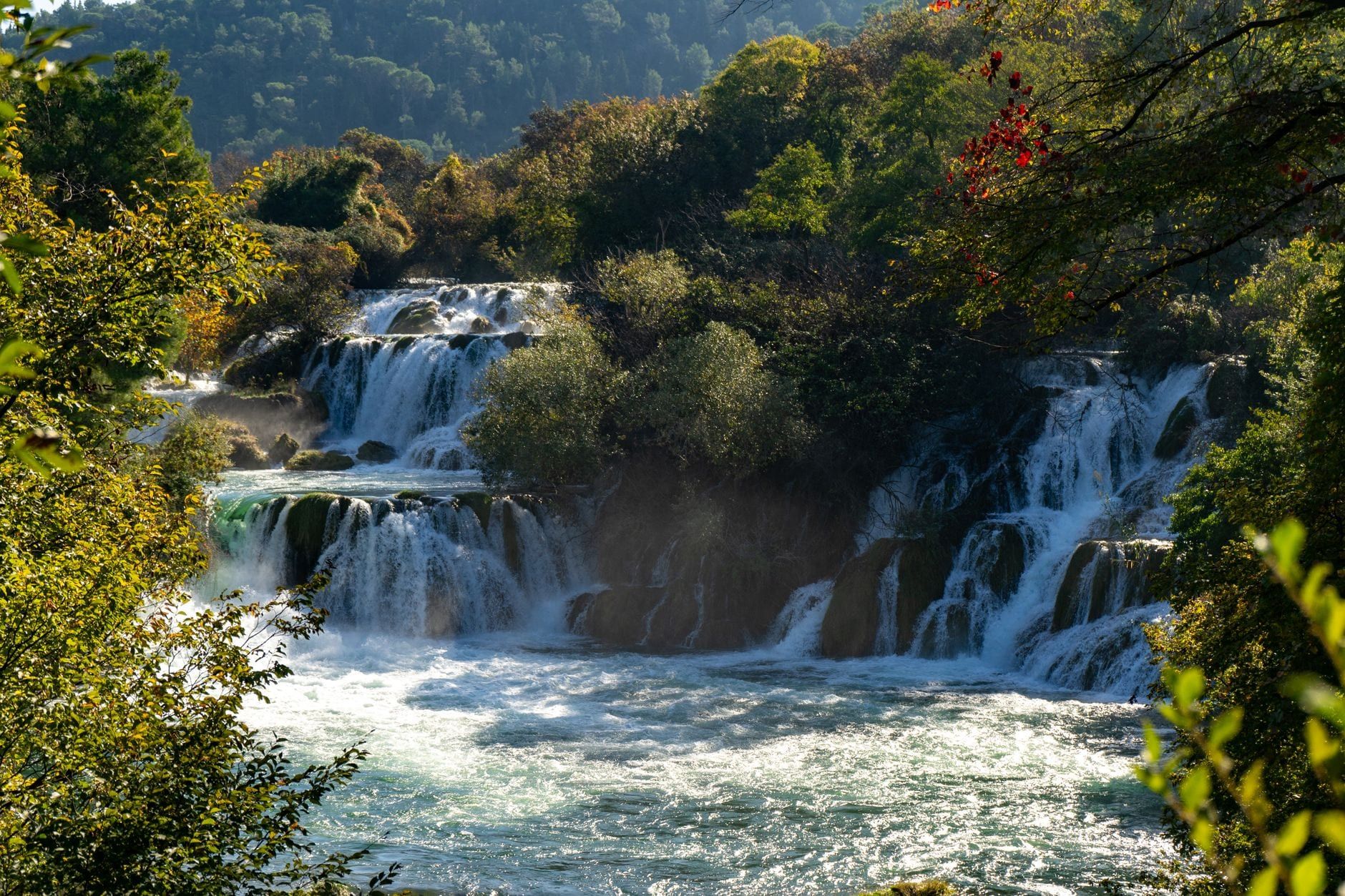
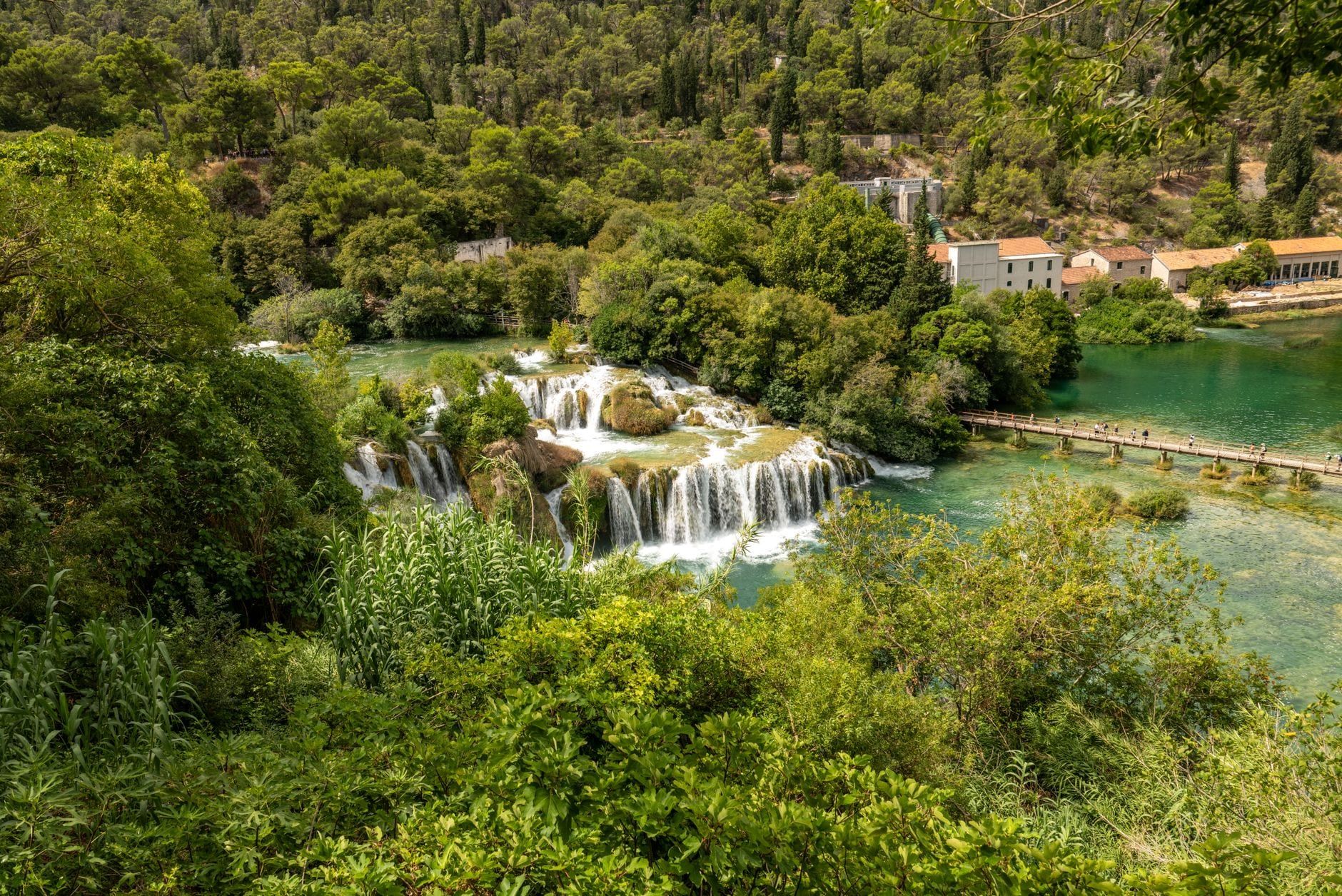
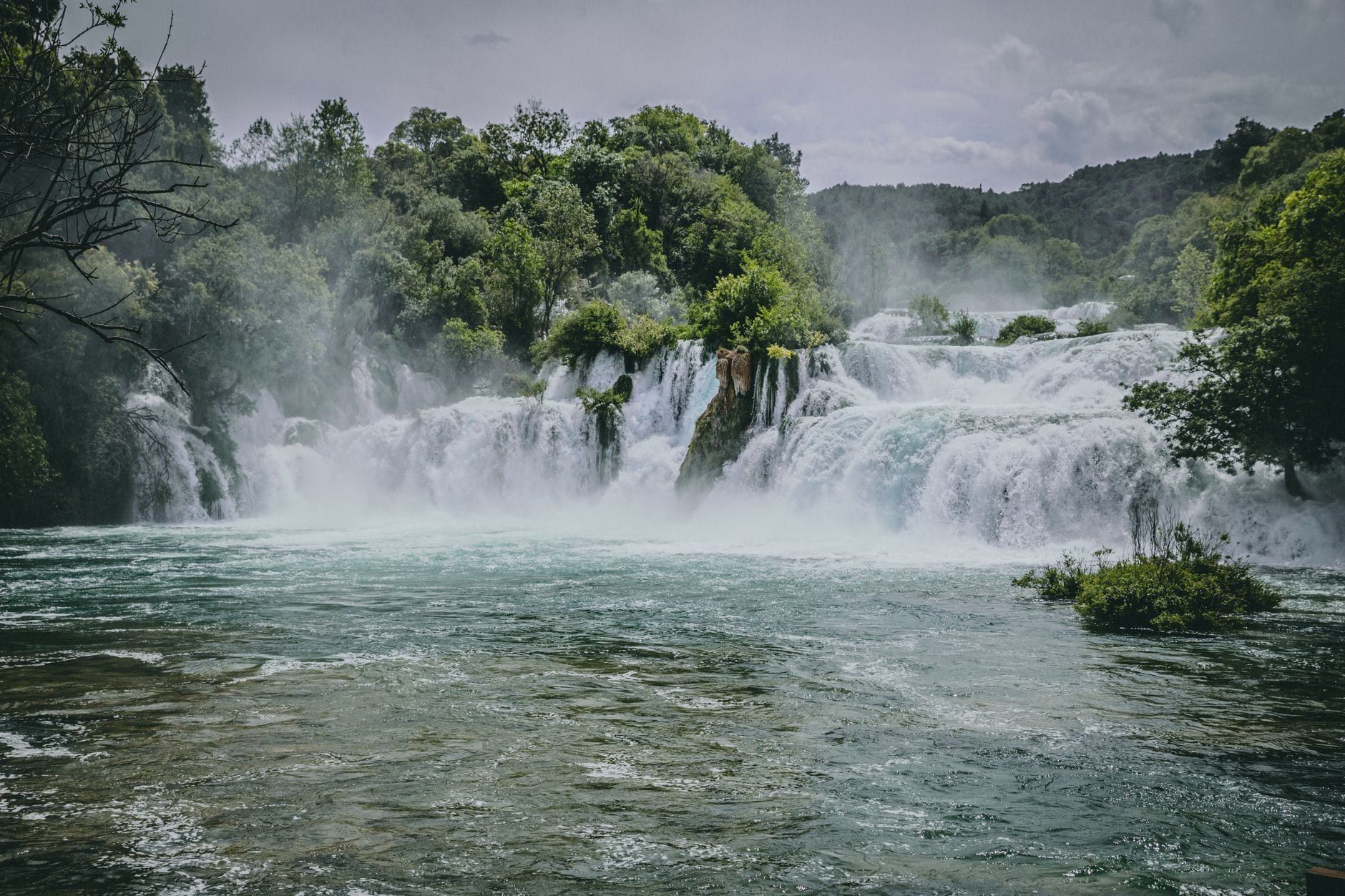
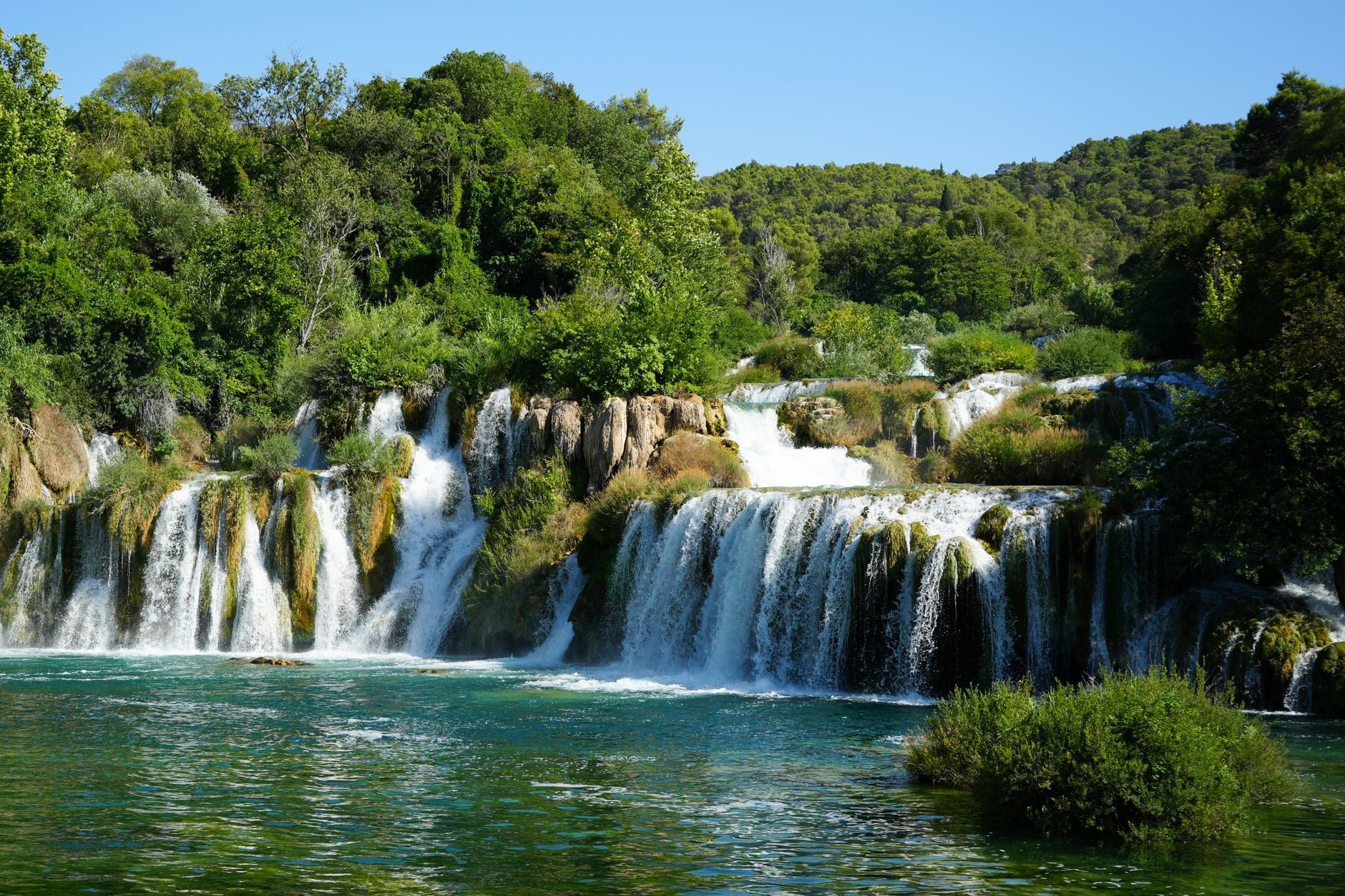
The Krka River drops 242 m through the park in a chain of seven travertine waterfalls, the biggest being Skradinski buk: 17 steps falling 45.7 m across an 800-metre stretch of cascades up to 400 m wide. Wooden boardwalks cross the travertine barriers between them. It is Croatia's second most visited national park after Plitvice, drawing over a million visitors a year.
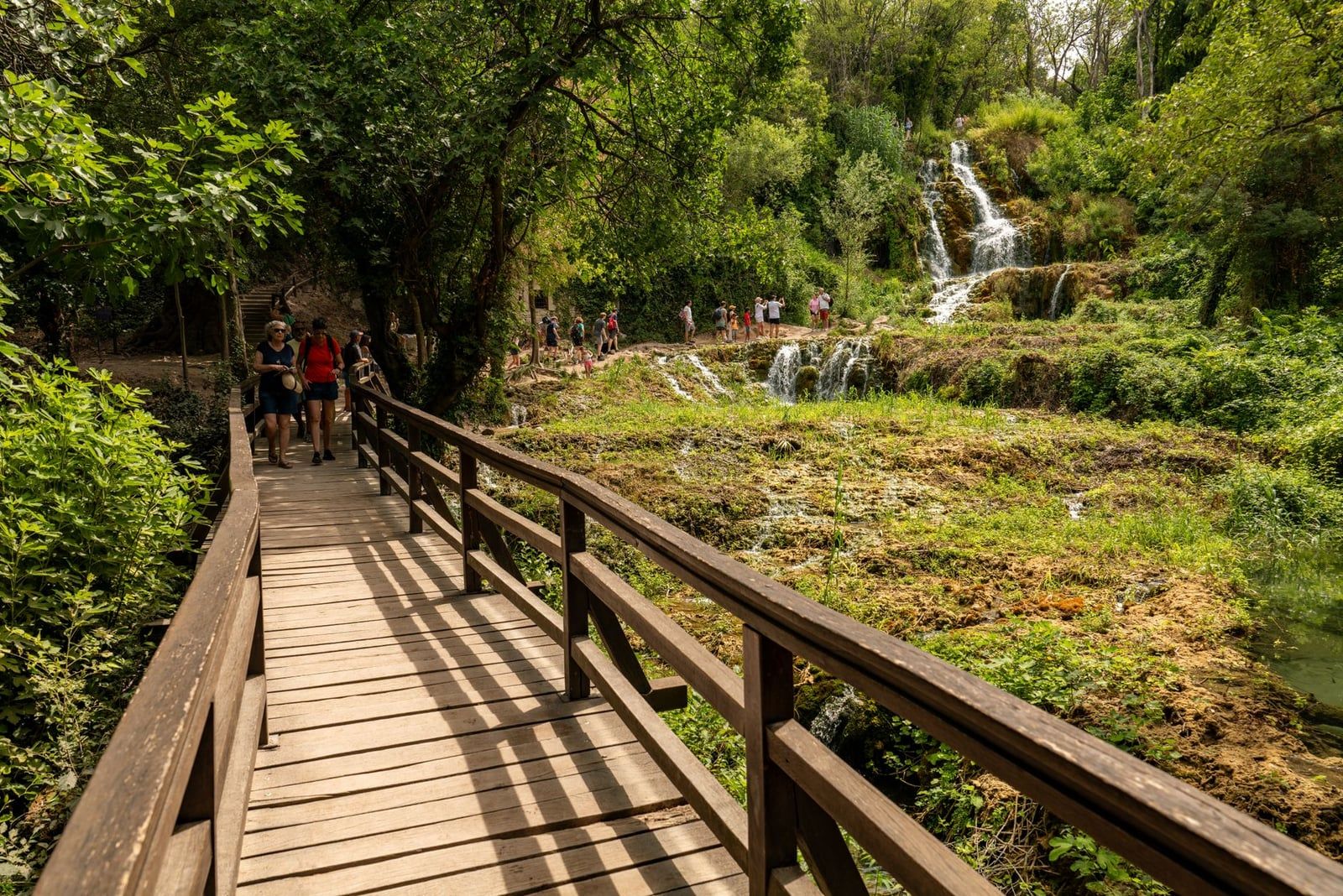
Expect those crowds. July and August pack the boats and boardwalks, and the park applies capacity limits in peak season — once the site is full, latecomers wait their turn. Book online and arrive before 9:00, or go late, and the problem mostly disappears. In May, June or September you will share the walkways with a fraction of the summer numbers.
Weighing Krka against Plitvice? From a Split base, Krka is the easier call: under 90 minutes away versus a much longer, more tiring day to Plitvice, and you can pair the falls with a boat ride and lunch in Skradin. Plitvice has the bigger lake scenery; Krka has the better day-trip logistics. Our Krka versus Plitvice comparison breaks it down further.
How to Get from Split to Krka National Park: All Options Compared
Four ways to go, four price points. The car wins on flexibility, the bus on price, the tour on zero effort, the transfer on comfort. So, tour or bus? The short version for car-free travelers:
| Public bus | Organized tour | |
|---|---|---|
| Cost | €12–15 each way plus the €40 summer ticket | From about €25 plus the €40 summer ticket |
| Planning effort | Moderate — buy tickets online, check return times | None — hotel-area pickup and guide included |
| Time in the park | Whatever the bus timetable allows | A fixed free-time window of roughly five hours |
| Deadline | The last return bus sets your deadline | The coach leaves when the schedule says |
| Best for | Budget travelers who like independence | Anyone who wants the day handled for them |
On an organized tour
Typical tours run 8–10 hours with morning pickups around Split, and prices start at roughly €25 per person. Read the fine print on two points. First, most tours do not include the entrance ticket — up to €40 in summer, paid on site — which is why headline prices look cheap. Second, the "boat cruise" advertised in many listings is usually the standard park ferry from Skradin that every visitor takes anyway. Some departures add wine tasting or a stop in Šibenik; pick the Šibenik variant if you want two destinations in one day. Browse the full range of Krka tours from Split to compare inclusions before committing.
Driving yourself
Take the A1 motorway from Dugopolje and exit at 21–Skradin for the Skradin entrance, or 22–Šibenik for the Lozovac side — about an hour either way, plus a few euros in tolls. The toll-free coastal road through Trogir and Šibenik adds around 30 minutes but turns the drive itself into part of the day. A rental car is the only option that lets you reach quieter sights like Roški slap on the same ticket, and it makes an evening stop in Šibenik or Trogir easy on the way back. Starting from Trogir? Our Trogir to Krka route guide covers that side of the coast.
By public bus
Buses leave from Split's main bus station, next to the ferry port, and run to the "Skradin (Krka NP)" stop in about 1 hour 20 minutes. Operators include Prijevoz Knežević, FlixBus and Croatia Bus; fares run €12–15 one way, or about €19 return if you book both legs with the same company. In summer there are up to 10 departures a day, the earliest around 7 a.m.; in winter only a few. Do one thing before you commit: check the last return bus from Skradin, because it dictates your whole afternoon. From the stop it is a short walk to the park boat jetty.
Private transfer or taxi
A private transfer from Split starts around €100 one way for a regular car, roughly €15–20 more for an eight-seat minivan. Split four ways, that is competitive with the bus and infinitely more comfortable. The driver can wait in Skradin and bring you back, which removes the last-bus anxiety entirely. Agree the pickup time before you head into the park — Skradin in August is not the place to hunt for a signal.
Skradin or Lozovac: Choosing Your Park Entrance
Two entrances serve the Skradinski buk area, and they deliver completely different arrivals. One warning first: do not just type "Krka National Park" into a navigation app — GPS regularly steers drivers into fields. Follow the brown tourist signs to a named entrance.
Skradin: the boat arrival
Skradin is the scenic option. Your ticket includes a 20-minute boat ride up the limestone canyon to the falls, with departures roughly hourly in summer. Be at the jetty for the first boat of the day — by mid-morning the queue stretches and boats fill up. The town itself is a small marina settlement with lunch spots and a riverside swim area outside the falls zone, so it earns its place as your exit point. Parking in Skradin is privately run and paid, and the lot fills by late morning in July and August.
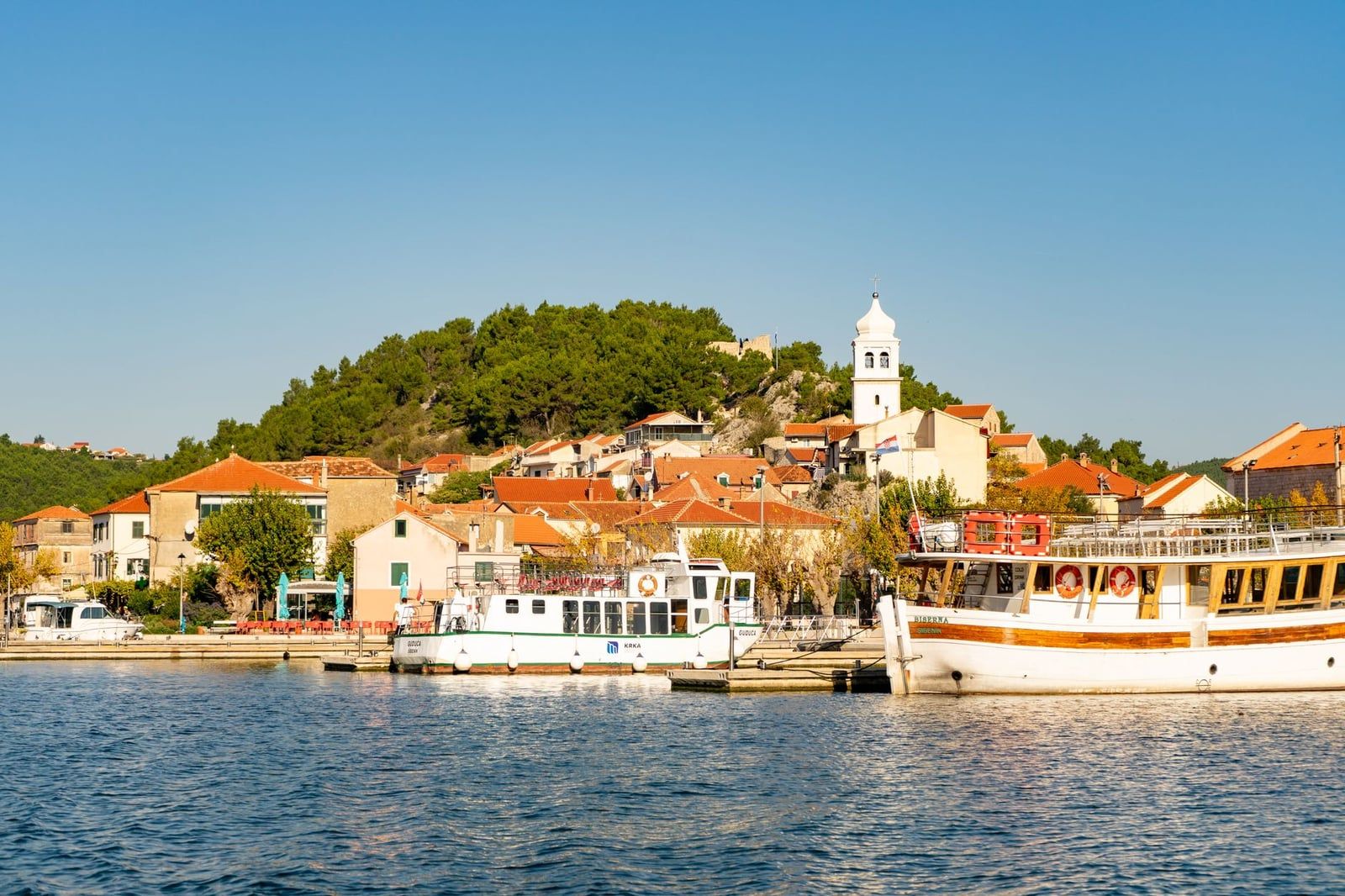
Lozovac: the fast lane
Lozovac is the main entrance, 83 km from Split on the A1. Parking is free, and in season a free park shuttle runs the short way down to the falls — you are at Skradinski buk within minutes of arriving. Families with small children can walk the path one direction and ride the shuttle back. One quirk of the ticket system: a single ticket admits you to each locality once, so you cannot shuttle in from Lozovac and sail out to Skradin on the same ticket. Pick your route before you buy.
The recommendation: bus travelers arrive in Skradin anyway, so take the boat. Drivers should choose Lozovac for speed and free parking, Skradin if the boat approach and a long lunch matter more. Traveling with kids? Lozovac, without hesitation.
Krka Tickets & Entrance Prices (And How to Book)
Prices come straight from the park's current official price list, and they swing hard with the season:
- June–September: €40 adult, €15 children 7–18
- April, May, October: €20 adult, €12 children 7–18
- November–March: €7 adult, €4 children 7–18
- After 15:00, June–September: €30 adult (€11.25 children/students)
- Children under 7: free year-round
That after-15:00 summer discount is the most underused trick at Krka — you save €10 and land when the crowds are thinning and the light turns golden. The one-day ticket includes the boat between Skradin and Skradinski buk, the Lozovac shuttle (both 1 April–31 October) and one visit to every open land locality that same day. Boat excursions cost extra and can only be bought on site: Visovac is €15 for two hours, Visovac plus Roški slap €20 for four, the Čikola cruise €10.
Buy online through the official park webshop and choose your entrance and arrival mode at checkout. Tickets are not sold in time slots, but capacity limits in July and August mean latecomers can wait outside — booking ahead removes that risk. And when a tour price looks too good to be true, it usually is: the entry fee is almost always a separate, on-the-day payment. Entry is free on 1 May, if you fancy the year's biggest crowds. Full seasonal detail is in our guide to Krka's opening hours and entry fees.
Can You Swim at Krka National Park?
Not at the falls. Swimming at Skradinski buk has been prohibited since 1 January 2021, to protect the fragile travertine formations the entire park exists to preserve, and jumping or diving from the falls or bridges is banned everywhere. Those Pinterest photos of people bathing beneath the cascades are a decade out of date.
Swimming is still allowed in three designated areas — Roški slap, Stinice and Pisak — but only from 1 June to 30 September, at your own risk and depending on weather and water levels. You can also swim in the Krka River at Skradin, outside the falls area, where locals cool off on summer afternoons.
Read tour descriptions with this in mind. Operators that advertise "swimming" take you to the designated areas or the river at Skradin, not under the waterfalls — and many still use the old bathing photos in their listings. Bring the swimsuit; just aim it at the right stretch of water.
What to See and Do on a Krka Day Trip
Skradinski buk is the main event, but a full day has room for an island monastery, quieter cascades and a proper lunch. Here is what each looks like, and how your transport choice decides what you can reach.
Skradinski buk: the boardwalk loop
The falls split into 17 cascades dropping 45.7 m across 800 m of travertine, and a wooden boardwalk loops across the islands between them. The walk itself takes 60–90 minutes; with the restored watermills, the ethno-village exhibits and the 1895 Jaruga hydroelectric plant at the trail's end — whose power made Šibenik the first city in the world lit by alternating current — you will spend two to three hours. Walk the loop clockwise to avoid oncoming foot traffic, and expect the heaviest flow of people between 11:00 and 15:00. Our guide to the waterfalls of Krka covers the circuit in more detail.
Visovac Island
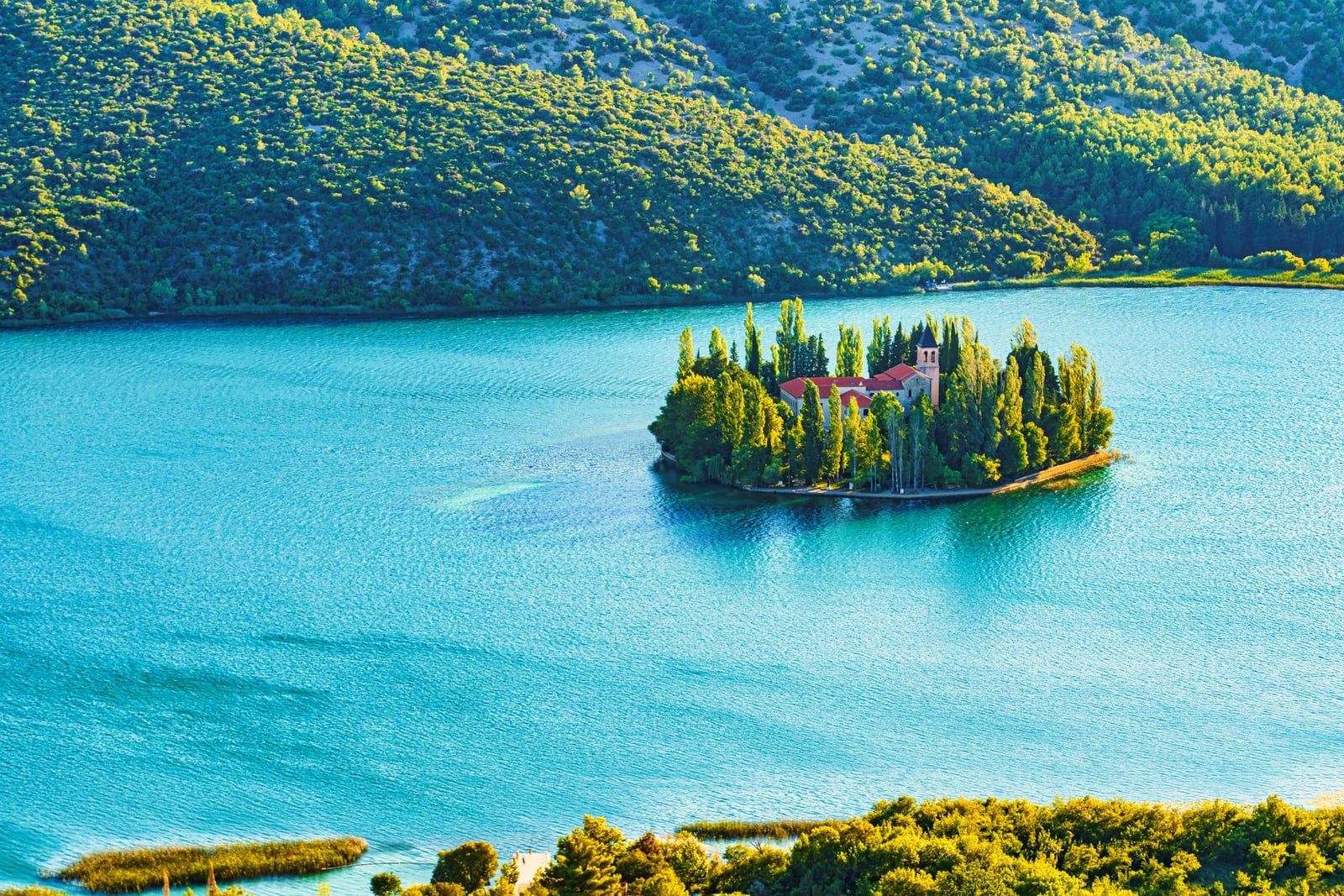
A Franciscan monastery founded in 1445 occupies this tiny island in a broad river lake — church, gardens, a small museum and 17th-century paintings, all under cypresses. The excursion costs €15, lasts two hours and includes a 30-minute stop on the island; buy tickets at the park, since these boats cannot be reserved online. On 2 and 15 August the island opens only to pilgrims, so plan around those dates.
Roški slap
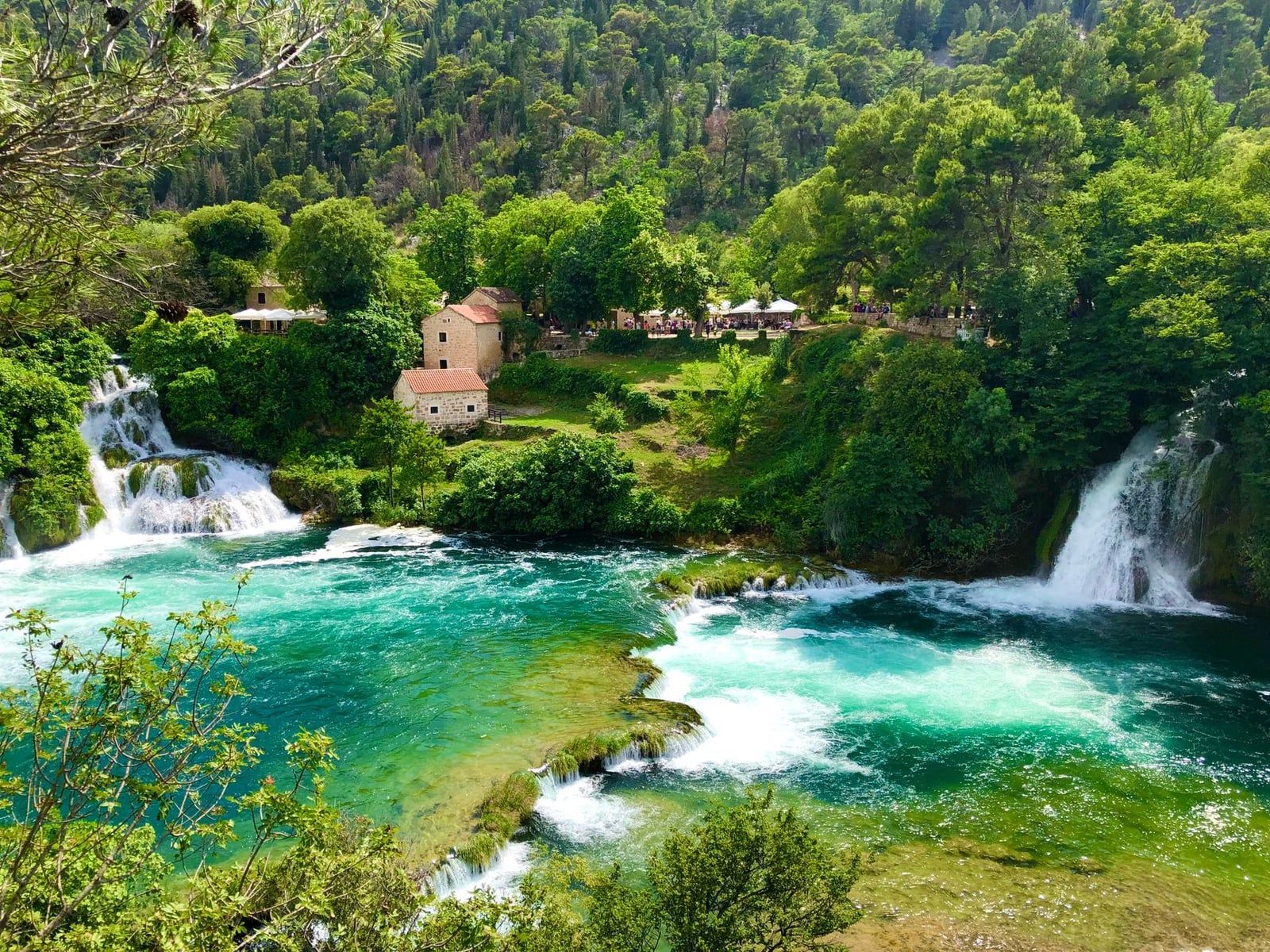
Locals call its 12 interconnected cascades the "necklaces" — a stair-step string of low falls beneath steep canyon walls, and far quieter than Skradinski buk. Standard Split day tours skip it. You reach Roški slap by car via the Laškovica entrance or on the €20, four-hour boat tour from Skradinski buk, which adds views of the medieval fortresses Trošenj and Nečven. Worth it if you have wheels or a private guide.
Skradin town
Build lunch around Skradin if you enter this way. The town's signature dish is Skradinski rižot, a meat risotto that simmers for hours, and the Skradin cake that follows it is worth saving room for. Afterward, the marina and the river swim spot outside the falls area fill an easy hour.
Šibenik: the add-on for drivers
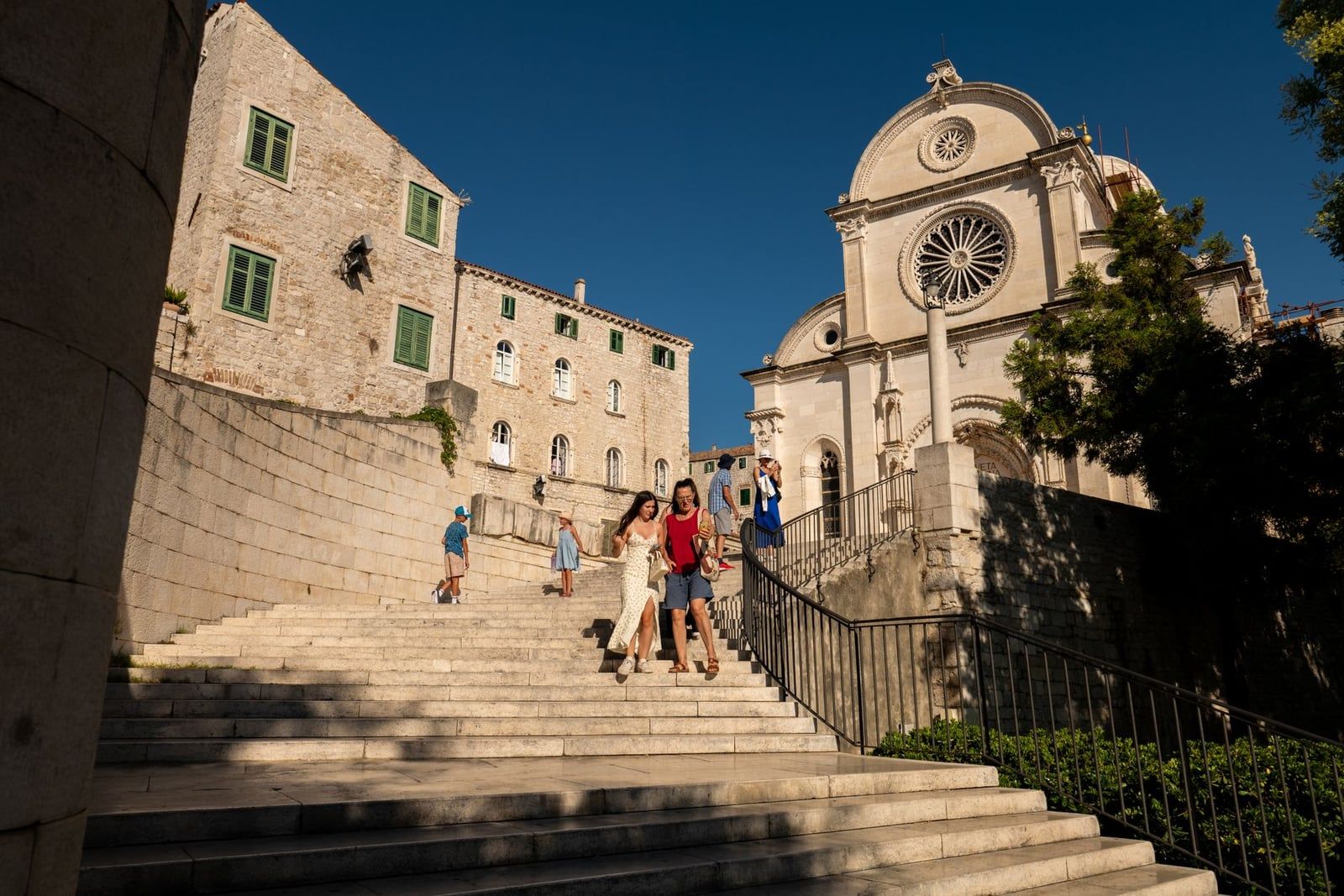
Šibenik sits about 20 minutes from the park — closer to Krka than Split itself — with a UNESCO-listed cathedral of St James and the 15th-century St Michael's fortress above the old town. Drivers can stop on the way back; tour-takers should simply choose a Šibenik-variant itinerary.
A Realistic Krka Day Trip Itinerary (With Timings)
The day rewards an early start, especially in summer. Leave Split between 7:00 and 8:00 and the whole sequence below works; leave at 10:00 and you spend the day in queues.
- 7:00–7:30 — leave Split; earliest buses depart around 7 a.m.
- 8:30–9:00 — arrive at Skradin or Lozovac; tickets ready on your phone
- 9:00 — first boat or shuttle down; thinnest crowds of the day
- 9:30–12:00 — Skradinski buk loop clockwise, plus the watermills
- 12:00–13:30 — lunch in Skradin; the rižot is the order
- 14:00 — optional €15 Visovac boat excursion, two hours
- 16:00–17:30 — boat or shuttle out, drive or bus back to Split
The time math: the loop takes about 2.5 hours (three in summer), the Skradin boat an hour return, so four hours on site is the minimum and six is comfortable. Tours typically give you around five hours of free time in the park. Door to door, plan on 8–10 hours.
Two crowd hacks decide the day. Be on the first boat from Skradin — or enter via Lozovac before that boat lands — and you will walk the falls nearly alone. Or flip it: arrive after 15:00, pay €30 instead of €40, and get better light for photos as the coaches pull out. On the return, bus travelers must know their last departure from Skradin before the day starts; drivers can detour through Šibenik or Trogir instead. Our Krka day trip planner has more variations on the timeline.
Best Time to Visit Krka from Split (And What to Pack)
May, June, September and early October are the sweet-spot months: 18–25 °C, all boat services running, full opening hours and noticeably smaller crowds. Spring brings the strongest waterfall flow and the loudest birdsong; June keeps the long 8:00–20:00 schedule with lush vegetation.
July and August run above 30 °C with little shade on the open viewpoints, and this is when capacity limits bite. If summer is your only window, book online, arrive before 9:00 or use the after-15:00 ticket. November to March flips the park: €7 entry, 9:00–16:00 hours, no boats (they run only 1 April–31 October) and the river at its fullest — a calm, photogenic visit if you dress for it and watch your footing on wet boardwalks.
Pack for boardwalks, not beaches:
- Grippy shoes — the boardwalks and tufa paths are wet and slippery
- Water and sun protection; shade is scarce in July
- A light layer for the boat ride
- Swimsuit — but only for the designated swim areas
- Card plus some cash; excursion boats sell tickets on site
- Downloaded tickets and a power bank
FAQ: Split to Krka National Park
How far is Krka National Park from Split and how long does it take to get there?
About 93 km, depending on the entrance. Driving takes 1–1.5 hours on the A1 motorway; the bus takes about 1 hour 20 minutes to the Skradin park stop.
How much is the bus from Split to Krka National Park?
A one-way adult ticket costs €12–15; a return booked with the same operator runs about €19. Buses leave from Split's main bus station next to the ferry port, with up to 10 daily departures in summer and only a few in winter.
How much do Krka National Park tickets cost?
Per the park's official price list: €40 for adults June–September (€15 for children 7–18), €20 in April, May and October, and €7 November–March. Under-7s enter free, and entering after 15:00 in summer costs €30 for adults.
Is the boat ride from Skradin included in the entrance ticket?
Yes — the standard ticket includes the Skradin–Skradinski buk boat and the Lozovac shuttle, both operating 1 April–31 October. Longer excursions to Visovac, Roški slap and the fortresses cost extra and are bought on site only.
Can you swim at Krka National Park?
Swimming at Skradinski buk has been banned since 2021 to protect the travertine. It is allowed only at Roški slap, Stinice and Pisak, from 1 June to 30 September, at your own risk and depending on conditions.
How much time do you need at Krka National Park?
The Skradinski buk circuit takes 2–3 hours, the boat about an hour return, so plan 4–6 hours in the park and an 8–10 hour day door to door from Split.
Which is better from Split: Krka or Plitvice?
For most Split-based visitors, Krka. It is under 90 minutes away versus a much longer, more tiring day to Plitvice, and it pairs easily with Skradin or Šibenik. Plitvice has the grander scenery if you can spare the travel time.
Do tours from Split include the Krka entrance fee?
Often not. Many tours look cheap because the entrance ticket — up to €40 in summer — is paid separately on the day. Some bundles include the ticket, lunch or wine tasting, so always check the inclusions before booking.