Seven travertine waterfalls step down the Krka River through a 109 km² national park, dropping 242 m in total between Knin and the town of Skradin. The park stretches along the river rather than around a single sight, so a visit is really a choice: the big show at Skradinski buk, the quieter cascades at Roški slap, or a full day stringing them together by boat. Skradinski buk alone — 17 cascades spilling 45.7 m across an 800-metre travertine barrier — is one of the largest formations of its kind in Europe.
One warning before anything else: you can no longer swim at Skradinski buk. The ban dates from January 2021, and a lot of tours and blog posts still use photos of people in the water below the falls. Swimming survives only in three designated spots upstream, in summer. This guide covers every waterfall in the park, the exact 2026 ticket prices, what the famous "hike" really involves, and how to fit it all into a day from Split, Zadar or Šibenik — or you can start with the site's Krka waterfalls tours and let someone else handle the logistics.
Krka's Waterfalls at a Glance
Krka was proclaimed a national park in 1985 — Croatia's seventh — and it protects the middle and lower course of the Krka plus the lower Čikola, a few kilometres northeast of Šibenik. More than a million people a year now visit, enough that the park runs capacity limits in peak season. The essentials:
- Park size: 109 km² along the Krka and Čikola rivers
- Waterfalls: seven travertine barriers, 242 m of combined drop
- Star attraction: Skradinski buk (17 cascades, 45.7 m, 800 m wide stretch of river)
- Swimming: banned at Skradinski buk; allowed at Roški slap, Stinice and Pisak (1 Jun–30 Sep)
- Tickets: €7–€40 depending on season; under-7s free
- Minimum time: 2–3 hours for Skradinski buk
If you're short on time, the decision is easy: Skradinski buk. It's the fall in every photo of Krka, the one connected by boat from Skradin and shuttle from Lozovac, and the one most visitors see and leave happy. Roški slap is the reward for anyone with an extra half day, and Manojlovac is a spring-only detour for waterfall completists. You can read more background in the park's history and highlights.
Every Waterfall in Krka National Park (and Which Ones to See)
Krka's seven barriers are all built from travertine — limestone deposited by the river itself — and each is a different beast. Here's what you're choosing between.
Skradinski Buk: the one everyone comes for
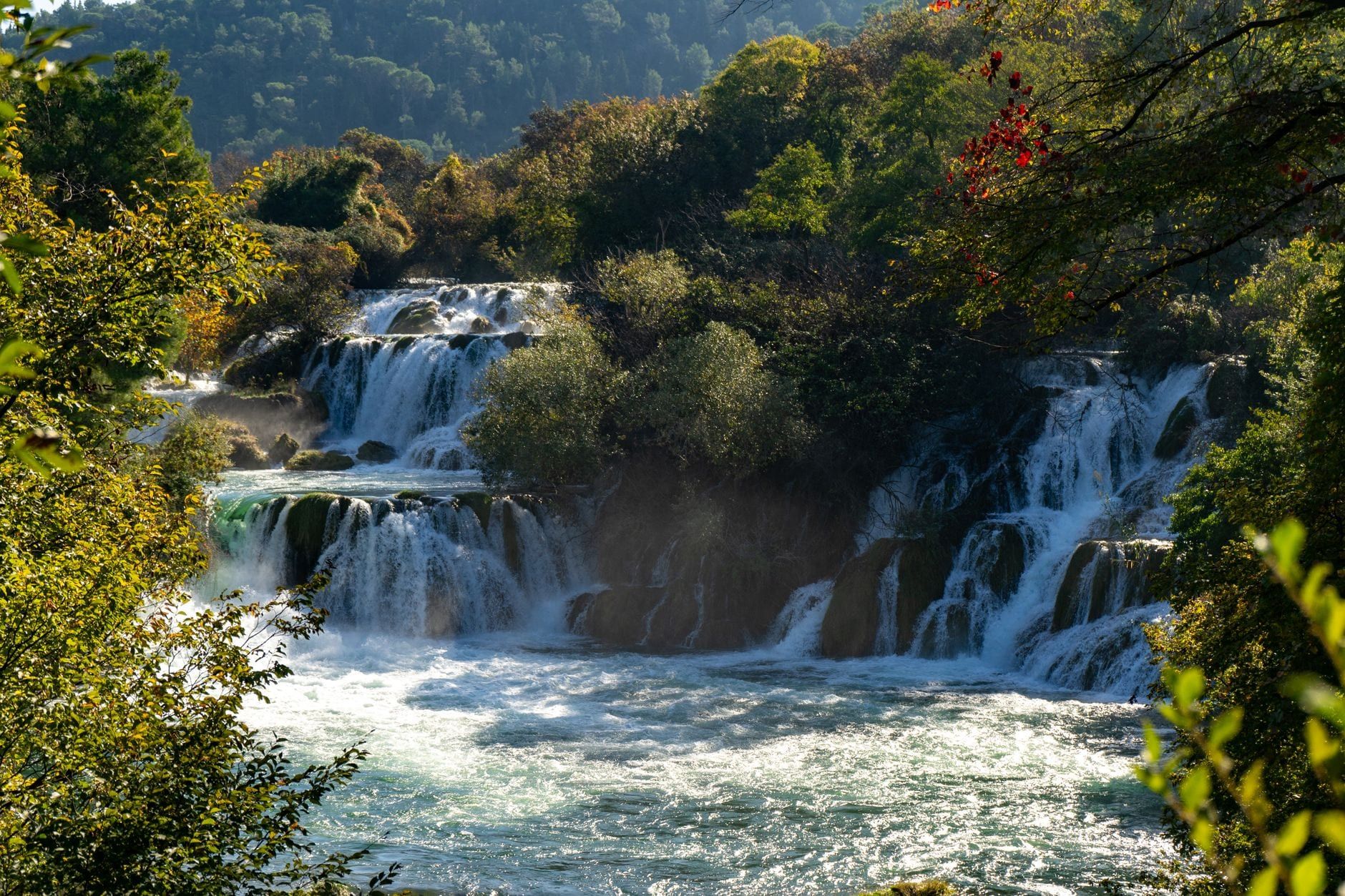
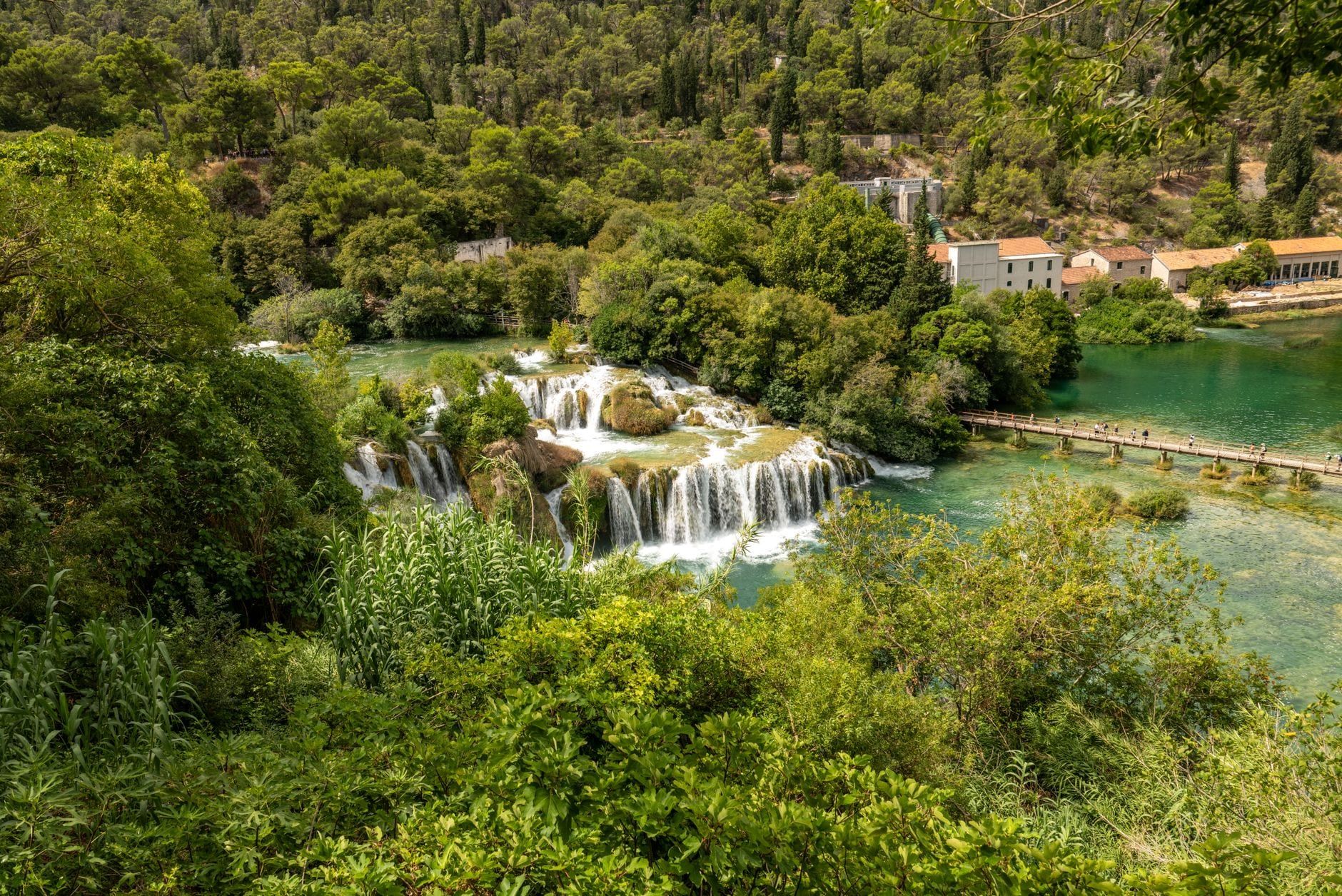
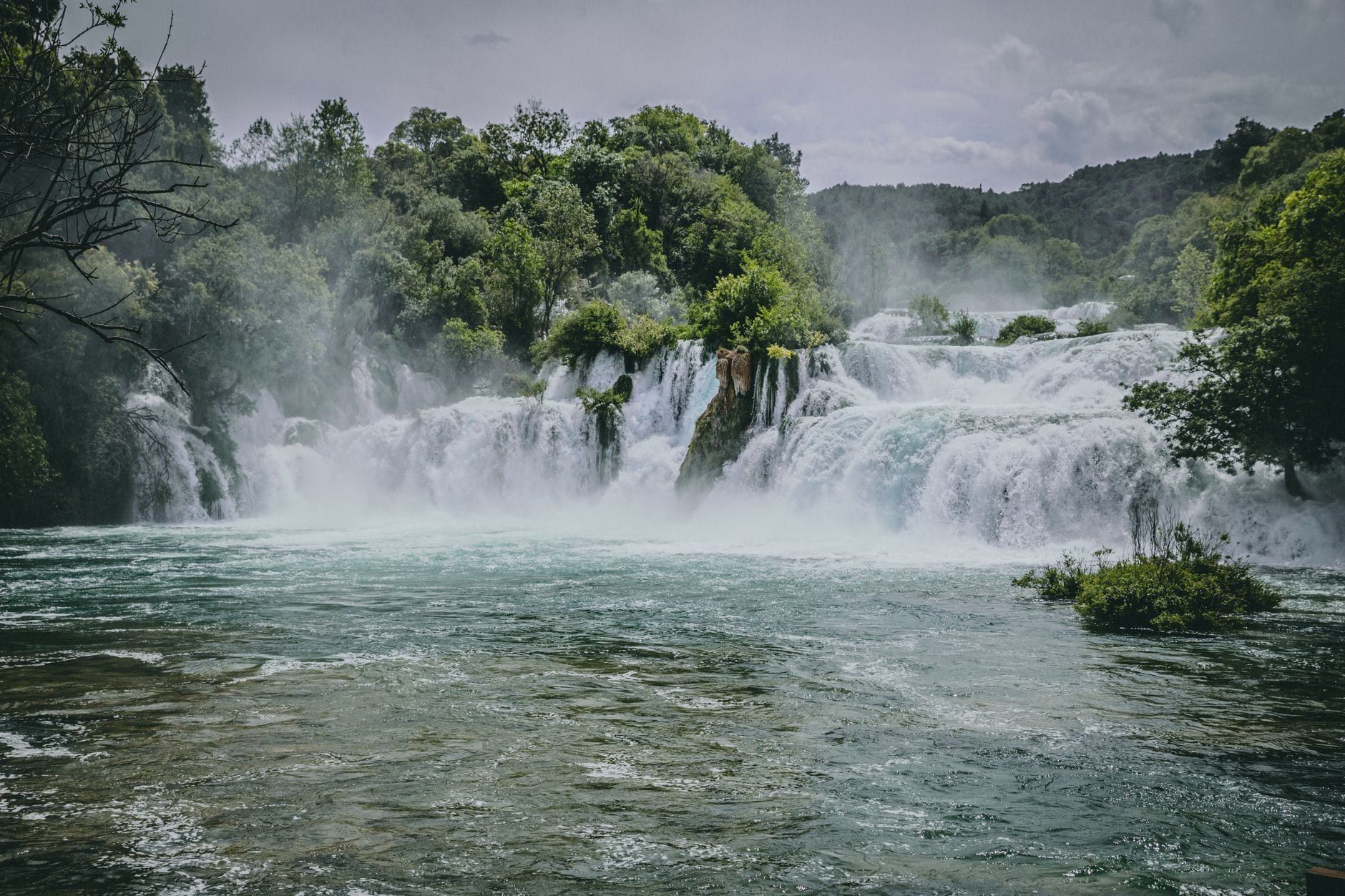
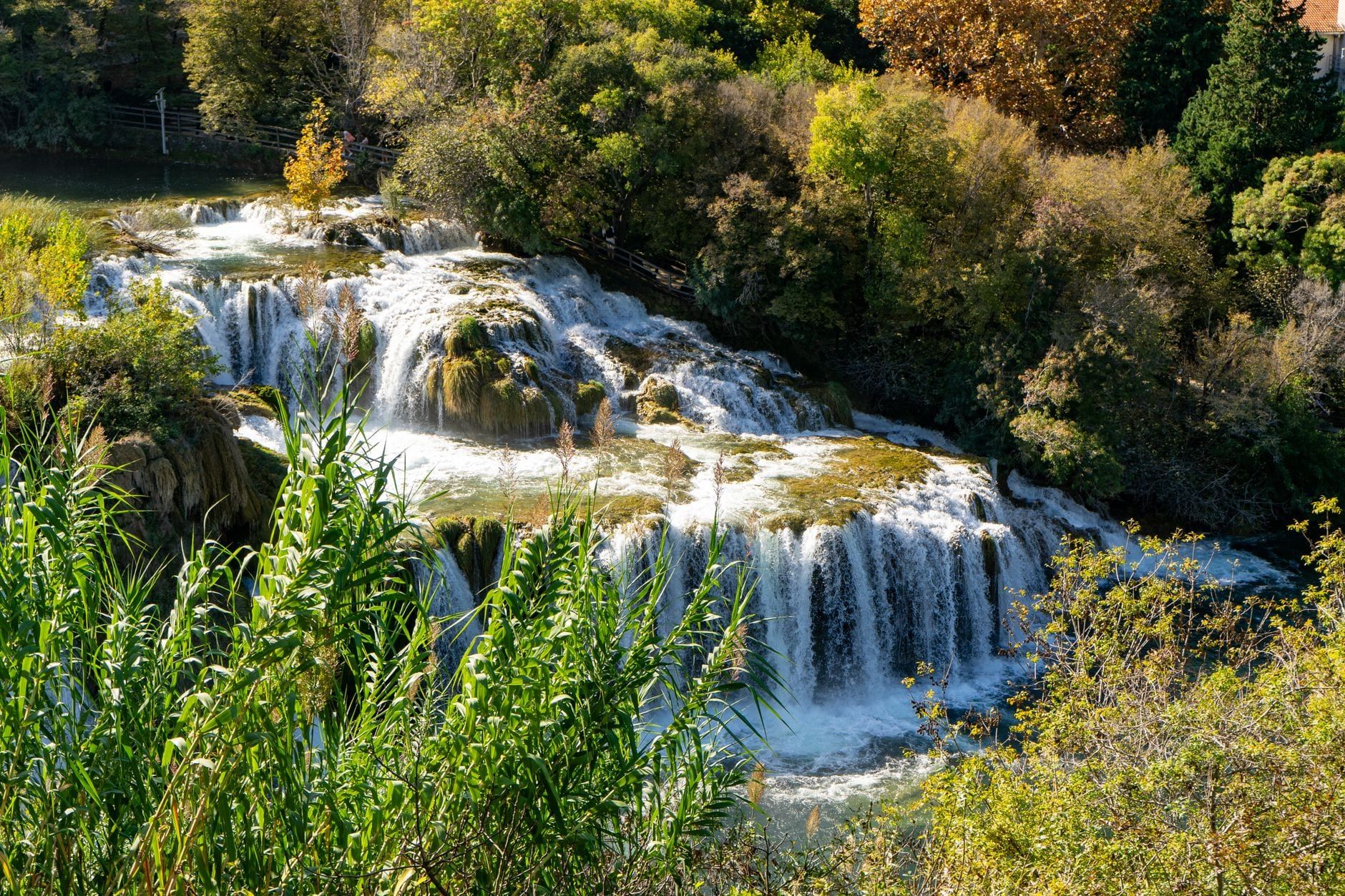
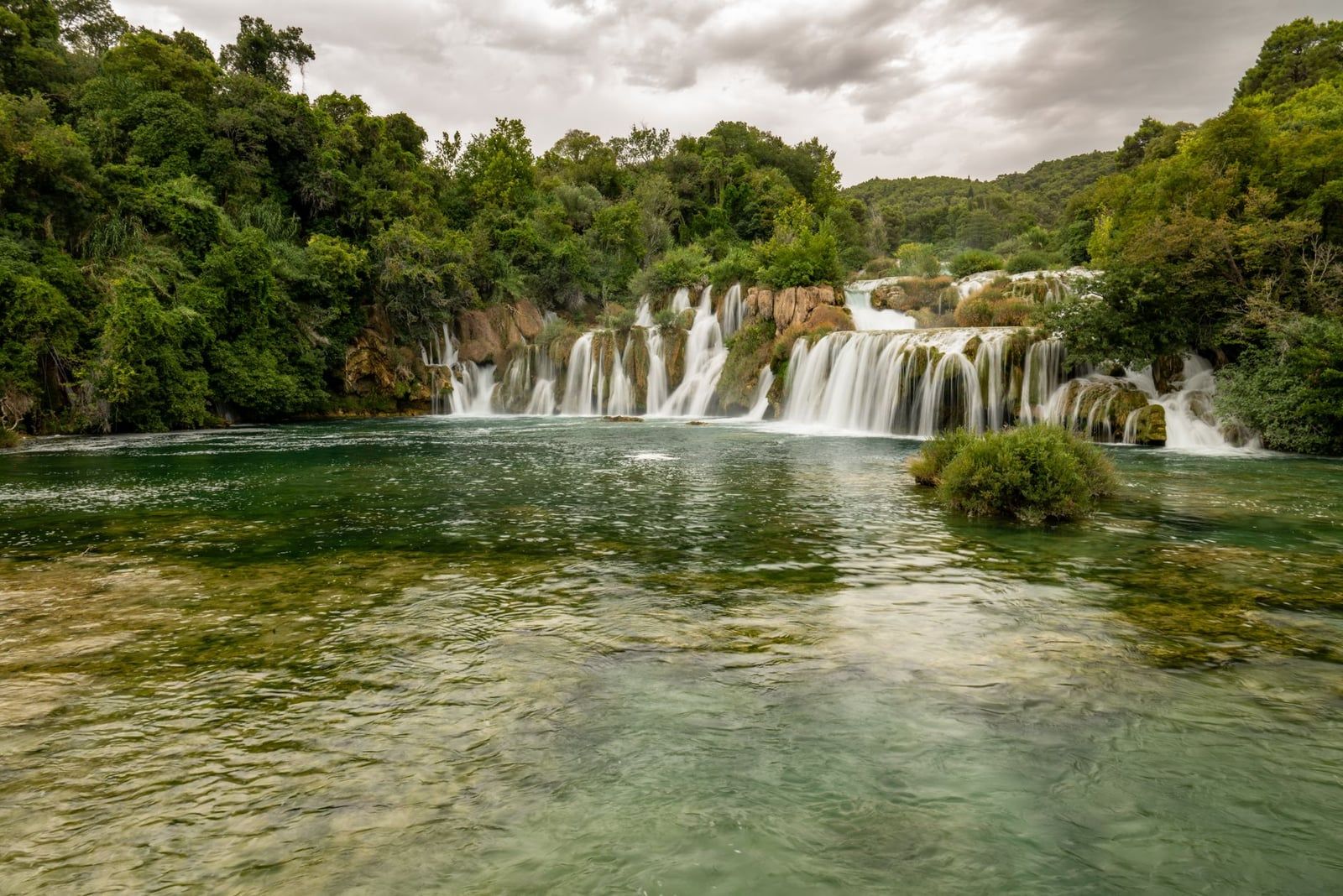
Seventeen cascades fall 45.7 m across roughly 800 m of barrier, 200–400 m wide, where the Krka and Čikola rivers merge. It's less a single waterfall than a wide staircase the entire river tumbles down, spreading into foam and turquoise pools before the canyon narrows again. Wooden boardwalks cross the barrier on small islands, so you walk out over the water with falls on both sides — the signature Krka experience.
For roughly nine in ten visitors, this is the whole trip. It's the most accessible fall (flat loop, boat and shuttle included in the ticket), the most photogenic, and the one with the watermills and historic hydro plant along the walk. If you see nothing else, see this.
Roški Slap and the Ogrlice 'Necklaces'
Roški slap is gentler and far quieter. Its main fall drops 22.5 m, but the real draw is the Ogrlice — the "Necklaces" — a 650-metre stretch of low, stair-step cascades threading between small travertine islands beneath steep canyon walls, with a combined drop of 25.5 m. A flat 1,360 m educational trail loops through them. Bring swimming gear: this is one of the three places in the park where you're allowed in the water.
You reach Roški slap by car via the Laškovica entrance (with a shuttle in summer), or on the 4-hour boat excursion from Skradinski buk. Ambitious walkers can climb 517 wooden steps from Roški slap to Oziđana cave and its small archaeological display — a real effort in summer heat, so go before midday or skip it.
Manojlovac: the tallest, and the most conditional
At 59.6 m, Manojlovac is the tallest waterfall on the Krka — nearly a third again the height of Skradinski buk. But it's remote, in the park's far north near the Burnum entrance, and highly dependent on flow: by late summer it can slow to a trickle. Come in spring, after rain, and it's a thundering column in a deep canyon. It's also seasonal in access — the Manojlovac area closes from November to March.
Worth it in April or May if you have a car and a spare half day. In August, don't make the drive.
The other barriers
Upstream sit Bilušića buk, Brljan and Miljacka — the last dropping 23.8 m — plus smaller cascades that fill out the seven. All sit in the park's quieter upper reaches, reached by the 47 km of hiking trails and 388 km of cycling routes rather than the main visitor infrastructure. Miljacka has its own early-20th-century hydro plant; the Krka Monastery stands near it. These are for second visits and locals, not first-timers.
Why the water is that colour
The turquoise-green glow comes from calcium carbonate dissolved in the river water. As it tumbles over the barriers, the mineral precipitates out and builds fresh travertine — the rock the falls themselves are made of. The barriers are alive and still growing, millimetre by millimetre, which is exactly why swimming at the main falls is now banned. Trample the soft young travertine and you kill the thing you came to see.
Walking the Skradinski Buk Boardwalk Loop
Let's set expectations: the famous Krka "hike" is a 1.9 km flat boardwalk loop that takes 1.5–2.5 hours with stops — the walking itself is 60–90 minutes. It's a stroll, not a hike. You must follow the set route; stepping off the marked trail is prohibited everywhere in the park, and on the travertine barriers in particular.
The loop crosses the barrier on wooden walkways and bridges, passing through pools, over channels and past the viewpoints over the main cascades. Along the way you'll pass restored watermills — some still working, grinding corn as they did for centuries — an ethno-village of stone dwellings with craft demonstrations, and at the end of the trail the Jaruga hydroelectric plant. It opened in 1895, two days after Niagara's plant, and made Šibenik the first city in the world lit by a complete alternating-current hydroelectric system. Toilets, benches and snack stops line the main circuit.
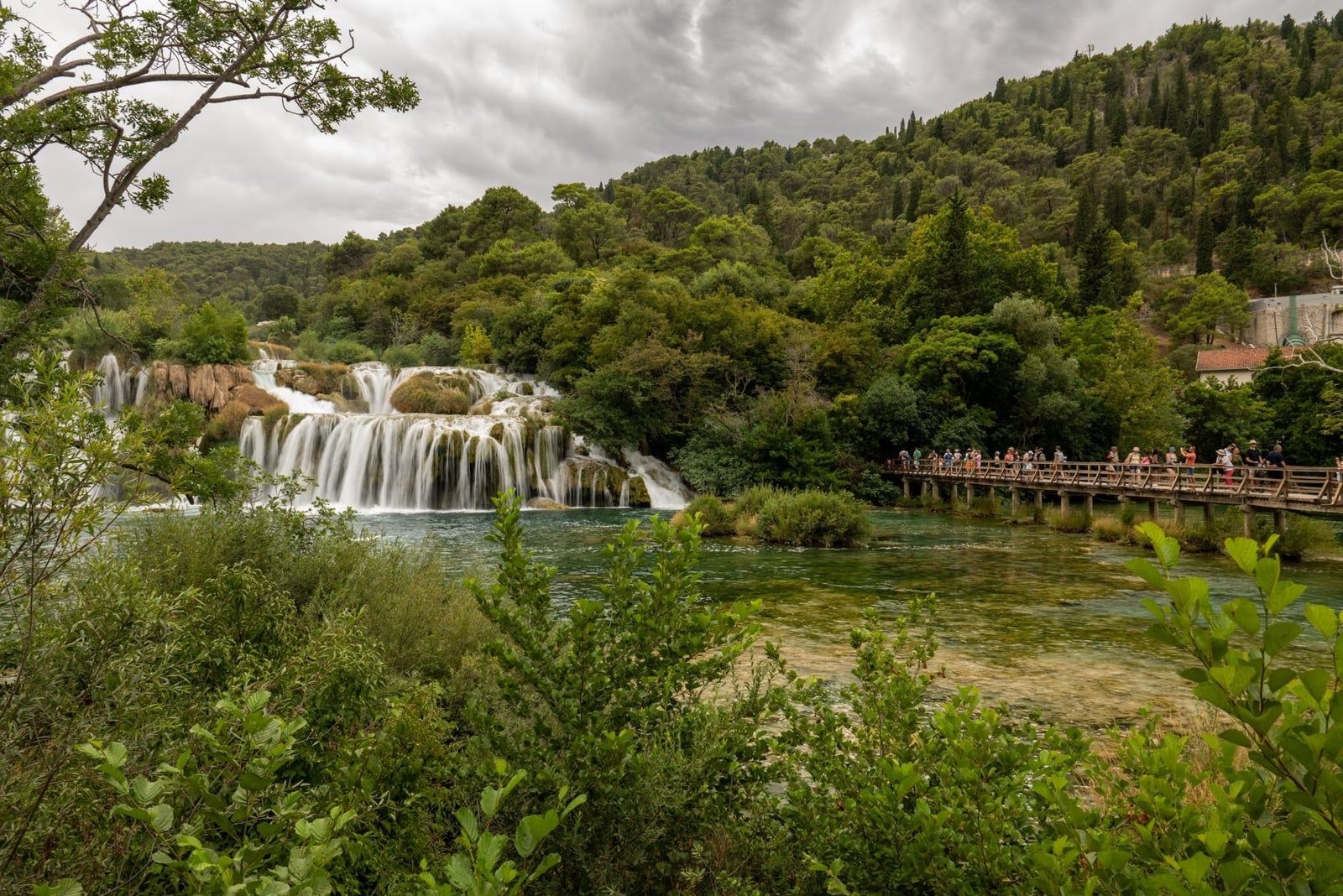
Photographers should know two things. First, the wide aerial shot that dominates Instagram is a drone photo — and drones are banned outright in the park, with Croatian fines running €650–€3,300. Second, parts of the barrier sit in harsh shadow in the morning, so if photo quality matters more than crowd avoidance, aim for late afternoon instead. On foot, the best views come from the boardwalk sections on the river's small islands.
Families manage the loop easily — it's flat, railed and full of things to look at — but strollers struggle on the stepped, narrow sections, and a child carrier is the easier option. Boardwalk edges have drops and the stone is wet and slippery, so hold small hands. One crowd tactic works better than any other: be at the Lozovac car park for the 8:00 opening and walk the 15-minute descent yourself, ahead of the first shuttle at around 8:20 and before the first boats arrive from Skradin. For the first hour you'll share the falls with a fraction of the day's visitors.
Can You Swim at the Krka Waterfalls?
Not at Skradinski buk. Swimming there has been banned since 1 January 2021, to protect the living travertine, and jumping or diving off the falls or bridges is prohibited everywhere in the park. Rangers enforce it, and the rock and currents make violations genuinely dangerous.
But swimming hasn't disappeared from Krka. It's permitted in three designated areas — Roški slap, Stinice (on the lake near Visovac) and Pisak (Remetić) — between 1 June and 30 September, at your own risk and depending on water levels. The Roški slap area is the most scenic of the three, with the Necklaces cascades in view while you swim.
Be sceptical of any tour listing that promises swimming at the falls: some still advertise it with pre-2021 photos, and the rule applies to everyone, guide or not. Practical notes — the designated spots have limited facilities, the entry is over rocks rather than sand, and water shoes are close to essential.
Tickets, Entrances & Boat Rides
Here are the official 2026 prices, straight from the park's price list. Note the after-15:00 summer discount — it's the cheapest way to see the falls in high season with daylight left to spare.
| When you visit | Adults | Children 7–18 / students |
|---|---|---|
| June – September | €40 | €15 |
| April, May, October | €20 | €12 |
| November – March | €7 | €4 |
| After 15:00, June–September | €30 | €11.25 |
Children under 7 always enter free, and 1 May is a free-entry day (expect the year's biggest crowds). Groups of adults pay €30/€16/€5 by season, and visitors with a European Disability Card plus one companion enter free. The current opening hours and entry fees are on the park's official site, and tickets can be bought online in advance at shop.np-krka.hr — worth doing in July and August, when capacity limits can leave late arrivals waiting at the gate.
The ticket includes more than the boardwalk: the boat between Skradin and Skradinski buk, the shuttle bus between Lozovac and Skradinski buk (both 1 April–31 October), and the Laškovica–Roški slap shuttle in summer. One caveat worth planning around — the ticket admits you to each locality once, so you can't bus down from Lozovac and return by boat via Skradin on the same ticket. Choose your entrance first.
Longer boat excursions cost extra, and they can't be booked online — they're sold only on site at the jetties. Prices: Skradinski buk–Visovac, 2 hours, €15; Skradinski buk–Visovac plus Roški slap, 4 hours, €20; the Čikola canyon cruise from Skradinski buk, 45 minutes, €10; and a fortress-viewing cruise from Roški slap, 2 hours, €15. You can compare the routes and operators on the site's Krka boat tours page.
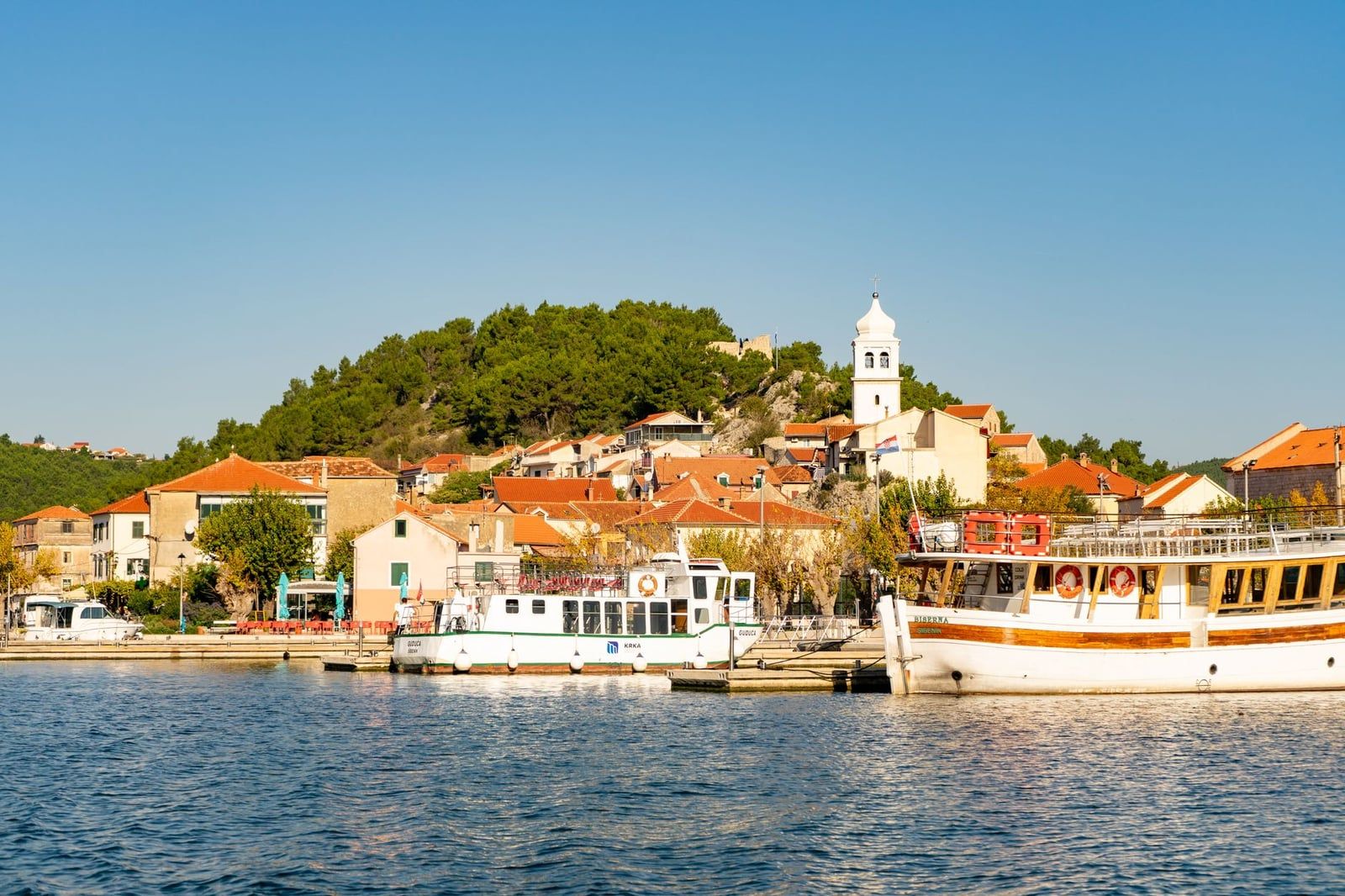
Four entrances matter. Lozovac is the main car entrance, with a large free car park and the shuttle down to the falls — the efficient choice, and the only one open on 1 January. Skradin is the scenic choice: paid parking, then the included 20–25-minute boat cruise up the canyon to the falls. Laškovica serves Roški slap. Burnum/Puljane covers the northern sights — Manojlovac and the Roman legionary camp at Burnum. A tip from the park itself: follow the brown tourist signs rather than GPS, which has a habit of leading drivers into fields.
Best Time to Visit the Krka Waterfalls
Late May to early June, and September, are the sweet spot: temperatures around 18–25 °C, full boat services, long opening hours and crowds well down on July and August. Spring also brings the strongest water flow, which matters — by late summer the falls are visibly tamer.
July and August are hot (often above 30 °C with little shade on the open boardwalks) and packed; when capacity limits bite, latecomers wait. If summer is your only window, enter after 15:00: the adult ticket drops from €40 to €30, and in June–August the park stays open until 20:00 — enough for a full loop in late light and smaller crowds.
Winter is the trade-off season. Skradinski buk stays open 9:00–16:00, the river runs at its fullest, and you can have the barrier almost to yourself. But the boats and shuttles stop (they run 1 April–31 October), Manojlovac and Burnum close, and the park shuts entirely on 25–26 December. Hours shift by month — 8:00–20:00 in June–August, 8:00–19:00 in May and September — so check the current table on the official site before any off-season drive.
How Long You Need: Half-Day & Full-Day Itineraries
Three realistic plans, depending on how much of the river you want.
2–3 hours: Skradinski buk only
Via Lozovac, allow about 3–3.5 hours including the shuttle each way. Via Skradin, the 20–25-minute boat ride each way pushes it to around 4 hours — but the cruise up the limestone canyon is half the reason to enter that way. Either way you'll cover the full boardwalk loop with time for the watermills and the 1895 plant.
5–6 hours: add Roški slap
Drive between the two (roughly 30 minutes each way via Laškovica, or take the 4-hour €20 boat excursion and let the river do the connecting). The Ogrlice trail adds an easy hour of walking. This is the plan for people who found Skradinski buk busy and want the Krka that locals know.
Full day: add Visovac and a boat excursion
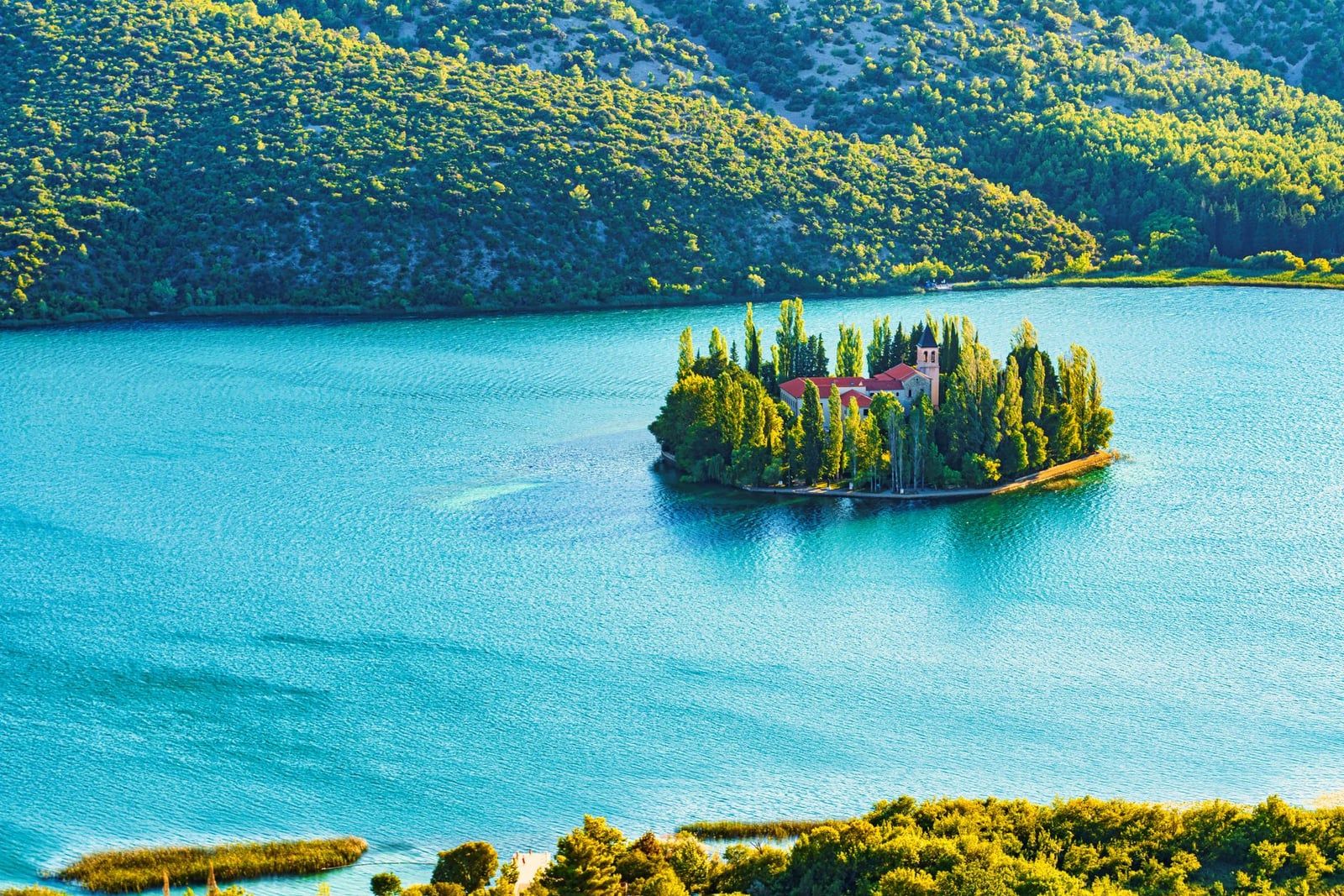
Visovac is a tiny island in a broad river lake, home to a Franciscan monastery since 1445. The 2-hour excursion (€15) stops there for 30 minutes; the 4-hour version (€20) adds 90 minutes at Roški slap. With a morning loop at Skradinski buk, the 4-hour afternoon boat makes a complete, unhurried day. Note that on 2 and 15 August the island opens only to pilgrims.
Getting there: the drive from Split is 93 km (1–1.5 hours on the A1, exiting for Skradin or Šibenik); Zadar is 76 km, just under an hour; Šibenik is 20 minutes from Lozovac. Buses from Split reach the Skradin park stop in 1h20–1h30 for €12–15, and up to 12 daily buses run from Zadar. The site has full route guides for Split to Krka and Zadar to Krka, covering car, bus and tour options in detail.
Without a car, an organised excursion is the simpler route — day tours from Split run daily in season, from around $25 per person with the entry ticket on top, so check what's actually included before booking. Where to base: Skradin is the walk-to-the-boat option, a small marina town where being first in the morning queue is a realistic goal; Šibenik, 20 minutes away, is the pick if you want restaurants, a UNESCO-listed cathedral and city life after the park closes.
Krka vs Plitvice: Which Waterfall Park Should You Choose?
The most common either/or question in Croatian trip planning, and the answer depends mostly on your base and your priorities.
| Krka | Plitvice Lakes | |
|---|---|---|
| Distance from Split | About 1 hour by car | About 3 hours by car |
| Main walk | Flat 1.9 km boardwalk loop | Long network of trails, 4–6 hours of walking |
| Boat arrival | Included, 20–25 min from Skradin | Electric boats and shuttle included |
| Swimming | Yes, in 3 designated areas in summer | No swimming anywhere |
| Summer crowds | Very busy at Skradinski buk in summer | Very busy on main routes in summer |
| Scenery | One huge travertine barrier, dramatic | Chain of lakes and falls, UNESCO-listed, arguably grander |
The verdict: basing on the coast or short on time, Krka wins — it's half the distance, the walk is easier, and the boat arrival is a genuine pleasure rather than transport. Chasing the bigger, UNESCO-listed scenery and willing to give it a full day from the coast? Plitvice, and go early. Neither park allows swimming at its main falls, so don't let old photos decide this one for you. If your itinerary covers both the coast and inland Croatia, doing both is realistic and worthwhile — the in-depth Krka vs Plitvice comparison breaks the decision down further.
Frequently asked questions
Can you still swim at the Krka waterfalls?
Not at Skradinski buk — swimming there has been banned since 1 January 2021. You can swim at three designated areas, Roški slap, Stinice and Pisak, between 1 June and 30 September, at your own risk depending on water levels.
How much time do you need at Krka National Park?
The Skradinski buk loop takes 2–3 hours, or around 4 hours entering via Skradin with the boat each way. Adding Roški slap makes it a 5–6 hour half day, and a full day covers Visovac and a boat excursion too.
Which Krka entrance is best for the waterfalls?
Skradin for the scenic 20–25-minute boat arrival; Lozovac for speed, free parking and beating the crowds on foot; Laškovica for Roški slap; Burnum/Puljane for Manojlovac and the Roman camp at Burnum.
Does the Krka ticket include the boat ride?
Yes. The ticket covers the Skradin–Skradinski buk boat and the Lozovac shuttle bus (1 April–31 October) plus the Laškovica–Roški slap shuttle in summer. Longer excursions to Visovac, Roški slap and the Čikola cost €10–€20 extra and are sold only on site.
How far is Krka National Park from Split?
About 1–1.5 hours by car (93 km) to Skradin or Lozovac, or 1h20–1h30 by bus for €12–15. Plitvice, by comparison, is around 3 hours each way.
When is Krka National Park cheapest?
November–March, when adults pay €7. In summer, entering after 15:00 cuts the adult price from €40 to €30. Children under 7 are always free, and 1 May is a free-entry day.
Can you walk between all the Krka waterfalls?
No. The park covers 109 km² along the river, and the sights connect by roads, boats and separate loops rather than one trail. The 1.9 km Skradinski buk circuit is the only walk most visitors do.
Is Krka better than Plitvice?
Depends on your trip. Plitvice is the bigger, UNESCO-listed showpiece with larger falls, but it's 3 hours from the coast and bans swimming entirely. Krka is about 1 hour from Split, flat and easy to walk, arrives by boat, and has designated summer swimming areas — the clear pick for a coastal day trip.